• Innovative Strategies That Create More Profits

What’s The Shape Of Your Pipeline?


Jeff Hoffman wrote an article where he talks about the shape of your pipeline. Individual salespeople generally have a good handle on their pipeline. But management does not, Management needs to keep watching the shape of the sales funnel as a metric in order to get a better understanding of the pipeline and the status of the people in that pipeline, 

What is the shape of your pipeline? 

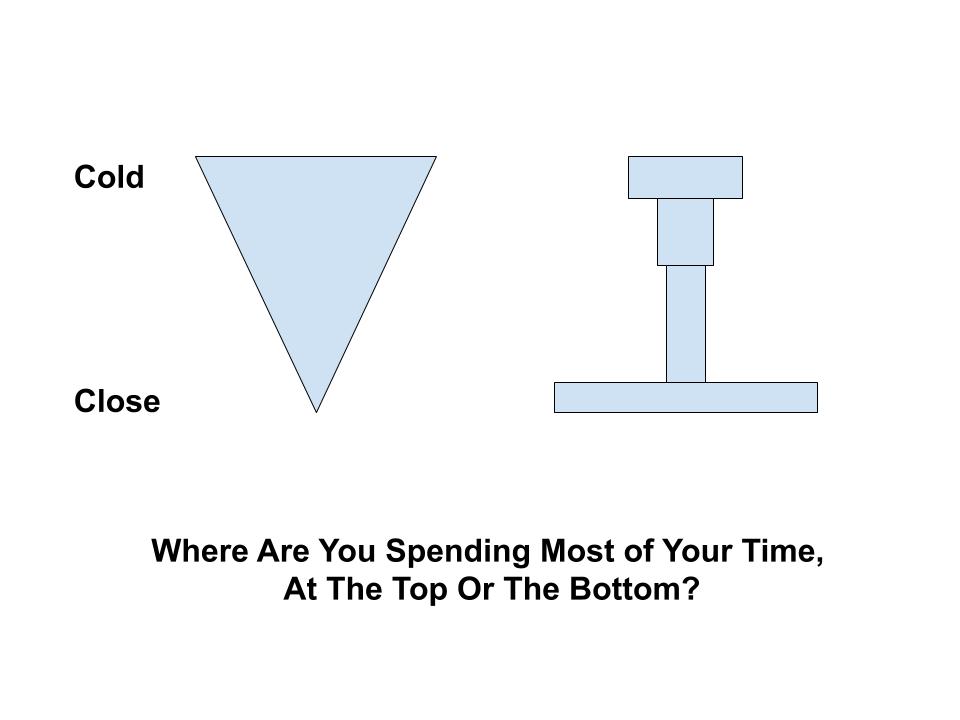
Do you use the traditional funnel, broad at the top and then gets continuously more narrow as it gets closer to closing? Let’s say there is a  statistical relationship of 3x the number of leads to closes. Therefore, salespeople need to get 3x the number of leads to closes if they are going to meet their quota.  

However, a better-looking funnel is shaped like a  champaign glass, which is wide at the top and narrows quickly down the stem to the base. Thie idea, of course, is to qualify prospects quickly so you can get rid of poor-prospects and have more time to work on real prospects. Naturally, this requires a well-designed qualifying system, But, it would be well worth the time an effort it takes to get that qualifying system. Then multiply that by the amount of  quality sales time gained,

The real prospects are in the stem of the champagne glass. These prospects have a 1.25 statistical probability of closing. Therefore, in the lower stem, you need 1.25 real pre-close prospects to meet a closing sale. And, much more time for the salesman to work on these potential prospects to meet his quota.  

Make an illustration of your pipeline because it’s an easy way to see where you are, and then keep track of the numbers (leads vs. closes) over time so you can plan your sales forecast more accurately and with less consternation.

If you know someone who needs to change the shape of their funnel, forward this post to them. Maybe it will help. 


Do you want to make the right decision or be right? 


When you are working in a startup, decision making is difficult because there are so many unknowns. And you can’t get enough information to decide in a reasonable time frame.

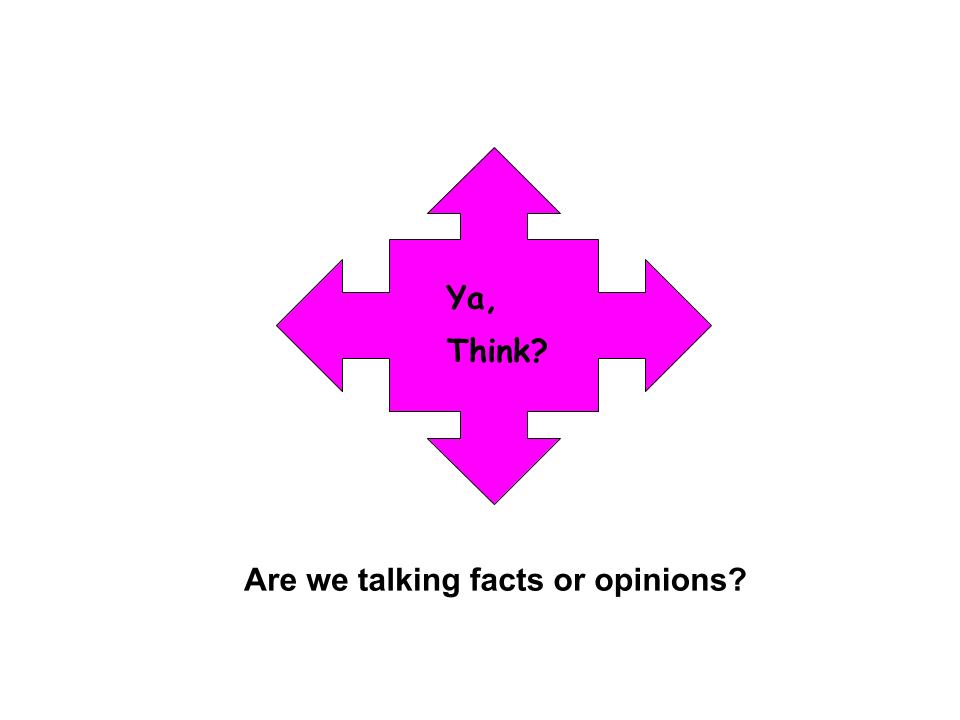
Often, others will disagree wholly or partially with the founder’s “facts.” However, unless we are talking about physical objects, “facts” are simply one person or one group’s aggregated opinions. That implies there can be many different facts about the same fact,  

However, some founders believe that every decision they make must be right. But what is more important than being right, is making the right decision. You can only do that if you believe you are fallible. 

If your decision doesn’t work out, admit it. You can quickly change course and think about why you made that decision. Study your decision-making process. Learn from it. That’s how you gain the knowledge that will help you when it’s time to make the next decision.

 If you know someone who has to always be right, only send this to them anonymously. 

Jim Zitek/ https://https://harborcapitalgroupinc.com/wp-content/uploads/2024/07/Braintopview-1.jpg.com 


Persuasion Requires Understanding And Empathy

To be persuasive, you have to spend a considerable amount of time getting to know your audience. What is it that they want to hear, not what you want to tell them. 

A key element of persuasion is empathy (the feelings desires. wishes, fears, and passion of the audience). Persuasion comes when you stir their emotions. The best way to achieve empathy is with a story that relates to their situation. 

Everything you say and do must serve the needs of the audience and if you are guided by the audience, you will be successful. An important way to achieve understanding and empathy is to change your focus from features to benefits. 

A feature is a fact about you or your product or service and may not be relevant, but a benefit is always relevant. People need a reason to act and that reason must be theirs, not yours.

Think about this. Give the audience a fact and some context as to why that fact is important. Then, give them the benefit of that fact. If you don’t have a benefit, you don’t need that fact. 

If you know someone who needs to turn skeptics into believers, tell them about this post. Maybe it will help. 

Maybe Your Product Is Great

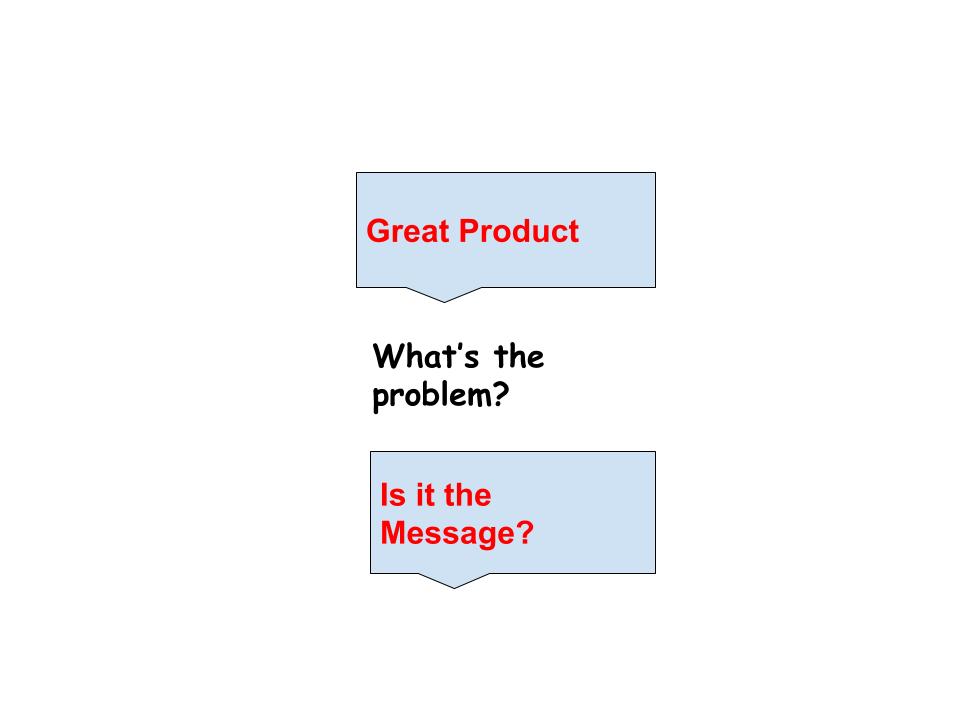
Maybe your product is excellent, but your message is not. Instead of focusing on features and functions, focus on what the customer wants.  

If you are talking to people who are interested in listening to you, Maybe you should stop selling and start giving information that will help the customer do his job, solve his problem, fulfill his “want”.

Most buyers have a budget. Maybe they don’t want to spend their budget on your product, but the result of buying your product?

If you know someone with a flat sales curve, tell them about his blog. Maybe it will help. 


Great Temptations

 Don’t Be Tempted

When you tell your story to prospects who want to hear it, you are tempted to “stretch” the story a little to improve it.

Peter Theil, the Venture Capitalist, assumes most people say their product performs 20% better than it does.

So he wants to invest in companies with ten times better products than the competitors.  

We don’t know if 20% is the right amount of exaggeration, but it does bring up an important point.

We are exposed to so many competing stories 24/7 that this “standard” exaggeration may no longer work.

Today, you will get caught, your audience will tell others about your overkill, and you will end up the loser.

Remember, a story that resonates with people who want to hear your story are likely to believe it is true.

They will find instances that reinforce this truth, called cognitive bias, and tell others.

How can you prove your product, service, or value proposition is true (metrics, testimonials, studies, case studies, referrals, etc.)?

How Do We Know What To Believe

In his book, All Marketers Tell Stories, Seth Godin talks about understanding why people buy the goods and services they do, He states that: We believe things that aren’t true …or many things that are true, are true because we believe them. 

In other words, we believe what we want to believe, and once we believe something, it becomes a self-fulling truth. For example, why do people buy bottled water when they can get it for free?

One reason is that we have moved beyond buying things we need and have moved to buy things based on our complexity of wants. If you believe that bottled water is better and you want better water, you happily buy it and also enjoy the statement the product makes to others.