• Innovative Strategies That Create More Profits

Insight: How To See Opportunities Differently

Insight: How To See Opportunities Differently

Every successful company experiences a moment when information turns into understanding. Data, feedback, and observation come together to reveal what customers really need. That moment is called an insight.

Insights change how companies design, build, and deliver their products and services. They replace guesswork with strategy and help turn ordinary products into real solutions.

What Insights Really Are

An insight is more than a fact or statistic. It is a deeper understanding that explains why people act a certain way or why something happens.

Why Insights Matter for Business Growth

  1. Insights reveal what customers value
  2. Insights enable creativity
  3. Insights focus on what really matters.
  4. Insights improve customer experience and loyalty

Turning Data Into Insights

Data is important, but it is not enough on its own.  Data only matters when you understand it in context.

The Competitive Advantage of Insight

Insights drive progress in any business. They turn observations into action, clear up confusion, and help create useful innovations. Companies that learn to find and use insights not only improve their products, but also change how they understand their customers.

Jim Zitek

I help companies create a competitive advantage in 90-days

Insight: The Power To See Opportunities Differently


Insight: The Power To See Opportunities Differently

Every successful company experiences a moment when information turns into understanding. Data, feedback, and observation come together to reveal what customers really need. That moment is called an insight.

Insights change how companies design, build, and deliver their products and services. They replace guesswork with strategy and help turn ordinary products into real solutions.

What Insights Really Are

An insight is more than a fact or statistic. It is a deeper understanding that explains why people act a certain way or why something happens. For example, knowing that customers leave their carts is just a fact. Realizing they do it because shipping costs show up too late in the checkout process is an insight. This reveals the cause and shows how to improve.

Insights connect two areas: the world of data and the world of human feelings, motivation, and context.

Why Insights Matter for Business Growt

1. Insights reveal what customers value

Companies often think they know what matters most to their users. But real insights come when organizations look beyond what customers say and uncover what they really mean or feel.

This clear understanding helps teams focus on features, messages, or new ideas that meet real needs, not just what they think people want.

2. Insights enable creativity

When a team finds an unmet need or a problem people have ignored, it can lead to creative solutions. Many great products come from seeing old problems in a new way, not just from new technology. 3.

3. Insights focus on what really matters.

Insights help organizations focus on what really matters. Without them, teams might waste time on the wrong features or follow the wrong numbers. A good insight helps everyone use their time, money, and energy wisely.

4. Insights improve customer experience and loyalty

When a company uses real insights, its products and services become easier to use and more helpful. Customers feel understood, which builds trust and makes things run more smoothly. This connection can turn first-time buyers into loyal fans.

Turning Data Into Insights

Data is important, but it is not enough on its own. Companies collect large amounts of information, such as sales numbers, engagement rates, and survey responses. But data only matters when you understand it in context.

The best companies make this process part of their culture. They encourage teams to be both analytical and curious.

The Competitive Advantage of Insight

Insights drive progress in any business. They turn observations into action, clear up confusion, and help create useful innovations. Companies that learn to find and use insights not only improve their products, but also change how they understand their customers.

Jim Zitek

I help companies create a competitive advantage in 90-days

Stop Fighting Your Competitors

Stop Fighting Your Competitors

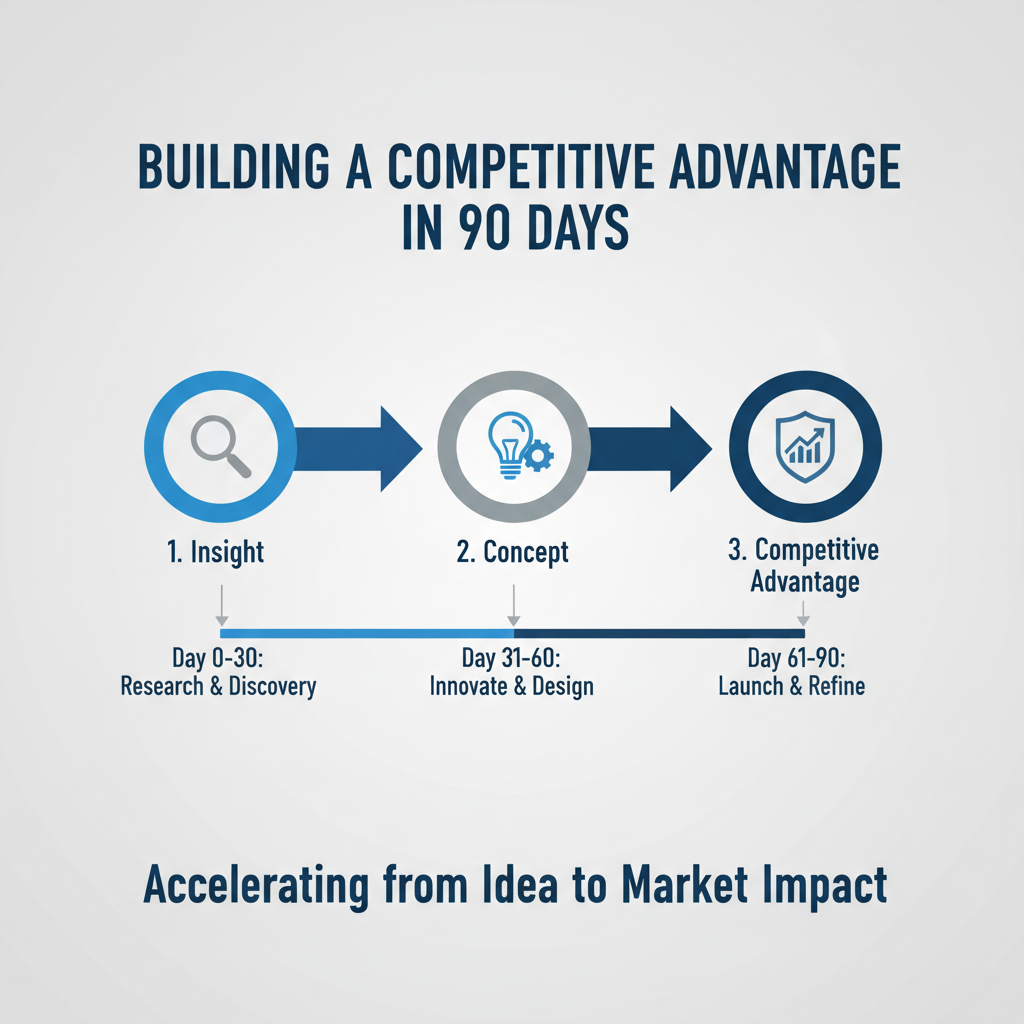
It’s now possible to create a competitive advantage in just 90 days using my Insight-concept-competitive advantage process.

Most companies obsess over competitors—tracking features, matching prices, copying tactics—while margins erode and differentiation disappears. The result is a race to the middle: more effort, less leverage, and no lasting advantage.

There’s a better way. Using the Insight → Concept → Competitive Advantage Model to create a unique growth strategy and competitive advantage. And do it in 90 days.

If your team is working hard but differentiation still feels elusive, this creative program will change how you think about identifying insights, creating product or service growth, and creating a competitive advantage for your customers, not your competitors. 

 If faster growth and a competitive advantage are of interest, check out my website: www.harborcapitalgroupinc.com. and judge for yourself how to create a competitive advantage and stop fighting your competitors.

 Have a great day,

Jim Zitek

I turn sales problems into creative solutions that deliver a competitive advantage in 90 days.

STOP FIGHTING YOUR COMPETITORS


Stop Fighting Your Competitors

It’s now possible to create a competitive advantage in just 90 days using my Insight-concept-competitive advantage process.

Most companies are fighting the wrong battle. They obsess over competitors—tracking features, matching prices, copying tactics—while margins erode. The result is a race to the middle: more effort, less leverage, and no lasting advantage.

There’s a better way.  

True competitive advantage isn’t something you outspend or outlast your competitors to achieve. It’s something you design—systematically, deliberately, and faster than most leaders think possible.

The Insight → Concept → Competitive Advantage framework does exactly that. It replaces reactive competition with an intentional advantage in 90 days. 

Insight: Diagnose the Real Problem 

Most strategies fail because they’re built on surface-level assumptions: customer requests, market averages, or competitor benchmarks.

Insight is different. Insight is a rigorous diagnosis. It uses vertical thinking—analysis, decomposition, cause-and-effect—to uncover what’s actually happening beneath the symptoms:

  • Where value is leaking
  • Why customers behave the way they do
  • Which constraints truly limit growth or pricing power
  • Where competitors are structurally vulnerable 

This phase doesn’t generate ideas. It clarifies where an advantage is possible. Without insight, creativity is guesswork.

 Concept: Create What Competitors Can’t Easily Copy

Once the real problem is clear, creativity becomes focused and productive. There are nineteen different individual creative techniques included under vertical and lateral thinking. Concepts are generated by combining:

  • Vertical creativity (logic, evaluation, feasibility, economics)
  • Lateral creativity (reframing, provocation, analogies, non-obvious connections)

This is where most companies stumble. They rely on brainstorming or incremental thinking and mistake activity for innovation.

Concept development, done correctly, produces:

  • New ways to deliver value customers didn’t ask for—but immediately recognize
  • Offers that change the basis of comparison
  • Solutions competitors can’t quickly reverse-engineer 

Concepts are not ideas for ideas’ sake. They are testable strategic options designed to become an advantage.

 Competitive Advantage: Design It, Then Deploy It

A competitive advantage exists only when customers consistently choose you for a reason competitors can’t neutralize. In the final phase, concepts are:

  • Scored
  • Tested
  • Refined
  • Deployed 

The focus is speed and proof. Within 90 days, leaders can move from insight to a live, market-facing advantage—often in pricing power, differentiation, cost structure, or perceived value. This isn’t theory. Its execution.

Stop Competing. Start Inventing.

When you stop fighting competitors and start designing an advantage, everything changes:

  • Strategy becomes clearer
  • Creativity becomes practical
  • Growth becomes intentional

Insight → Concept → Competitive Advantage isn’t about keeping up. It’s about getting ahead—and staying there.

If you would like to learn more about turning sales problems into solutions that deliver a competitive advantage. Let’s have a short phone call. No obligations.

Jim Zitek

jzitek@harborcapitalgroupinc.com

Turning Assumptions Into Insights

How to Stop Guessing and Start Diagnosing

Most strategy failures don’t stem from poor execution. They begin with untested assumptions.

An assumption is when you believe something is true without having proof. An insight is a proven understanding that leads you to act differently.

To build a real competitive advantage, you need to turn assumptions into insights.

Why Assumptions Are Dangerous

Assumptions may seem efficient, but they create three main risks:

  • Misallocated resources: You end up solving the wrong problem.
  • False certainty: Leaders stop asking questions.
  • Strategic drift: The company creates solutions based on faulty logic.

Ultimately, they become just like everyone else.

What Is the 5-Whys Technique?

The 5 Whys is a root-cause analysis method popularized in the Toyota Production System. The idea is simple:

  1. State the problem.
  2. Ask “Why?”
  3. Take the answer and ask “Why?” again.
  4. Repeat five times (or until you identify the root caThe goal isn’t just to ask five questions. 

The real aim is to dig deep. Here’s an example: Assumption vs. Insight.

  • Why are sales down? → Customers hesitate at the quote stage.
  • Why do they hesitate? → They compare us to lower-priced competitors.
  • Why do they compare? → They don’t see meaningful differentiation.
  • Why not? → Our value story isn’t clear.
  • Why isn’t it clear? → Sales messaging focuses on specs, not outcInsight: The real issue isn’t price, but how customers see our differences. This insight changes everything, from messaging and positioning to sales training and product strategy. 

Benefits of Turning Assumptions into Insights

When used correctly, the 5 Whys and similar root-cause methods can increase strategic accuracy: you fix the real causes, not just the symptoms.

  • Reduce political bias: It shifts the discussion from opinions to real questions.
  • Strengthen Competitive Advantage

You find gaps in differentiation that your competitors haven’t noticed.

How to Put Your Insight into Action: The Concept to Advantage Model

Use the 5 Whys to get past surface-level explanations.

  1. Insight phase: Identify the main root causes. You can’t gain real insight if you don’t challenge your assumptions.
  2. Concept phase: Once you identify the root causes, use various techniques to develop solutions.
  3. Advantage phase: Test your ideas and weigh the costs and benefits.

Conclusion

Here’s the hard truth: Most leaders don’t ask “Why?” often enough. They jump to “What should we do?” That’s the wrong order. Diagnose first, then design.

Assumptions feel safe, while insights can be uncomfortable. But a real competitive advantage comes from pushing past that discomfort.

If you want pricing power, higher margins, or real strategic differentiation, you need to challenge what you think you know. Start by asking one question: Why?

Have a great day,

Jim Zitek

I turn sales problems into creative solutions that 

deliver a competitive advantage.


Six Thinking Hats: Creativity Engine, Decision Engine… or Both?

Edward de Bono’s Six Thinking Hats is a helpful method for group discussions and personal thinking. It asks you to consider a problem or decision from six different viewpoints, each represented by a colored hat.

Use Six Thinking Hats to make quick, balanced decisions and run efficient meetings, especially when people have different personalities or when the stakes are high. While other tools help with what you discuss, Six Hats improves how you think together for better results.

Try Six Thinking Hats when meetings get stuck because people are thinking in different ways, have conflicting biases, or face tough choices. It does not replace detailed research or special tools, but it helps groups make faster, stronger, and more widely supported decisions.

When groups take turns using each hat, they are encouraged to see different points of view. This helps avoid groupthink and leads to better decisions.

The Six Hats and Their Focus

The hats are covered in the order listed here. Whoever wears a hat leads that part of the meeting. The whole process usually takes about an hour.

1. White Hat: Neutrality & Facts

The White Hat stands for neutral, objective, and data-driven thinking. It is about gathering information and looking at facts without making judgments.

  • “What data do we have?”
  • “What are the known facts and what is still unknown?”
  • “What information might we need to look up or verify?”

2. Red Hat: Emotions & Intuition

The Red Hat stands for emotional viewpoints, feelings, and gut instincts. It encourages people to share their emotions and first reactions openly.

  • “What is my gut feeling about this?”
  • “Does anything here make me uneasy or excited?”
  • “What’s my first, instinctive response?”

3. Black Hat: Critical Judgment & Caution

The Black Hat stands for critical, careful, and risk-aware thinking. It is used to spot possible problems, dangers, or negative outcomes.

  • “What could go wrong here?”
  • “What is the downside of this idea?”
  • “Have we identified any flaws or weaknesses?”

4. Yellow Hat: Optimism & Benefits

The Yellow Hat stands for positive, constructive, and solution-focused thinking. It is about looking for benefits, opportunities, and good results.

  • “What are the advantages?”
  • “Why could this idea be worthwhile?”
  • “What opportunities or possibilities might this create?”

5. Green Hat: Creativity & Alternatives

The Green Hat stands for creative thinking, new ideas, and possibilities. It is used for brainstorming and exploring fresh solutions.new ideas, can we generate?”

  • “Could we combine or modify existing concepts in an innovative way?”
  • “How else can we think about this problem?”

6. Blue Hat: Process & Control

The Blue Hat stands for organization, facilitation, and thinking about the process itself. It helps manage the meeting, set goals, sum up key points, and plan what to do next.

  • “What is our goal or agenda?”
  • “How should we allocate our time?”
  • “Let’s summarize what has been discussed.”

How You Use this Technique in Your Meeting

Introduction and Guidelines

A facilitator, usually wearing the Blue Hat, explains what each hat is for and ensures everyone understands the goal: to examine a challenge from every angle in a structured way.

Sequential Thinking

The group or individual. Everyone wears the same hat at the same time. For example, the whole group starts by focusing on facts with the White Hat, then moves together to emotions with the Red Hat. Each hat keeps everyone focused on the same type of thinking. For example, with Red Hat, everyone pays attention to feelings, and emotional input is not ignored; with one, emotional input is dismissed as irrelevant.

This shared focus helps avoid confusion or conflict about whether it’s okay to voice concerns, be critical, or propose wild ideas.

Summaries and Action Plans

Throughout the Blue Hat tracks, the group should fully understand the problem, including its facts, emotions, risks, benefits, and creative solutions. The main results will include a clear list of insights for decision-making, specific action steps, and actionable items to move forward.

Effectiveness and People often bring their own biases to discussions. By using all the hats in order, you ensure that essential viewpoints, such as facts, emotions, risks, and creativity, are included. Emotions, risks, and creativity are considered.

Reduces Conflict and Miscommunication

Usually, different thinking styles can clash in group discussions. The Six Hats method avoids this by giving each style its own time, so pessimistic and optimistic views are shared in separate steps.

Promotes Creativity

The Green Hat phase is when the group is encouraged to brainstorm and share unusual ideas. This ensures creative thinking is not blocked by early criticism or by excessive focus on data. Provides Clear Structure

Labeling each phase keeps the discussion organized and helps participants understand the purpose of each round.

Reduces Groupthink

Groupthink can happen when teams want to agree too much. The Six Hats method makes sure every viewpoint, even negative ones, is considered. This helps avoid herd mentality and leads to better analysis.

Enhances Emotional Intelligence

The Red Hat allows people to share their feelings, which are often left out in regular meetings. This builds empathy and helps make decisions that connect better with everyone involved. Practical Applications

Business Meetings and Strategy Sessions:

Teams use the Six Hats to explore new product ideas, analyze market data, or solve complex organizational problems.

Project Planning:

Before launching a project, teams can cycle through each hat to identify potential risks, gather data, and brainstorm improvements.

Personal Decision-Making: 

Individuals can apply the hats informally to weigh pros and cons, emotions, and data when making major life decisions.

Other Considerations  

Training and Familiarity: The method works best when everyone understands each hat and tries to think from that viewpoint. A brief introduction is helpful. Management: Set specific time limits for each hat to keep the discussion balanced and moving.

Facilitation:  Having a neutral Blue Hat facilitator is especially important for larger groups or complex topics.

Ability:  While the classic approach cycles through all hats, facilitators can adjust the order or spend longer on some hats as needed.

Overall Assessment of Effectiveness

Edward de Bono’s Six Thinking Hats is well known for its clear structure, which helps people think creatively, critically, and with emotional awareness.

By separating thinking styles—fact-finding, emotional, critical, positive, creative, managerial—the method encourages thorough exploration and strength. 

At first, the method may feel forced, but many people find that once the team gets used to it, it dramatically improves productivity, clarity, creativity, and decision-making.  


Jim Zitek

I turn complex product problems into creative solutions

 with a Competitive Advantage

Six Thinking Hats: Creativity Engine, Decision Engine… or Both?

2-minute read

Six Thinking Hats is a framework that helps with both creativity and decision-making by guiding how a group thinks together. Use it to generate, improve, and evaluate ideas step by step, then reach a decision with clear trade-offs and team support. The real strength comes from the order in which you think.

What Six Hats Actually Does

Edward de Bono’s Six Hats breaks thinking into six timed modes: Blue (process), White (facts), Red (feelings), Yellow (benefits), Black (risks), and Green (creativity). Everyone uses the same mode together. Black Hat focuses on critical judgment, while the Blue Hat leader chooses which hat the group wears and sets the order.

This rule protects new ideas early on and ensures evaluation is thoughtful rather than political.

  • For creativity, it holds off criticism so people can focus on generating ideas.
  • For decisions, it helps the group come together and makes trade-offs clear.

In short, Six Hats lets you use other tools like SCAMPER or 5 Whys, and helps keep meetings from turning into style or personality clashes.

When You Aim for Creativity

You can create stronger, more original ideas and avoid groupthink or early criticism by following these steps.

  • White Hat clarifies what you know and what you assume, so brainstorming starts with accurate information. Red Hat lets people share gut reactions early, which helps avoid hidden objections later.n objections.
  • Green Hat encourages creative thinking by focusing on many different ideas. You can use tools like SCAMPER, analogies, random prompts, or provocations here.
  • Yellow Hat turns rough ideas into concrete concepts by highlighting their advantages and potential risks.
  • Black Hat looks for problems and limits.
  • Blue Hat manages the timing and wraps up by asking, “Which concepts move forward and what will we test?”

This approach ensures ideas aren’t dismissed too soon. 

They come out stronger, with clear benefits, known risks, first steps to address them, and someone responsible for testing. Select among proposed options efficiently, transparently, and with genuine buy-in. Six Hats supports this by:

  • White Hat separates facts from opinions and makes the unknowns clear.
  • Yellow and Black Hats together give a balanced view of risks and benefits, rather than people arguing for their own sides.
  • Green Hat isn’t for wide brainstorming here, but for focused tweaks like pilots, packaging, scoping, and making decisions safer to try.
  • Red Hat makes sure people’s gut concerns come up early, so they don’t cause delays later.
  • Blue sums up the Blue Hat wraps up by summarizing the decision, who owns what, how to measure success, and when to check back in. Process compresses evaluation into a single pass, producing a clear, owned decision rather than prolonged discussion.

Since Six Hats supports both creativity and decision-making, you might ask if it’s better for one than the other.

It’s a combination—by design. Six Hats:

  • Helps you choose better options by making the evaluation balanced and clear.
  • Builds commitment by surfacing feelings, making trade-offs clear, and assigning next steps.

Think of it as a way to guide group thinking. This framework adapts to your meeting goals, whether you need to brainstorm, make decisions, or both, by adjusting how much time you spend on each part.

More information on this topic is available on the blog.

JIm Zitek

I turn complex product problems into creative solutions

with a competitive advantage

How CEOs Can Use Volatility to Create a Competitive Advantage

Uncertainty is no longer just something to get through. Now, you can use it to your advantage.

Many CEOs view economic volatility as a threat. They worry about higher interest rates, unpredictable demand, slower sales cycles, tighter cash flow, and the pressure to do more with less.

Over the next two to three years, the most successful B2B companies will be led by people who see volatility as an advantage, not just a problem.

Volatility is more than turbulence. It changes the competitive landscape, giving bold companies a chance to act quickly while others hold back.

You can turn this uncertainty into an opportunity.

Why Volatility Creates an Opportunity for CEOs

Volatility affects your business in three main ways:

  1. It exposes weaknesses in your company and your competitors. Inefficient processes, weak offerings, outdated models, and poor customer experience all become obvious under stress.
  2. It changes customer behavior. Customers become more risk-averse, more value-driven, and more willing to switch providers if a better value appears.
  3. It slows competitors down. Many CEOs freeze, cut investments, delay decisions, and lose confidence. This creates space for companies that act quickly to win a bigger share of the market.

Volatility reveals which companies are leaders and which are lagging.

First: Build a Volatility-Ready Strategy

To benefit from volatility, a CEO must first understand it. This requires clear thinking and strategy. Ask yourself questions like these on a regular basis:

A Revenue Resilience Diagnostics.  

  • What revenue disappears if demand drops 10–20%?
  • Which customers are vulnerable?
  • Which offerings remain essential?

A Cost Flexibility Review

  • How quickly can we move from fixed costs to variable costs?
  • Where can we simplify our operations without losing value?
  • If customers had to cut budgets today, would they keep us?
  • Why? Why not?

A Competitor Stress Analysis

  • What will competitors do under pressure?
  • Where can we advance while they retreat?

This process helps CEOs clearly see their weaknesses, risks, and opportunities. It prepares them to take decisive, strategic action.

Preparation alone is not enough. Creativity is what turns preparation into a real advantage.

Creativity: The CEO’s Secret Weapon in Volatile Markets

Volatility requires creativity and fresh ideas to find new ways to grow. Both vertical and lateral thinking are essential now.

Creativity is more than catchy slogans or brainstorming. It means finding new strategies that your competitors have not considered.

Here are three powerful creative levers a CEO can use:

  1. Create Volatility-Specific Offerings

During uncertain times, customers value:

  • Predictability
  • Reduced risk
  • Faster ROI
  • Greater reliability
  • Lower operational friction. 

Creative CEOs change their products and services to meet these needs. For example:

  • Performance guarantees
  • 90-day value delivery commitments
  • Fixed-fee or inflation-protected contracts
  • Proactive monitoring services
  • Outcome-based pricing
  • Bundled service + software + support packages

When customers are worried, they change how they buy. If your product or service helps them feel more secure, you can earn their loyalty and grow your market share.

  1. Convert Internal Strengths Into a Value Monopoly

Most companies have hidden strengths they have never used to make money:

  • Reliability
  • Speed
  • Technical expertise
  • Service quality
  • Industry knowledge
  • Partnership networks

Lateral thinking helps you use these strengths to stand out. For example:

  • “Zero-downtime guarantee”
  • “Rapid deployment model”
  • “Optimization audit service.”
  • “Continuous improvement partnership. “Predictive performance dashboard elements help you build a strong, unique position in the market. They make you stand out and earn loyalty, especially in uncertain times.     


 3 Move While Competitors Freeze. 

The quickest way to gain an advantage is to act while others wait.

Volatility leads many companies to:

  • Delay decisions
  • Cut back on service
  • Slow innovation
  • Retreat from customer engagement
  • Postpone strategic projects

This is the time for bold CEOs to:

  • Launch new offerings
  • Deepen customer relationships
  • Expand advisory or strategic roles.
  • Improve customer experience
  • Gain wallet share
  • Invest in innovation that your competitors cannot match.

Companies that change their strategies during uncertain times gain long-term advantages. Their willingness to act sets them apart from those who wait.

How Volatility Creates Long-Term Competitive Advantage

Volatility gives CEOs a chance to build advantages that last long after things become stable again. Companies that innovate during these times can build:

  • Differentiation: Unique offerings, service layers, and solutions competitors can’t replicate.
  • Pricing Power: Volatility hurts companies that offer only basic products, while rewarding those that provide unique value.
  • Increased Switching Costs: When you become essential during chaotic times, customers stay loyal.
  • Internal Capability: By navigating volatility, companies become more agile, creative, and resilient.

Volatility speeds up change. Companies that adapt creatively now will keep their advantage, even after things settle down.

A CEO Playbook for Turning Volatility Into Strength

Here is a simple, practical framework CEOs can use:

Step 1: Diagnose the Risks (Vertical Thinking). Understand revenue, costs, customers, and competitive vulnerabilities.

Step 2: Design New Solutions (Lateral Thinking). Create volatility-specific offerings that reduce customer uncertainty.

Step 3: Differentiate Deeply. Build value that competitors cannot copy or match.

Step 4: Strengthen Relationships. Be more present and more helpful than competitors during challenging conditions.

Step 5: Move Forward While Others Hold Back. Make bold moves when your competitors hesitate. This is how you build a real advantage.

Conclusion: 

Volatility does not create winners or losers. It shows who they are. It reveals them.

Companies that move first and create new value will capture lasting market share.

The companies that hesitate or wait for stability will fall further behind.

The CEOs who thrive in volatile conditions do three things better than anyone:

They prepare better.

They innovate faster.

They use volatility as an opportunity.

Take action now to build advantages your competitors will not see coming.

Jim Zitek

I turn complex product problems into successful solutions 

with a competitive advantage


Creativity: The CEO’s Secret Weapon in Volatile Markets

When markets are unpredictable, new ideas can help companies grow.

Many CEOs see volatility as a risk. Higher interest rates, uncertain demand, slower sales, and tighter cash flow make it harder to do more with less.

However, the most successful B2B companies are led by people who see volatility as an opportunity.

Volatility is not just chaos. It gives bold companies a chance to move fast while others wait.

Thinking in new ways helps leaders develop strategies their competitors might miss.

Here are three creative ways CEOs can turn uncertainty into opportunity.

1. Create Volatility-Specific Offerings.

During uncertain times, customers value:

  • Predictability
  • Reduced risk
  • Faster ROI
  • Greater reliability
  • Lower operational friction

Creative CEOs shape their products and services to meet these needs.

Examples:

  • Performance guarantees
  • 90-day value delivery commitments
  • Fixed-fee or inflation-protected contracts
  • Proactive monitoring services
  • Outcome-based pricing
  • Bundled service + software + support packages

When customers are worried, they buy differently. To build loyalty, help them feel more secure.

2. Turn Internal Strengths Into Unique Value

Most companies have strengths they haven’t used to make a profit yet:

  • Reliability
  • Speed
  • Technical expertise
  • Service quality
  • Industry knowledge
  • Partnership networks

Thinking in different ways can help turn these strengths into new value. For example:

  • “Zero-downtime guarantee”
  • “Rapid deployment model”
  • “Optimization audit service”
  • “Continuous improvement partnership”
  • “Predictive performance dashboard”

These examples can give your company a unique edge that lasts.

3. Take Action While Competitors Wait

Volatility often makes others pause, but moving quickly while they wait gives you an advantage.

  • Delay decisions
  • Cut back on service
  • Slow innovation
  • Retreat from customer engagement
  • Postpone strategic projects

Now is the time for bold CEOs to take action: offerings

  • Deepen customer relationships
  • Take on more advisory or strategic roles.
  • Improve customer experience
  • Gain wallet share
  • Invest in innovation, because competitors may not be able to keep up. Things change, companies that adapt will succeed, while those that don’t get left behind.

To learn more about using volatility to your advantage, read my full blog post (same title) or visit www.harborcapitalgroupinc.com.

Jim Zitek

I turn complex product problems into successful solutions 

with a competitive advantage

The Creativity Weapon Your Competitors Don’t Use: Provocation

In most B2B industries, business leaders tend to solve problems in similar ways. They examine data, brainstorm ideas, study competitors, and strive to enhance existing solutions. These approaches feel safe, rational, and businesslike.

But they also lead to the same predictable ideas.

True innovation — creating new revenue, categories, and advantages — demands more than logic. It requires breaking from established thinking and exploring ideas your competitors wouldn’t consider.

That’s why Edward de Bono created one of the most underrated creativity tools for business leaders: Provocation, also called “Po.” When used effectively, it becomes a strategic tool that helps you break free from industry norms and generate bold, valuable ideas.

Let’s look at what makes Provocation unique and how your organization can use it to gain an edge.

What Is Provocation (Po)?

Provocation is a lateral thinking tool. You make a statement that is illogical, impossible, or absurd on purpose to help your mind see new possibilities.

De Bono introduced the term “Po” to show that the statement should not be judged or dismissed. It permits you to set logic aside.

Some of de Bono’s classic provocations include:

  • “Po: houses should be heated from the ceiling down.”
  • “Po: Cars should have square wheels.
  • “Po: A restaurant should serve dessert first.”
  • “Po: a company should hire people with no qualifications.”

These statements are not meant to be true. Their purpose is to provoke new thinking.

When your brain tries to make sense of something absurd,

it can discover insights you would never find through normal reasoning.

Why CEOs Should Use Provocation

1. It breaks your team out of “industry thinking.”

Every industry’s unspoken assumptions limit innovation:

  • Customers expect this.”
  • “You can’t do that in B2B”.

Provocation helps your organization break through these invisible barriers.

2. It creates ideas your competitors cannot predict.

Most companies use the same strategy tools. Few business leaders use anything that challenges logic itself.

Just one provocation can lead to a solution that gives you a lasting competitive advantage.

3. It accelerates breakthrough thinking.

Rather than just improving your current model, Provocation helps you imagine new models more quickly than traditional brainstorming.

4. It helps teams escape the “gridlock” of expertise.

Even smart teams can get stuck quickly because their expertise makes them repeat old patterns.

Provocation breaks these patterns right away.

When to Use Provocation

Use it when you’re facing:

  • stalled innovation
  • slow growth
  • declining differentiation
  • strategic inflection points
  • customer complaints that keep repeating
  • complexity you can’t untangle through analysis
  • an opportunity that requires fresh thinking

It’s especially effective when you know the root cause of a problem but don’t have a solution yet. 

Why it’s so effective:

Make a statement that defies logic, best practices, or common sense.

Example from de Bono: “Po: Cars should have square wheels.” Absurd? Yes.

Is it useful? More than you might expect.

Step 2: Explore the consequences. Ask:

  • What would happen if this were true?
  • What problem might this solve?
  • What assumptions does this break?

Square wheels cause vibration, which could be useful for compacting surfaces.

Insight: “Movement doesn’t have to be smooth to create value.”

Step 3: Extract the core insight.

From the absurdity, a principle emerges.

In business, a provocation such as “Po: we should eliminate customer service completely” might reveal this insight:

“Customers want products so simple they require no service at all.”

Step 4: Move toward practical solutions.

Turn the insight into practical ideas. This final step leads to breakthroughs.

For example:

  • Self-guided onboarding
  • AI-assisted support
  • Proactive issue detection
  • A radically simplified interface

All of this starts with an idea that doesn’t seem to make sense.

Why Provocation Works Better Than Brainstorming

Traditional brainstorming:

  • Stays within known boundaries
  • Reinforces existing assumptions
  • Produces incremental ideas
  • Favors loud or senior voices

Provocation:

  • Breaks boundaries
  • Challenges assumptions
  • Produces non-linear ideas
  • Democratizes creativity

This isn’t just brainstorming. It’s a structured way to shake things up.

Which kinds of B2B challenges benefit most from Provocation? Consider these categories:

  • Strategic reinvention
  • Product or service redesign
  • Customer experience transformation
  • Business model innovation
  • Process simplification
  • Identifying new revenue streams
  • Differentiation challenges

If the problem is routine, logic is enough. However, if the problem is complex or affects the entire system, a strategic approach is necessary. In these cases, Provocation works better.

Final Thoughts

Your competitors are focused on optimizing. But optimization rarely creates a real advantage. Innovation, led by leaders like you, is what makes the difference.

Most teams attempt to generate new ideas by employing the same thinking that led to their existing ideas.

  • They brainstorm logically.
  • They make lists.
  • They stay realistic. But Provocation gives you the power to:
  • Disrupt old thinking
  • Unlock breakthrough thinking with one powerful word: Po.

If you want your team to think in new ways, try a new technique. That’s where Edward de Bono’s Provocation can help.

Jim Zitek

 I turn complex product problems into creative solutions with a competitive advantage.