• Innovative Strategies That Create More Profits

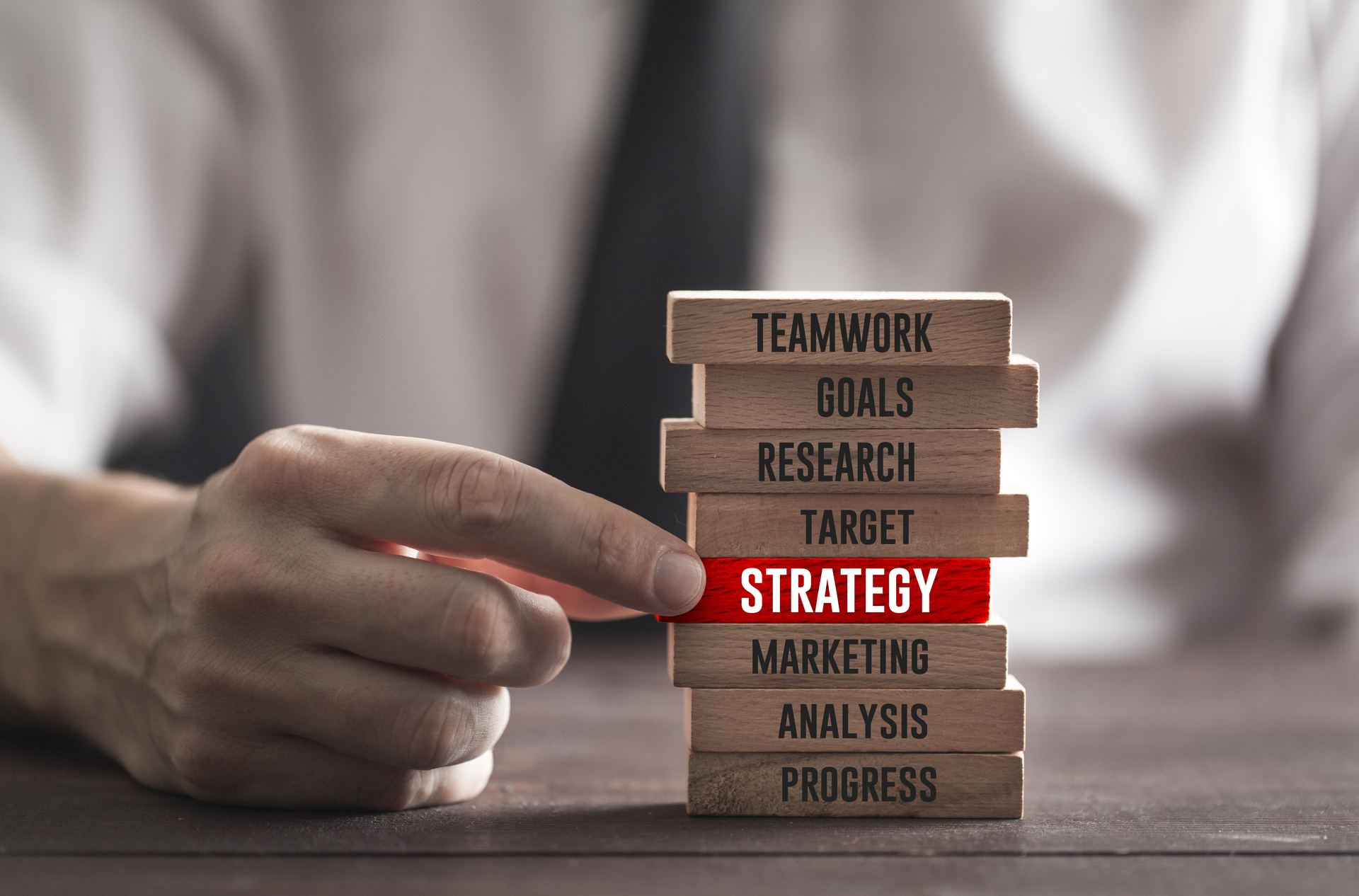
The Importance of Strategy in Creating a Competitive Advantage

In business, working hard is important, but it is rarely enough to guarantee success.

Strategy is not simply a plan for growth. It is a clear choice about how your business will stand out, where to focus your best resources, and how to offer value that others cannot easily copy. That is why strategy is so important for building and keeping a competitive advantage.

A company has a competitive advantage when it offers more value than its competitors or runs more efficiently. This advantage can come from lower costs, stronger branding, excellent service, innovation, specialized skills, or unique resources. These strengths are usually the result of smart strategic choices made over time, not luck.

Strategy is essential for guiding your business toward success.

Strategy is the foundation of strong, progressive leadership. For example, Southwest Airlines focused on keeping costs low and turning planes around quickly, which helped it compete with bigger airlines.

Businesses have limited resources and must navigate changing customer needs, new technology, and intense competition. Without a clear strategy, decisions can become scattered and reactive. Teams might try to do too much at once, spread themselves too thin, or copy competitors rather than leverage their own strengths. A strong strategy helps a company focus on what matters most and align every action with enduring objectives, enabling lasting success.

Strategy also helps a business decide where it fits in the market.

Not every company should compete in the same way. Some try to offer the lowest prices with good quality. Others stand out by providing unique products, special experiences, or expert knowledge. Some focus on a small market and serve it better than larger competitors. By choosing a clear way to compete, a company prevents being just average and instead becomes truly excellent at something.

The choices you make in your strategy decide if your resources help your business succeed or just get by. For example, Google spends heavily on research and development, which helps it remain at the forefront of innovation.

A company builds a competitive advantage by putting its money, time, talent, and technology into the areas that matter most. Strategy helps guide these decisions. For example, a company focused on innovation might spend more on research and development. If customer loyalty is its strength, it might invest in service, branding, and customer experience. This way, strategy helps avoid wasting resources on activities that do not improve the company.

A strategy keeps your business steady when the market is uncertain or changing.

Strategy is what helps your brand stay consistent and stand out. For example, Starbucks ensures customers have a similar experience everywhere through aligning its operations with its brand strategy.

A business earns trust and brand recognition when customers know what to expect. Consistency happens when operations, marketing, leadership, and culture all follow the same strategy. When everything supports the same goal, the company becomes stronger and increasingly united. Over time, this is hard for competitors to copy, especially when it is built into the company’s systems and culture.

Strategy also helps companies handle change. For example, Microsoft shifted to cloud computing to keep up with new technology, showing how a flexible strategy can be.

Markets are always changing. Customers’ preferences shift, new technologies appear, and global situations change. Without a strategy, a company might panic or chase every new trend. With a strong strategy, a company can adapt while being true to what matters most. A good strategy means knowing what should stay the same and what can change.

To create a lasting advantage, make bold strategic choices that make your company stand out and are hard for others to copy.  

Competitors can copy products, prices, and marketing. But it is much harder to copy a strong strategy—a unique mix of skills, processes, relationships, reputation, and culture. Strategy helps businesses build this kind of advantage. Instead of relying on just one strength, it creates activities that support one another and lead to long-term success.

Great leaders see strategy as vital for long-term success, not simply an option.

For example, Tesla’s clear focus on electric vehicles and innovation has brought its team together and set the brand apart.

Good leaders use strategy to set priorities, inspire employees, and guide decisions throughout the company. When employees understand the purpose of their work, they are more likely to make meaningful contributions. Strategy is far more than a business tool—it also brings people together and supports strong leadership and performance.

Real-world examples show just how powerful strategy can be.

Companies like Apple, Toyota, and Amazon became leaders by having clear strategies. Apple focused on design, integration, and being a premium brand. Toyota stood out for efficiency and quality. Amazon focused on size, convenience, and putting customers first for the long term. They all succeeded not just by making good products, but by following strategies that shaped their biggest decisions.

Conclusion

Strategy turns drive into a real advantage. It helps businesses decide where to compete, how to win, and how to use their resources. Most importantly, it builds strengths that matter to customers and are hard for competitors to match.

 In business, strategy is not optional—it is the foundation of lasting success. To achieve long-term results, companies need to make strategy central, execute it consistently, and review it regularly as circumstances change. By sticking to a clear strategy, organizations can stay relevant and keep a strong competitive edge.


 Why a Competitive Advantage Is Critical and Why Few Companies Have One


Today, almost every industry is more competitive. Customers have more options, can switch providers easily, and many businesses offer similar products, services, and promises.

Just being good is no longer enough. Companies need a real competitive advantage—a clear reason for customers to pick them and a stronger way to hold their place in the market.

Competitive advantage matters because it helps a company stand out, protect its profits, build customer loyalty, and grow over time.

Without an advantage, businesses end up trying to get noticed, cutting prices, and copying competitors—often working harder just to keep up. A true competitive advantage gives a lasting edge that hard work alone cannot match.

Even though it is important, few companies truly have a real advantage. Many think they do, but often it is only temporary or just a belief that they are better than their competitors.

A real competitive advantage needs to matter to customers, be hard to copy, and be strong enough to make a difference over the long term. This is less common than most businesses realize.

What a Competitive Advantage Really Means

Competitive advantage is more than a claim. It is a real difference that helps a company outperform its rivals, gives customers a reason to choose it, and supports growth.

That advantage can come from many sources, such as:

  • a distinctive brand,
  • lower cost, and better efficiency, 
  • superior customer experience, unique expertise, faster innovation, proprietary systems or knowledge, stronger distribution or relationships
  • a business model that is difficult to replicate

A competitive advantage should create value that customers notice and prefer. If customers do not see it, do not care, or if it is easy to copy, it is not a real advantage.

Why It’s So Critical

A competitive advantage lets a business compete from a stronger position. In crowded markets, companies without an advantage become interchangeable and lose control of their strategy.

Instead of being chosen for what makes them distinct, they are judged on things like:

  • price
  • convenience
  • promotions
  • speed
  • short-term visibility.

These factors matter, but they are often unstable and easy for others to copy. This leads to sameness, where businesses spend more but get less in return.

A real competitive advantage changes this. 

It gives a company more than just a marketing message and leads to real business benefits.

1. It helps a company stand out

A competitive advantage helps a company stand out in a crowded market. It gives people a reason to notice and remember the business.

2. It strengthens customer preference

People do not choose a company just because they know about it. They choose based on value, trust, relevance, and fit. A real advantage makes it more likely that customers will notice and prefer a company.

3. It protects. 

Without a real difference, a company competes on price, which might boost sales but can hurt profits. A stronger advantage helps a company compete based on value.

4. It supports long-term growth

A clear advantage gives a company a strong foundation for long-term growth. The company knows its value, what it stands for, and why it is hard to replace.

5. It helps companies adapt when the market changes or new competitors show up. 

Businesses with a real advantage rely on their strong position and trust, not just short-term tactics.

Why So Few Companies Actually Have One

If competitive advantage is so important, why do so few companies truly have one?

Building a competitive advantage is difficult in practice, not just in theory.

Most organizations focus on getting things done, not on truly standing out. While keeping operations running smoothly, meeting goals, and addressing immediate issues are important, a report from Harvard Business School Working Knowledge notes that an effective operations strategy can actually provide a company with a competitive advantage.

There are several reasons why competitive advantage is rare.

1. Many Companies Mistake Activity for Strategy

A business can be busy, ambitious, and efficient without being truly different. Many companies believe that working harder, producing more, or investing more will make them stronger in the market. But if they still look and sound like their competitors, doing more just makes them more alike.

Competitive advantage requires clear strategic choices:

  • who to serve
  • What value to emphasize
  • where to focus resources
  • How to differentiate
  • What not to do

Making choices means making trade-offs, which can feel uncomfortable. Many companies avoid this and end up staying broad and generic.

2. They Try to Appeal to Everyone

Trying to appeal to everyone makes it harder to stand out. Broad messages rarely feel specific or meaningful to anyone.

A real advantage grows when a company narrows its focus, serves a specific group, solves a targeted problem, or builds on its strengths. Many worry this will limit their opportunities, but being too broad is less effective.

3. They Confuse Quality With Advantage

High quality is important, but it is often expected. Customers see competence as a basic need, not a reason to pick one company over another.

Many think they have an advantage because they do a good job. But if others do too, quality alone is not enough.

4. Their Difference Is Easy to Copy

Some companies create a short-term edge, but it does not last. Competitors can quickly copy features, campaigns, or promotions. A more lasting competitive advantage usually comes from deeper and more connected strengths, such as:

  • customer trust
  • specialized expertise
  • integrated systems
  • brand meaning
  • proprietary knowledge
  • accumulated operational learning
  • long-term relationships

These are harder to copy because they take time to build and are supported across the whole business.

  1. They Do Not Understand What Customers Truly Value.

Companies often see their strengths from the inside, not from the customer’s perspective. They focus on what they value, not on what matters most to customers.

A business may have real strengths, but if customers do not notice or care about them, those strengths are not an advantage. What customers see and what is really needed to match.

6. They Fail to Align the Whole Business Around the Advantage

A competitive advantage needs support from every part of the business, including product, service, sales, operations, customer experience, and leadership.

Many companies claim a market position they cannot deliver. When there is a gap between what is promised and what customers actually experience, trust and advantage are weakened.

7. They Focus Too Much on the Short Term

Building an advantage takes time. It means strengthening your brand, trust, systems, expertise, and position. Pressure for quick results leads to short-term tactics like discounts, trends, and chasing every opportunity. This often weakens what makes you unique in the long run.

Conclusion

A competitive advantage is essential because it helps a company compete with more strength, clarity, and resilience. It lets businesses stand out, earn customer preference, protect profits, and keep growing in markets where being the same as others is a disadvantage.

Few companies have a real advantage because building one is hard. It takes strategy, focus, understanding your customers, aligning the whole business, and discipline to create something competitors cannot easily copy. 

Most companies settle for being busy, offering quality, and chasing short-term results. Fewer put in the work to build a true advantage. That is why competitive advantage matters so much. The rarer it is, the more valuable it becomes. Start looking at your company’s strengths and gaps today to build an advantage that truly sets you apart.

New Ideas Start Here: A Guide to Lateral Thinking

Lateral thinking helps solve problems by looking at them in new ways, questioning assumptions, and trying approaches that aren’t obvious or based on standard logic.

Edward de Bono created the term ‘lateral thinking’ because traditional thinking is good at developing existing ideas but often struggles to create new ones.

He believed our usual ways of thinking are efficient but can also hold us back. We tend to notice only what we expect. Lateral thinking gives us ways to break out of these habits.

The idea behind lateral thinking

De Bono thought tough problems stick around because people keep using the same approach. Lateral thinking helps break that pattern.

Instead of only asking, “What is the logical next step?” you can also ask yourself:

  • What if the opposite were true?
  • What if I defined the problem differently?
  • What ideas seem wrong but might contain something useful?

The main idea is simple:

  • Vertical thinking moves logically from one justified step to the next.
  • Lateral thinking encourages you to look at things from a different angle and find new ways to begin.

He created lateral thinking to fill a gap. Traditional logic is good for evaluating and improving ideas, but not for generating them. People often stick to familiar methods, even if they don’t work well. De Bono believed creativity can be learned, not just something you’re born with. Lateral thinking tries to make creativity a regular process, not just something that happens by chance.

How lateral thinking works

Lateral thinking shakes up our usual ways of thinking and prompts us to consider ideas we might otherwise ignore.

A simple, step-by-step process starts with:   

  1. Clearly state the problem. Example: “How do we reduce traffic congestion?”
  2. Identify hidden assumptions. Example: “More cars mean we need more roads.” That assumption might be true, but it can limit our ideas.
  3. Use a deliberate thinking technique: 1.
  1. Reverse the assumption.
  2.  Introduce a random stimulus.
  3. Generate a provocative statement.
  4. Split Hold off on judging ideas right away. The goal isn’t to be correct immediately, but to explore new possibilities.to explore new possibilities.
  5. Extract value from unusual ideas. Even a strange idea may contain a practical principle.
  6. Turn promising ideas into practical solutions. Lateral thinking helps you come up with options, while traditional thinking helps you test and use them. Lateral thinking is most effective when combined with careful analysis.

Two lateral thinking techniques

1. Reversal: Reversal means taking a normal assumption or standard way of doing things and turning it around.

Example:

  • Normal assumption: “Restaurants need to speed up table service.”
  • Reversal: “What if restaurants made customers spend more time there on purpose?”

That reversed idea might lead to:

  • lounge-style seating
  • social dining experiences
  • profitable desserts and drinks
  • a restaurant focused on atmosphere instead of quick turnover. Reversal helps reveal hidden assumptions, but it’s just a starting point, not the final answer.

2. Random entry: Random entry uses a random word, image, or stimulus to force a fresh connection.

Example: Problem: “How can a school improve student engagement?” Random word: garden

This might lead to:

  • learning spaces outdoors
  • student ownership of projects that grow over time
  • peer mentoring arranged like an ecosystem
  • Subjects could be connected by ideas such as “cultivation” or long-term growth. Most random connections won’t lead to much, but a few can spark great ideas.

Examples of success: 

Lateral thinking can be seen in results, even though it’s sometimes hard to prove exactly when it was used.

1. Self-service business models

Instead of assuming service must always be delivered directly by staff, businesses asked: What if customers do part of the process themselves?

That kind of reframing contributed to the development of models such as ATM self-checkout systems. These successes came from questioning the idea that more convenience always means hiring more staff.

2. Low-cost airlines

Traditional airline thinking emphasized included services and full-service travel. A lateral shift asked: What if customers mainly want safe, cheap transport rather than bundled extras?

That reframing helped support the low-cost airline model:

  • no-frills service
  • faster aircraft turnaround
  • direct booking
  • optional add-ons. By looking at things differently, airlines redefined what customers actually pay for.

Problems and limitations of lateral thinking

Lateral thinking has limitations.

  •  It can generate impractical ideas
  • It may feel inefficient
  • It depends on follow-through 
  • It may be resisted in structured organizations
  •  It is not ideal for every problem
  • It can be mistaken for just coming up with any wild idea. 

Lateral thinking isn’t random. If used improperly, it turns into unfocused brainstorming.

Conclusion

Lateral thinking is a structured approach to breaking habitual thought patterns, enabling the generation of new and useful ideas, especially when conventional logical approaches are at a standstill.

 Here is a summary:

  • Concept: solve problems by reframing them and breaking assumptions
  • Why: to complement standard logical thinking with deliberate idea-generation methods
  • How it works: disrupt patterns, suspend early judgment, explore alternatives, then evaluate.
  • Successes: innovations such as self-service systems, no-frills models, and convenience-based redesigns
  • Problems: can be inefficient, impractical. Here’s an easy way to remember: vertical thinking finds the fastest route, while lateral thinking gives you a new map to discover hidden opportunities and unexplored treasures.


The Creative Power of Vertical Thinking

Vertical thinking helps you build ideas in a logical, step-by-step way.

These techniques help you examine ideas carefully, narrow your options, solve problems step by step, and turn rough ideas into real solutions.

1. Analysis

Break a concept or problem into smaller parts so you can look at each one clearly.

This helps you find causes, strengths, weaknesses, and understand how everything fits together.

For example, you could break a business idea into customer needs, pricing, production costs, and competition.

2. Selection

Pick the most practical option from your choices.

This helps you sort through ideas and highlight the best ones.

For example, if you have five product ideas, you could pick the one with the highest demand and lowest risk. Follow the ideas step by step so each one leads to the next.

This approach works well for planning and making decisions.

For example, you might identify the problem, gather information, compare your options, choose a solution, and then test it.

3. Evaluation

Judge ideas using clear criteria like cost, value, and practicality. This helps you decide if an idea should be improved, changed, or dropped.

For example, you might evaluate a new service idea by asking whether customers need it, whether it can be profitable, and whether it can be delivered efficiently.

4. Group information together to make it easier to understand and compare.

This helps you organize research, market segments, or product features.

For example, you could group customers by age, income, habits, or location.

Compare your options to find differences, advantages, or better choices.

For example, you could compare two brands by looking at their prices, quality, and target customers.

5. Refinement

Improve an idea by making small corrections or adjustments over time.

This helps you polish ideas so they work in real situations.

Now that you know the main techniques, let’s look at how vertical thinking works in real situations.

You can use vertical thinking to turn ideas into practical solutions. It helps you solve problems in an organized way.

  • Make decisions based on evidence.
  • Improve existing products or plans.
  • Reduce risk before taking action.
  • Turn creative ideas into market-ready solutions.

Some popular vertical thinking techniques include 5 Whys, Pareto Analysis, and SCAMPER.

Each one gives you a structured way to solve problems.

1. 5 Whys

With this technique, you ask “why?” several times, usually five, to find the root cause of a problem.

  1. Ask why it happened.
  2. For each answer, ask why again.
  3. Keep going until you find the real cause.

Example:

  • Sales dropped.
  • Why? Customers were unhappy.
  • Why? Delivery was late.
  • Why? Production was delayed.
  • Why? A supplier failed.
  • Why? There was no backup supplier.

Use: problem solving, quality control, process improvement.

2. Pareto Analysis

This technique uses the 80/20 rule, which means a few causes often account for most of the results or problems.

How it works:

  1. List all the problems or causes.
  2. Measure how often each one occurs or how much impact it has.
  3. Rank them from biggest to smallest. Focus on the few causes with the greatest impact.

Example: A company finds that 80% of customer complaints come from only two service issues. Fixing those first gives the greatest improvement.

Use: prioritizing problems, decision-making, and resource allocation.

3. SCAMPER

SCAMPER helps you improve ideas by looking at them from seven angles: Substitute, Combine, Adapt, Modify, Put to other uses, Eliminate, and Reverse or Rearrange. These questions help you find new options and better solutions.

Substitute: replace one part with another. Combine: join two ideas or features. Adapt: borrow from another idea. Modify: change the size, shape, or quality. Put to other uses: use it in a different way. Eliminate: remove unnecessary parts. Reverse or Rearrange: change the order or direction.

Example: For a water bottle:

  • Substitute plastic with steel.
  • Combine the bottle with a filter.
  • Adapt from sports bottles.
  • Modify size for travel.
  • Put to other uses as a thermos.
  • Eliminate the extra pack.
  • Reverse the design to make cleaning easier.

Use: improving products, generating structured variations, and innovating.

Conclusion

Vertical thinking techniques use logic—such as analysis, selection, reasoning, evaluation, comparison, classification, and refinement—to turn ideas into solutions. These creative methods help you analyze, refine, and improve ideas in a structured way. They are especially helpful when you already have a concept or problem to work with.


How Creative Thinking Turns Concepts Into Creative Ideas

The process of transforming abstract concepts into innovative ideas is central to creative thinking. Understanding this process involves examining how creative techniques reveal the inherent flexibility of concepts. Rather than maintaining a single, stable meaning, concepts are shown to shift according to context, perspective, comparison, or interpretation.

This is the main change:

  • People often see a concept as something stable and general that applies to everyone in every situation. Examples are beauty, justice, success, or truth.
  • A relative idea views the same concept in a new way, so its meaning changes depending on who sees it, where, when, and under what conditions.

Creative techniques question the belief that concepts have only one meaning.

1. Changing perspective

Think of a writer, artist, or designer who brings a concept to life by seeing it from a different angle. When the perspective shifts, the idea changes as well.

For example, freedom can feel exciting and empowering to one person, but might cause fear for someone else. Seeing different perspectives makes the concept unique to each person instead of universal.

2. Using contrast

Creative work often develops when two versions of an idea are compared side by side.

Comparing wealth and poverty can change how we define success. This shows that success depends on circumstances and values, not just money.

3. Metaphor is also an effective means of creative thinking. 

Metaphors help us reshape abstract concepts by connecting them to something concrete. For example, if we call time a thief, it suggests time steals moments. If we call it a river, it highlights flow and change. Each metaphor adds new meaning and shows how the image we choose forms our understanding.t.

4. Context does more than influence meaning.

 It can completely change it. An action might seem heroic in one situation but reckless in another. Details like setting, tone, and framing make these ideas highly context-dependent.

5. Inviting interpretation

Creative works often leave some things mysterious instead of explaining everything clearly.

Ambiguity, irony, open endings, and layered imagery invite the audience to find their own meaning. This makes the concept more flexible instead of fixed.

Simple example: Home.

Creative techniques can turn it into different ideas, such as:

  • home as safety
  • home as confinement
  • home as memory
  • home as exile
  • Home is still the same concept, but its meaning changes depending on the emotional, social, or cultural lens.

Creative techniques turn notions into relative ideas by using perspective, contrast, metaphor, context, and interpretation. This means meaning depends on relationships, not just fixed definitions.

​Now, let’s look at some key creative thinking strategies:

Vertical thinking relies on logic and structure. Lateral thinking uses creativity and new methods to turn concepts into marketable ideas.

Vertical thinking

Vertical thinking is like a careful builder. It is logical, works step by step, and always checks before making a move. idea by following definite steps, testing evidence, improving details, and improving what already exists.

In business, vertical thinking turns a concept into a product, plan, or strategy by asking questions such as “What works? What is realistic? How can this improve? It is especially good for evaluation, planning, risk reduction, and execution.

Lateral thinking 

In innovation, lateral thinking transforms concepts by asking questions such as: What if we approached this differently? Who else could this help? 

For example, Edward de Bono, who developed the lateral thinking technique and coined the term, encouraged the generation of new ideas by deliberately moving beyond standard patterns of thought. 

A classic example of lateral thinking is using a brick not just for building but also as a paperweight or a doorstop, demonstrating how unconventional uses can emerge from re-examining the concept’s potential applications.

This is where new possibilities appear. Lateral thinking opens up many options.

These creative techniques can work together

Vertical thinking then sorts through creative ideas and shapes them into workable plans. For example, if the concept is home delivery, lateral thinking might suggest meal kit subscriptions, 10-minute grocery apps, or delivery of pet medication. Hacks cost, demand, logistics, and customer fit to decide which idea can actually succeed.

Many sources say these approaches work well together. Lateral thinking creates new possibilities by generating diverse ideas, while vertical thinking improves them by carefully evaluating and refining them toward practical solutions. psychologyfor.com oventhal.com

Conclusion

Vertical and lateral thinking are the main ways to turn concepts into marketable ideas. Lateral thinking sparks originality, while vertical thinking turns those initial ideas into solutions that work in the market. This is one of three blog posts about transforming concepts into creative ideas.

Why High-Value Innovation Starts With Strong Concepts

People often think creativity is just about sudden inspiration, but strong ideas usually come from clear and disciplined concepts.

A concept helps you organize what you notice in the market. It lets you spot patterns, identify opportunities, and understand customer needs, behaviors, and frustrations. Without clear concepts, creativity can lose focus. Teams might come up with ideas, but those ideas are often too broad, random, or easy for others to copy.

That’s why concepts give creativity its direction.

For example, instead of just saying, “We need a new service idea,” it’s more helpful to say, “We’re seeing more time-poor clients who want expert support without a complicated buying process.” That’s a concept. Once you have that, better ideas tend to follow.

Rather than brainstorming in general, teams can design offers that fit that specific market need:

  • simplified premium packages
  • faster onboarding
  • expert-led guidance
  • priority response models
  • subscription-based advisory support

This link between clear concepts and focused innovation is why concepts matter so much for turning creativity into results. They help businesses move from vague ideas to real, relevant innovation.

Concepts help in four key ways:

  • First, concepts help spot patterns. They let businesses focus on what really matters in the market, rather than just reacting to random bits of data.
  • Second, concepts create focus. They give creative thinking a clear goal, so idea generation becomes more strategic.
  • Third, concepts help businesses stand out. They make it easier to design products or services that meet real customer needs instead of relying on general assumptions.
  • Fourth, concepts make ideas easier to act on. A strong concept can turn into a product, service, message, or experience that customers actually value.

In short, concepts connect insight to action.

This is important because creativity by itself isn’t enough. Many companies can come up with ideas, but far fewer turn those ideas into real business advantages. The difference often comes down to having clear concepts.

When businesses use strong concepts, they can ask better questions, like:

  • What customer group are we really serving?
  • What needs are competitors overlooking?
  • What friction can we remove?
  • What would make this offer feel more specific, useful, or distinctive?

That’s ultimately where better ideas start.

Conclusion

To sum up, creativity works best when it’s not just original but also relevant. Concepts make this possible. They add structure to what you notice, guide your ideas, and bring discipline to innovation.

If a company wants creativity to deliver real business value, it can’t just depend on inspiration. It needs concepts that sharpen thinking, guide action, and turn market insights into ideas customers actually want.

Concepts are what turn creativity into something useful.


Insight: The Power To See Opportunities Differently


Insight: The Power To See Opportunities Differently

Every successful company experiences a moment when information turns into understanding. Data, feedback, and observation come together to reveal what customers really need. That moment is called an insight.

Insights change how companies design, build, and deliver their products and services. They replace guesswork with strategy and help turn ordinary products into real solutions.

What Insights Really Are

An insight is more than a fact or statistic. It is a deeper understanding that explains why people act a certain way or why something happens. For example, knowing that customers leave their carts is just a fact. Realizing they do it because shipping costs show up too late in the checkout process is an insight. This reveals the cause and shows how to improve.

Insights connect two areas: the world of data and the world of human feelings, motivation, and context.

Why Insights Matter for Business Growt

1. Insights reveal what customers value

Companies often think they know what matters most to their users. But real insights come when organizations look beyond what customers say and uncover what they really mean or feel.

This clear understanding helps teams focus on features, messages, or new ideas that meet real needs, not just what they think people want.

2. Insights enable creativity

When a team finds an unmet need or a problem people have ignored, it can lead to creative solutions. Many great products come from seeing old problems in a new way, not just from new technology. 3.

3. Insights focus on what really matters.

Insights help organizations focus on what really matters. Without them, teams might waste time on the wrong features or follow the wrong numbers. A good insight helps everyone use their time, money, and energy wisely.

4. Insights improve customer experience and loyalty

When a company uses real insights, its products and services become easier to use and more helpful. Customers feel understood, which builds trust and makes things run more smoothly. This connection can turn first-time buyers into loyal fans.

Turning Data Into Insights

Data is important, but it is not enough on its own. Companies collect large amounts of information, such as sales numbers, engagement rates, and survey responses. But data only matters when you understand it in context.

The best companies make this process part of their culture. They encourage teams to be both analytical and curious.

The Competitive Advantage of Insight

Insights drive progress in any business. They turn observations into action, clear up confusion, and help create useful innovations. Companies that learn to find and use insights not only improve their products, but also change how they understand their customers.

Jim Zitek

I help companies create a competitive advantage in 90-days

STOP FIGHTING YOUR COMPETITORS


Stop Fighting Your Competitors

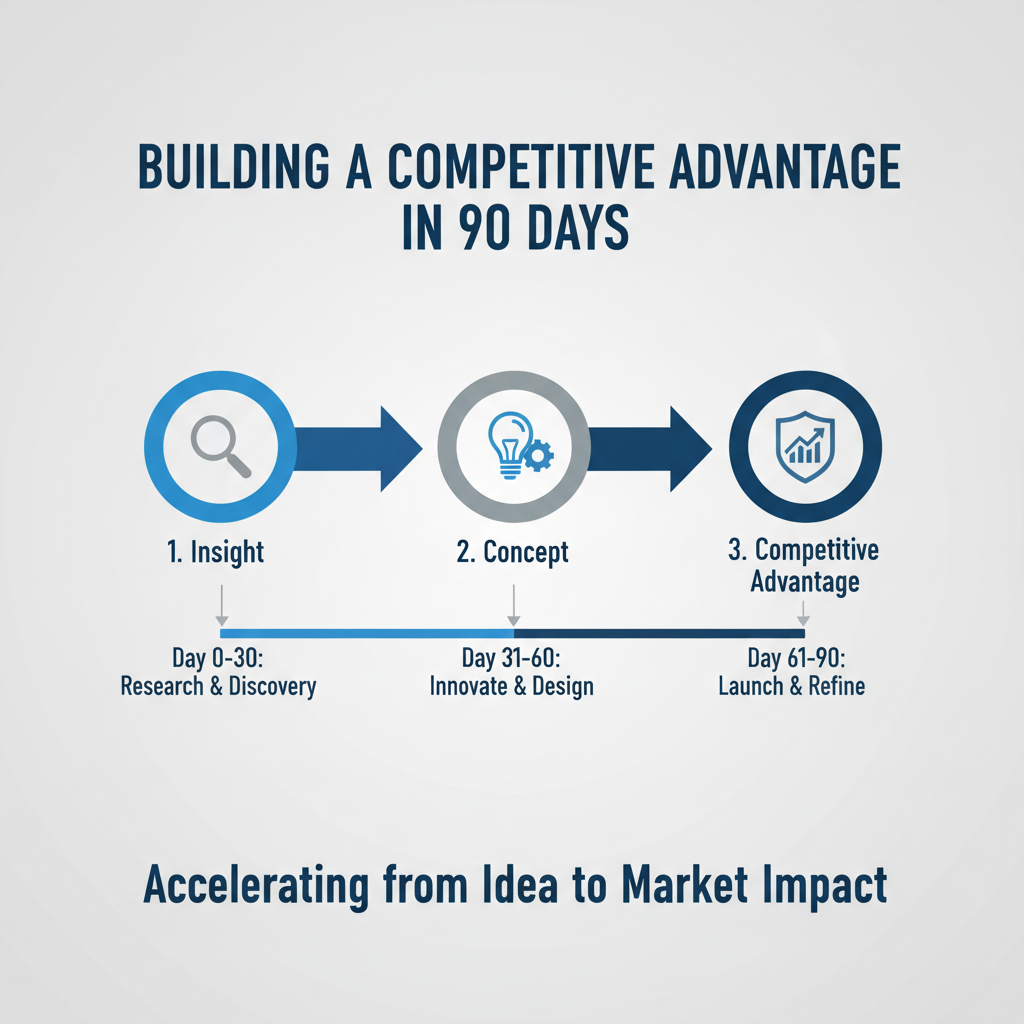
It’s now possible to create a competitive advantage in just 90 days using my Insight-concept-competitive advantage process.

Most companies are fighting the wrong battle. They obsess over competitors—tracking features, matching prices, copying tactics—while margins erode. The result is a race to the middle: more effort, less leverage, and no lasting advantage.

There’s a better way.  

True competitive advantage isn’t something you outspend or outlast your competitors to achieve. It’s something you design—systematically, deliberately, and faster than most leaders think possible.

The Insight → Concept → Competitive Advantage framework does exactly that. It replaces reactive competition with an intentional advantage in 90 days. 

Insight: Diagnose the Real Problem 

Most strategies fail because they’re built on surface-level assumptions: customer requests, market averages, or competitor benchmarks.

Insight is different. Insight is a rigorous diagnosis. It uses vertical thinking—analysis, decomposition, cause-and-effect—to uncover what’s actually happening beneath the symptoms:

  • Where value is leaking
  • Why customers behave the way they do
  • Which constraints truly limit growth or pricing power
  • Where competitors are structurally vulnerable 

This phase doesn’t generate ideas. It clarifies where an advantage is possible. Without insight, creativity is guesswork.

 Concept: Create What Competitors Can’t Easily Copy

Once the real problem is clear, creativity becomes focused and productive. There are nineteen different individual creative techniques included under vertical and lateral thinking. Concepts are generated by combining:

  • Vertical creativity (logic, evaluation, feasibility, economics)
  • Lateral creativity (reframing, provocation, analogies, non-obvious connections)

This is where most companies stumble. They rely on brainstorming or incremental thinking and mistake activity for innovation.

Concept development, done correctly, produces:

  • New ways to deliver value customers didn’t ask for—but immediately recognize
  • Offers that change the basis of comparison
  • Solutions competitors can’t quickly reverse-engineer 

Concepts are not ideas for ideas’ sake. They are testable strategic options designed to become an advantage.

 Competitive Advantage: Design It, Then Deploy It

A competitive advantage exists only when customers consistently choose you for a reason competitors can’t neutralize. In the final phase, concepts are:

  • Scored
  • Tested
  • Refined
  • Deployed 

The focus is speed and proof. Within 90 days, leaders can move from insight to a live, market-facing advantage—often in pricing power, differentiation, cost structure, or perceived value. This isn’t theory. Its execution.

Stop Competing. Start Inventing.

When you stop fighting competitors and start designing an advantage, everything changes:

  • Strategy becomes clearer
  • Creativity becomes practical
  • Growth becomes intentional

Insight → Concept → Competitive Advantage isn’t about keeping up. It’s about getting ahead—and staying there.

If you would like to learn more about turning sales problems into solutions that deliver a competitive advantage. Let’s have a short phone call. No obligations.

Jim Zitek

jzitek@harborcapitalgroupinc.com

Turning Assumptions Into Insights

How to Stop Guessing and Start Diagnosing

Most strategy failures don’t stem from poor execution. They begin with untested assumptions.

An assumption is when you believe something is true without having proof. An insight is a proven understanding that leads you to act differently.

To build a real competitive advantage, you need to turn assumptions into insights.

Why Assumptions Are Dangerous

Assumptions may seem efficient, but they create three main risks:

  • Misallocated resources: You end up solving the wrong problem.
  • False certainty: Leaders stop asking questions.
  • Strategic drift: The company creates solutions based on faulty logic.

Ultimately, they become just like everyone else.

What Is the 5-Whys Technique?

The 5 Whys is a root-cause analysis method popularized in the Toyota Production System. The idea is simple:

  1. State the problem.
  2. Ask “Why?”
  3. Take the answer and ask “Why?” again.
  4. Repeat five times (or until you identify the root caThe goal isn’t just to ask five questions. 

The real aim is to dig deep. Here’s an example: Assumption vs. Insight.

  • Why are sales down? → Customers hesitate at the quote stage.
  • Why do they hesitate? → They compare us to lower-priced competitors.
  • Why do they compare? → They don’t see meaningful differentiation.
  • Why not? → Our value story isn’t clear.
  • Why isn’t it clear? → Sales messaging focuses on specs, not outcInsight: The real issue isn’t price, but how customers see our differences. This insight changes everything, from messaging and positioning to sales training and product strategy. 

Benefits of Turning Assumptions into Insights

When used correctly, the 5 Whys and similar root-cause methods can increase strategic accuracy: you fix the real causes, not just the symptoms.

  • Reduce political bias: It shifts the discussion from opinions to real questions.
  • Strengthen Competitive Advantage

You find gaps in differentiation that your competitors haven’t noticed.

How to Put Your Insight into Action: The Concept to Advantage Model

Use the 5 Whys to get past surface-level explanations.

  1. Insight phase: Identify the main root causes. You can’t gain real insight if you don’t challenge your assumptions.
  2. Concept phase: Once you identify the root causes, use various techniques to develop solutions.
  3. Advantage phase: Test your ideas and weigh the costs and benefits.

Conclusion

Here’s the hard truth: Most leaders don’t ask “Why?” often enough. They jump to “What should we do?” That’s the wrong order. Diagnose first, then design.

Assumptions feel safe, while insights can be uncomfortable. But a real competitive advantage comes from pushing past that discomfort.

If you want pricing power, higher margins, or real strategic differentiation, you need to challenge what you think you know. Start by asking one question: Why?

Have a great day,

Jim Zitek

I turn sales problems into creative solutions that 

deliver a competitive advantage.


Six Thinking Hats: Creativity Engine, Decision Engine… or Both?

Edward de Bono’s Six Thinking Hats is a helpful method for group discussions and personal thinking. It asks you to consider a problem or decision from six different viewpoints, each represented by a colored hat.

Use Six Thinking Hats to make quick, balanced decisions and run efficient meetings, especially when people have different personalities or when the stakes are high. While other tools help with what you discuss, Six Hats improves how you think together for better results.

Try Six Thinking Hats when meetings get stuck because people are thinking in different ways, have conflicting biases, or face tough choices. It does not replace detailed research or special tools, but it helps groups make faster, stronger, and more widely supported decisions.

When groups take turns using each hat, they are encouraged to see different points of view. This helps avoid groupthink and leads to better decisions.

The Six Hats and Their Focus

The hats are covered in the order listed here. Whoever wears a hat leads that part of the meeting. The whole process usually takes about an hour.

1. White Hat: Neutrality & Facts

The White Hat stands for neutral, objective, and data-driven thinking. It is about gathering information and looking at facts without making judgments.

  • “What data do we have?”
  • “What are the known facts and what is still unknown?”
  • “What information might we need to look up or verify?”

2. Red Hat: Emotions & Intuition

The Red Hat stands for emotional viewpoints, feelings, and gut instincts. It encourages people to share their emotions and first reactions openly.

  • “What is my gut feeling about this?”
  • “Does anything here make me uneasy or excited?”
  • “What’s my first, instinctive response?”

3. Black Hat: Critical Judgment & Caution

The Black Hat stands for critical, careful, and risk-aware thinking. It is used to spot possible problems, dangers, or negative outcomes.

  • “What could go wrong here?”
  • “What is the downside of this idea?”
  • “Have we identified any flaws or weaknesses?”

4. Yellow Hat: Optimism & Benefits

The Yellow Hat stands for positive, constructive, and solution-focused thinking. It is about looking for benefits, opportunities, and good results.

  • “What are the advantages?”
  • “Why could this idea be worthwhile?”
  • “What opportunities or possibilities might this create?”

5. Green Hat: Creativity & Alternatives

The Green Hat stands for creative thinking, new ideas, and possibilities. It is used for brainstorming and exploring fresh solutions.new ideas, can we generate?”

  • “Could we combine or modify existing concepts in an innovative way?”
  • “How else can we think about this problem?”

6. Blue Hat: Process & Control

The Blue Hat stands for organization, facilitation, and thinking about the process itself. It helps manage the meeting, set goals, sum up key points, and plan what to do next.

  • “What is our goal or agenda?”
  • “How should we allocate our time?”
  • “Let’s summarize what has been discussed.”

How You Use this Technique in Your Meeting

Introduction and Guidelines

A facilitator, usually wearing the Blue Hat, explains what each hat is for and ensures everyone understands the goal: to examine a challenge from every angle in a structured way.

Sequential Thinking

The group or individual. Everyone wears the same hat at the same time. For example, the whole group starts by focusing on facts with the White Hat, then moves together to emotions with the Red Hat. Each hat keeps everyone focused on the same type of thinking. For example, with Red Hat, everyone pays attention to feelings, and emotional input is not ignored; with one, emotional input is dismissed as irrelevant.

This shared focus helps avoid confusion or conflict about whether it’s okay to voice concerns, be critical, or propose wild ideas.

Summaries and Action Plans

Throughout the Blue Hat tracks, the group should fully understand the problem, including its facts, emotions, risks, benefits, and creative solutions. The main results will include a clear list of insights for decision-making, specific action steps, and actionable items to move forward.

Effectiveness and People often bring their own biases to discussions. By using all the hats in order, you ensure that essential viewpoints, such as facts, emotions, risks, and creativity, are included. Emotions, risks, and creativity are considered.

Reduces Conflict and Miscommunication

Usually, different thinking styles can clash in group discussions. The Six Hats method avoids this by giving each style its own time, so pessimistic and optimistic views are shared in separate steps.

Promotes Creativity

The Green Hat phase is when the group is encouraged to brainstorm and share unusual ideas. This ensures creative thinking is not blocked by early criticism or by excessive focus on data. Provides Clear Structure

Labeling each phase keeps the discussion organized and helps participants understand the purpose of each round.

Reduces Groupthink

Groupthink can happen when teams want to agree too much. The Six Hats method makes sure every viewpoint, even negative ones, is considered. This helps avoid herd mentality and leads to better analysis.

Enhances Emotional Intelligence

The Red Hat allows people to share their feelings, which are often left out in regular meetings. This builds empathy and helps make decisions that connect better with everyone involved. Practical Applications

Business Meetings and Strategy Sessions:

Teams use the Six Hats to explore new product ideas, analyze market data, or solve complex organizational problems.

Project Planning:

Before launching a project, teams can cycle through each hat to identify potential risks, gather data, and brainstorm improvements.

Personal Decision-Making: 

Individuals can apply the hats informally to weigh pros and cons, emotions, and data when making major life decisions.

Other Considerations  

Training and Familiarity: The method works best when everyone understands each hat and tries to think from that viewpoint. A brief introduction is helpful. Management: Set specific time limits for each hat to keep the discussion balanced and moving.

Facilitation:  Having a neutral Blue Hat facilitator is especially important for larger groups or complex topics.

Ability:  While the classic approach cycles through all hats, facilitators can adjust the order or spend longer on some hats as needed.

Overall Assessment of Effectiveness

Edward de Bono’s Six Thinking Hats is well known for its clear structure, which helps people think creatively, critically, and with emotional awareness.

By separating thinking styles—fact-finding, emotional, critical, positive, creative, managerial—the method encourages thorough exploration and strength. 

At first, the method may feel forced, but many people find that once the team gets used to it, it dramatically improves productivity, clarity, creativity, and decision-making.  


Jim Zitek

I turn complex product problems into creative solutions

 with a Competitive Advantage