• Innovative Strategies That Create More Profits

Think Strategically, Compete Successfully .

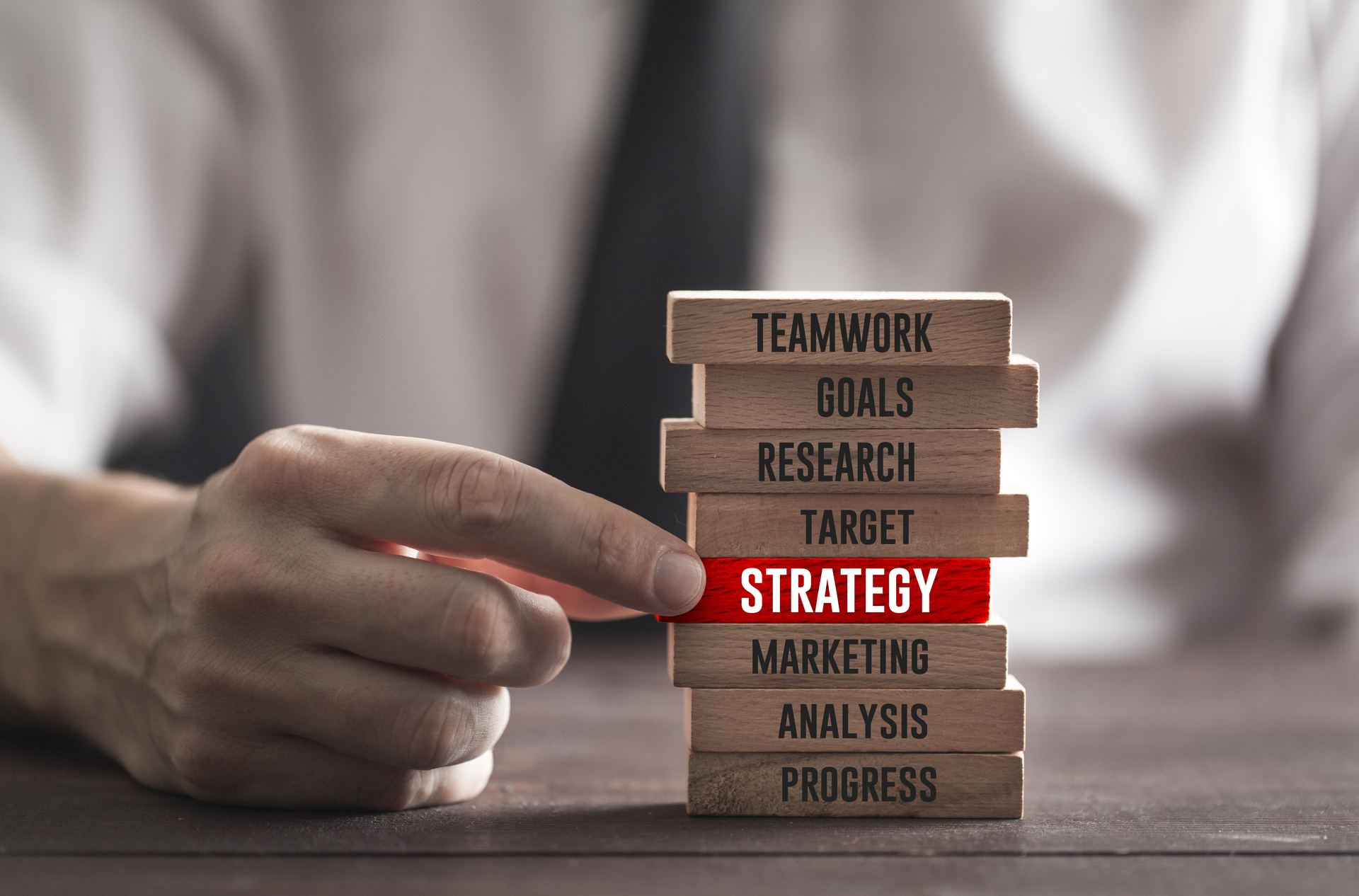
Working hard is important, but real business success comes from thinking strategically. In competitive markets, the most successful organizations decide where to focus, how to create value, and what makes them different.

Strategic thinking helps businesses look past short-term fixes. Rather than reacting to every problem, a strategic business acts with purpose. It knows its goals, understands its target market, and uses resources to support long-term success. This focus helps avoid wasted effort and leads to better results over time.

To compete, a company needs to know its customers and competitors. It should look for market gaps, meet customer needs, and offer something unique, such as lower cost, higher quality, faster service, innovation, or a better experience. Strategy turns these strengths into real advantages. Strategic thinking also helps businesses adapt. As markets, technology, and customer expectations change, companies with a clear strategy are better set to adjust while keeping focused on their main goals.

Simply put, businesses need to think before they act to compete successfully. Strategy gives direction, improves decision-making, and helps organizations build lasting advantages. In a dense market, strategic thinking is not just helpful—it is essential for growth, resilience, and long-term success.

More information is available on the Blog post.

Jim Zitek

I help companies create a competitive advantage in 90 Days.


A competitive advantage isn’t optional. It’s survival.


 Too many companies focus on growth, innovation, and market share without answering the question that matters most:

Why should customers choose you instead of someone else?

If the answer is only price, convenience, or habit, the business is more vulnerable than it appears.

A real competitive advantage is not just being good. It has something customers value that competitors cannot easily copy. That could be lower structural costs, a stronger brand, superior customer experience, deep expertise, switching costs, proprietary data, or a product that gets better as more people use it.

Without that kind of edge, companies fall into a reactive cycle. They discount to win business, increase marketing spend to replace lost customers, and copy competitors to stay relevant. That may drive short-term results, but it rarely creates long-term strength.

When markets tighten, the lack of a true advantage becomes obvious. Margins shrink, loyalty weakens, and growth becomes more expensive.

A competitive advantage changes the economics of a business. It protects margins, improves retention, strengthens pricing power, and creates room to reinvest.

In the long run, businesses without a competitive advantage struggle to lead.

They struggle to last.

Jim Zitek

I help companies create a competitive advantage in 90 Days

For more information, check out the Blog on this subject.

#Strategy #CompetitiveAdvantage #BusinessGrowth #Leadership #Differentiation

Stuck? Try Thinking Sideways


If a problem just won’t move, it might not be because you aren’t trying hard enough or thinking logically. Sometimes, it’s about how you’re looking at the problem. That’s where lateral thinking comes in.

Edward de Bono developed the concept of lateral thinking. It means looking at problems from different angles. Instead of following the usual path, we question assumptions, ask new questions, and look for unexpected solutions.

Logical thinking helps us test and refine ideas, while lateral thinking helps us generate new ones. We need both approaches.

For example, if a company wants to make customers happier, the usual answer might be to speed up service or better train staff. But with lateral thinking, you might ask whether the real issue is the steps customers take before they even reach you. This new angle can lead to better solutions.

Two Techniques

Two common lateral thinking techniques are reversal and provocation. Reversal means turning an assumption on its head to find new options. Provocation gets you thinking differently by adding a strange or unexpected idea.

Not every idea from lateral thinking will work in real life. Some just aren’t practical. Still, the method is important because it helps us get past the usual answers.

If logical thinking isn’t working, try looking at the problem from a different angle to find new ideas.

Want Better Ideas? Start with Vertical Thinking.

People often think of creativity as sudden inspiration or flashes of imagination. However, many great ideas come from a more structured method called vertical thinking.

Vertical thinking uses a logical, step-by-step process to develop ideas. It helps you examine a concept closely and refine it through careful analysis and clear reasoning. Rather than jumping from one idea to another, you work steadily toward a solution by breaking the problem into smaller parts and improving each one.

This method makes vertical thinking an important creative tool. Not every new idea is valuable just because it is different. For an idea to be truly valuable, it should be useful, clear, and realistic. Vertical thinking helps turn vague or interesting thoughts into real solutions.

Here are two simple examples of how vertical thinking works.

One example is the “5 Whys.” By asking “why?” several times, you look beyond the surface problem and find its root cause. This kind of deep questioning helps you create solutions that address the real issue, not just the symptoms.

Another helpful technique is SCAMPER. It guides you to ask if you can substitute, combine, adapt, modify, use differently, eliminate, or reverse parts of an idea. This gives you a clear way to improve an existing idea or develop a better one.

Vertical thinking is important because it gives creativity a clear direction. By turning concepts into practical, well-developed solutions, your ideas can go beyond mere inspiration. Effective ideas begin with clear thinking and careful development.

See the blog for more information.

Jim Zitek

I help ccmanies create a competitive advantage in 90 days.

Results Start With Ideas That Are Based On Concepts

Results Start With Ideas That Are Based On Concepts

Ideas that lead to results are almost never random. They come from a true understanding of the market.

Concepts make this understanding possible. They help businesses spot patterns, find opportunities, and focus creativity on what matters most.

Rather than coming up with ideas just for the sake of having them, companies can focus on ideas that address real customer needs and market opportunities.

That’s how you get better results.

Concepts matter because they turn creativity from just brainstorming into something that drives growth, sets you apart, and delivers real results.

If you want to learn more about concepts, read my blog post, Concepts: The Hidden Discipline Behind Creativity. You’ll find practical ways to use concepts in your business.

Jim Zitek

I help companies create a competitive advantage in just 90 days.

Concepts Make Ideas More Actionable

Concepts Make Ideas More Actionable

A good idea only creates value when it can be clearly developed, communicated, and executed. That is where concepts matter.

Concepts help businesses define what they are really seeing in the market: a customer need, a behavior pattern, a frustration point, or an unmet opportunity.

Instead of jumping from raw observation to random brainstorming, teams can use concepts to give their thinking structure and direction.

This makes ideas more actionable because they are rooted in something specific.

A concept helps clarify who the idea is for, what problem it solves, and why it matters.

That, in turn, makes it easier to shape the offer, align teams, communicate value, and move from insight to execution.

Without concepts, ideas often stay vague. With concepts, they become clearer, more relevant, and more commercially useful.

That is why concepts are so important: they turn creative thinking into ideas a business can actually act on.


Insight: How To See Opportunities Differently

Insight: How To See Opportunities Differently

Every successful company experiences a moment when information turns into understanding. Data, feedback, and observation come together to reveal what customers really need. That moment is called an insight.

Insights change how companies design, build, and deliver their products and services. They replace guesswork with strategy and help turn ordinary products into real solutions.

What Insights Really Are

An insight is more than a fact or statistic. It is a deeper understanding that explains why people act a certain way or why something happens.

Why Insights Matter for Business Growth

  1. Insights reveal what customers value
  2. Insights enable creativity
  3. Insights focus on what really matters.
  4. Insights improve customer experience and loyalty

Turning Data Into Insights

Data is important, but it is not enough on its own.  Data only matters when you understand it in context.

The Competitive Advantage of Insight

Insights drive progress in any business. They turn observations into action, clear up confusion, and help create useful innovations. Companies that learn to find and use insights not only improve their products, but also change how they understand their customers.

Jim Zitek

I help companies create a competitive advantage in 90-days

Stop Fighting Your Competitors

Stop Fighting Your Competitors

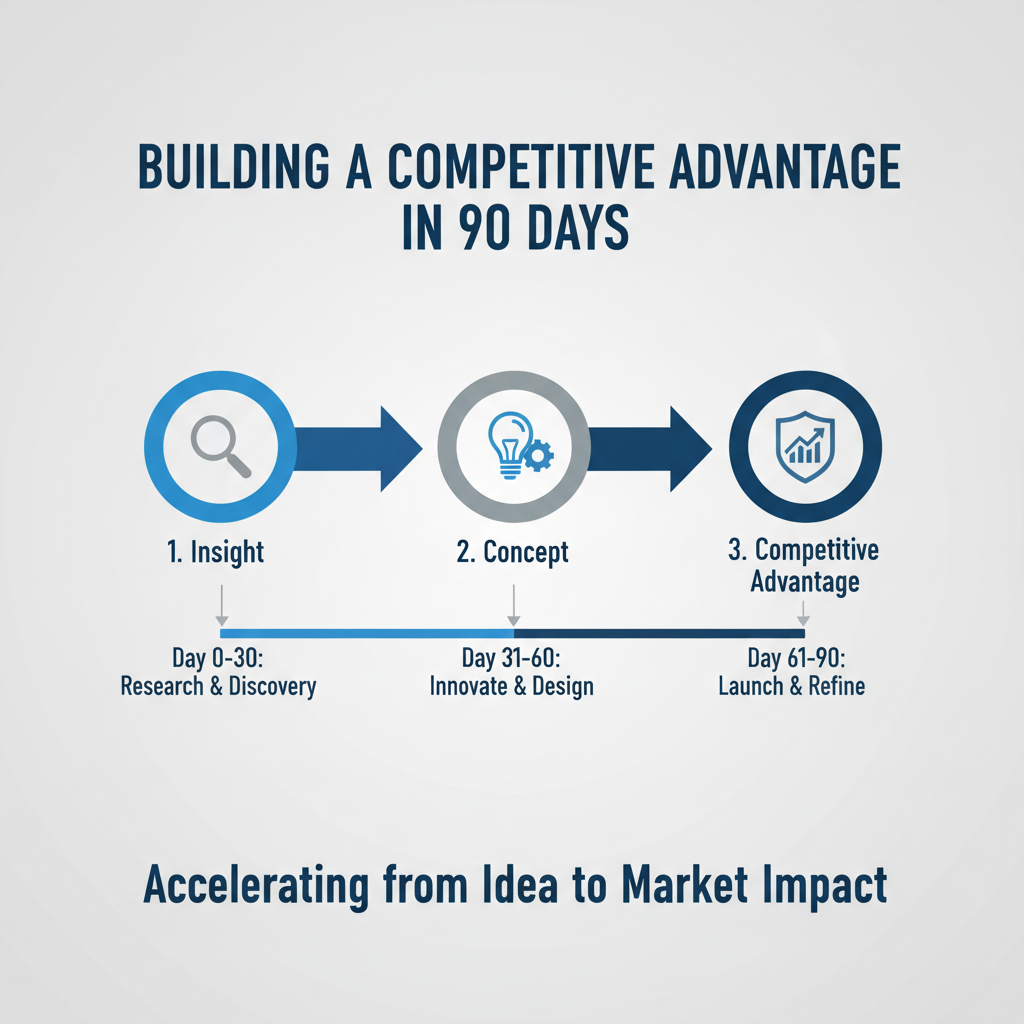
It’s now possible to create a competitive advantage in just 90 days using my Insight-concept-competitive advantage process.

Most companies obsess over competitors—tracking features, matching prices, copying tactics—while margins erode and differentiation disappears. The result is a race to the middle: more effort, less leverage, and no lasting advantage.

There’s a better way. Using the Insight → Concept → Competitive Advantage Model to create a unique growth strategy and competitive advantage. And do it in 90 days.

If your team is working hard but differentiation still feels elusive, this creative program will change how you think about identifying insights, creating product or service growth, and creating a competitive advantage for your customers, not your competitors. 

 If faster growth and a competitive advantage are of interest, check out my website: www.harborcapitalgroupinc.com. and judge for yourself how to create a competitive advantage and stop fighting your competitors.

 Have a great day,

Jim Zitek

I turn sales problems into creative solutions that deliver a competitive advantage in 90 days.

Six Thinking Hats: Creativity Engine, Decision Engine… or Both?

2-minute read

Six Thinking Hats is a framework that helps with both creativity and decision-making by guiding how a group thinks together. Use it to generate, improve, and evaluate ideas step by step, then reach a decision with clear trade-offs and team support. The real strength comes from the order in which you think.

What Six Hats Actually Does

Edward de Bono’s Six Hats breaks thinking into six timed modes: Blue (process), White (facts), Red (feelings), Yellow (benefits), Black (risks), and Green (creativity). Everyone uses the same mode together. Black Hat focuses on critical judgment, while the Blue Hat leader chooses which hat the group wears and sets the order.

This rule protects new ideas early on and ensures evaluation is thoughtful rather than political.

  • For creativity, it holds off criticism so people can focus on generating ideas.
  • For decisions, it helps the group come together and makes trade-offs clear.

In short, Six Hats lets you use other tools like SCAMPER or 5 Whys, and helps keep meetings from turning into style or personality clashes.

When You Aim for Creativity

You can create stronger, more original ideas and avoid groupthink or early criticism by following these steps.

  • White Hat clarifies what you know and what you assume, so brainstorming starts with accurate information. Red Hat lets people share gut reactions early, which helps avoid hidden objections later.n objections.
  • Green Hat encourages creative thinking by focusing on many different ideas. You can use tools like SCAMPER, analogies, random prompts, or provocations here.
  • Yellow Hat turns rough ideas into concrete concepts by highlighting their advantages and potential risks.
  • Black Hat looks for problems and limits.
  • Blue Hat manages the timing and wraps up by asking, “Which concepts move forward and what will we test?”

This approach ensures ideas aren’t dismissed too soon. 

They come out stronger, with clear benefits, known risks, first steps to address them, and someone responsible for testing. Select among proposed options efficiently, transparently, and with genuine buy-in. Six Hats supports this by:

  • White Hat separates facts from opinions and makes the unknowns clear.
  • Yellow and Black Hats together give a balanced view of risks and benefits, rather than people arguing for their own sides.
  • Green Hat isn’t for wide brainstorming here, but for focused tweaks like pilots, packaging, scoping, and making decisions safer to try.
  • Red Hat makes sure people’s gut concerns come up early, so they don’t cause delays later.
  • Blue sums up the Blue Hat wraps up by summarizing the decision, who owns what, how to measure success, and when to check back in. Process compresses evaluation into a single pass, producing a clear, owned decision rather than prolonged discussion.

Since Six Hats supports both creativity and decision-making, you might ask if it’s better for one than the other.

It’s a combination—by design. Six Hats:

  • Helps you choose better options by making the evaluation balanced and clear.
  • Builds commitment by surfacing feelings, making trade-offs clear, and assigning next steps.

Think of it as a way to guide group thinking. This framework adapts to your meeting goals, whether you need to brainstorm, make decisions, or both, by adjusting how much time you spend on each part.

More information on this topic is available on the blog.

JIm Zitek

I turn complex product problems into creative solutions

with a competitive advantage

Creativity: The CEO’s Secret Weapon in Volatile Markets

When markets are unpredictable, new ideas can help companies grow.

Many CEOs see volatility as a risk. Higher interest rates, uncertain demand, slower sales, and tighter cash flow make it harder to do more with less.

However, the most successful B2B companies are led by people who see volatility as an opportunity.

Volatility is not just chaos. It gives bold companies a chance to move fast while others wait.

Thinking in new ways helps leaders develop strategies their competitors might miss.

Here are three creative ways CEOs can turn uncertainty into opportunity.

1. Create Volatility-Specific Offerings.

During uncertain times, customers value:

  • Predictability
  • Reduced risk
  • Faster ROI
  • Greater reliability
  • Lower operational friction

Creative CEOs shape their products and services to meet these needs.

Examples:

  • Performance guarantees
  • 90-day value delivery commitments
  • Fixed-fee or inflation-protected contracts
  • Proactive monitoring services
  • Outcome-based pricing
  • Bundled service + software + support packages

When customers are worried, they buy differently. To build loyalty, help them feel more secure.

2. Turn Internal Strengths Into Unique Value

Most companies have strengths they haven’t used to make a profit yet:

  • Reliability
  • Speed
  • Technical expertise
  • Service quality
  • Industry knowledge
  • Partnership networks

Thinking in different ways can help turn these strengths into new value. For example:

  • “Zero-downtime guarantee”
  • “Rapid deployment model”
  • “Optimization audit service”
  • “Continuous improvement partnership”
  • “Predictive performance dashboard”

These examples can give your company a unique edge that lasts.

3. Take Action While Competitors Wait

Volatility often makes others pause, but moving quickly while they wait gives you an advantage.

  • Delay decisions
  • Cut back on service
  • Slow innovation
  • Retreat from customer engagement
  • Postpone strategic projects

Now is the time for bold CEOs to take action: offerings

  • Deepen customer relationships
  • Take on more advisory or strategic roles.
  • Improve customer experience
  • Gain wallet share
  • Invest in innovation, because competitors may not be able to keep up. Things change, companies that adapt will succeed, while those that don’t get left behind.

To learn more about using volatility to your advantage, read my full blog post (same title) or visit www.harborcapitalgroupinc.com.

Jim Zitek

I turn complex product problems into successful solutions 

with a competitive advantage