• Innovative Strategies That Create More Profits

Competitive Advantage is Often Caught Between Discussion and Execution

Most leadership teams are surrounded by possibilities: new markets, new offers, partnerships, customer segments, pricing models, product expansions, and positioning shifts. The issue is not a lack of options. The issue is that most options never become a real advantage.

Why?

Because strategy often gets trapped between discussion and execution.

Some companies generate plenty of ideas but never determine which one matters most. Others gather data but fail to turn it into insight. Others see a market shift coming, but cannot align around what to do next. In each case, the company stays busy, but it does not move.

That is the hidden cost of a weak strategy. It creates motion without momentum.

And in today’s market, that cost is increasing. Customer expectations shift faster. Competitors copy faster. Timing windows close faster. The longer a company takes to identify the right move, the more likely it is to lose both speed and position.

This is why strategy cannot remain an abstract exercise. CEOs do not need more planning for its own sake. They need a way to identify the few strategic opportunities that can materially change the company’s position – and move on them before the value fades.

Jim Zitek

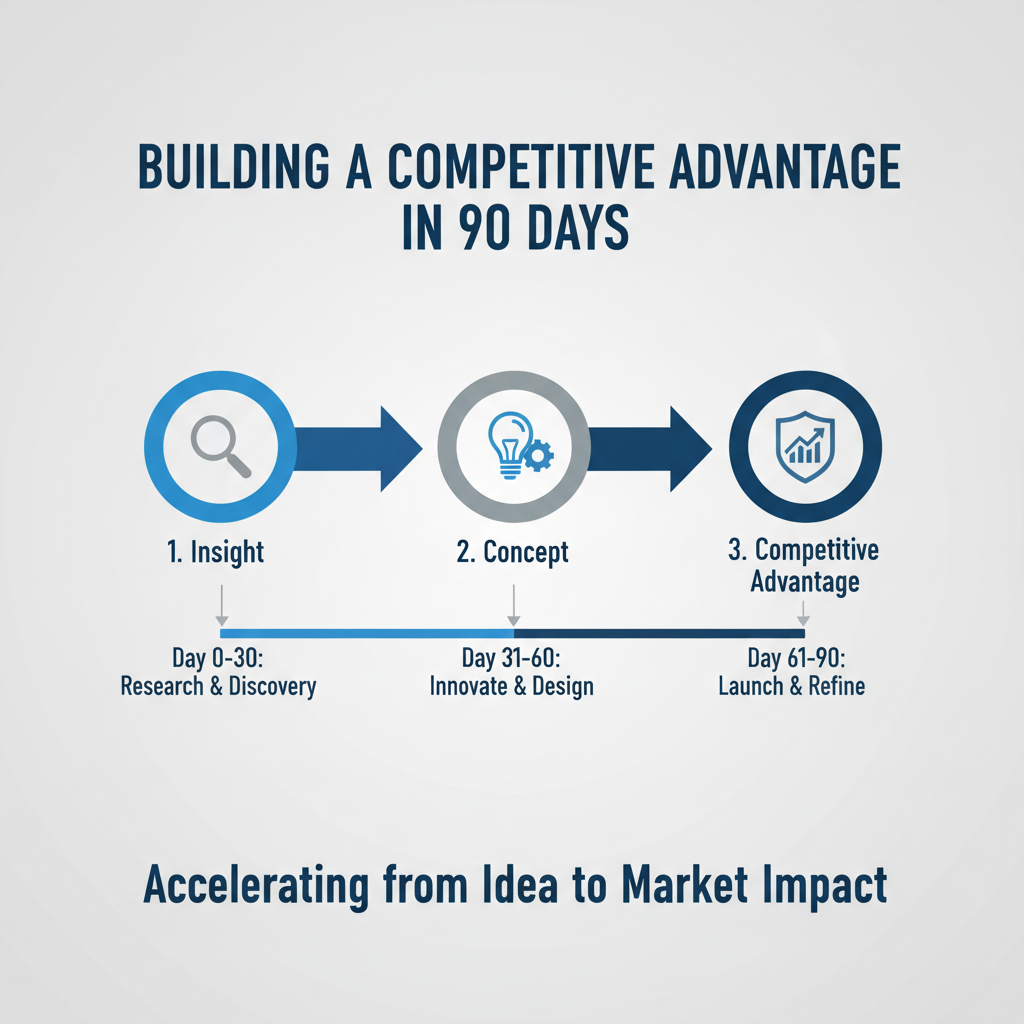
 I help CEOs identify, validate, and execute high-impact strategic opportunities that create a competitive advantage within 90 days.


Why Smart Companies Still Miss Strategic Opportunities


CEOs are not short on ideas. They lack strategic clarity to act with confidence.

Most leadership teams are surrounded by possibilities: new markets, new offers, partnerships, customer segments, pricing models, product expansions, and positioning shifts. 

The issue is not a lack of options. The issue is that most options never become a real advantage. Why? Because strategy often gets trapped between discussion and execution.

Some companies generate plenty of ideas but never determine which one matters most. Others gather data but fail to turn it into insight. Others see a market shift coming, but cannot align around what to do next. In each case, the company stays busy, but it does not move.

That is the hidden cost of a weak strategy. It creates motion without momentum.

And in today’s market, that cost is increasing. Customer expectations shift faster. Competitors copy faster. Timing windows close faster. The longer a company takes to identify the right move, the more likely it is to lose both speed and position.

This is why strategy cannot remain an abstract exercise. CEOs do not need more planning for its own sake. They need a way to identify the few strategic opportunities that can materially change the company’s position – and move on them before the value fades.

The problem is that many leadership teams confuse activity with strategic progress.

  • Meetings are not momentum.
  • Research is not a direction.
  • Brainstorming is not a competitive advantage.
  • Even alignment, by itself, is not enough.

Advantage is created when a business makes a move that changes the terms of competition in its favor.

That might come from a stronger market position, a more compelling value proposition, a validated growth opportunity, or a strategic shift that competitors are too slow to recognize. But none of that happens just because a leadership team is intelligent, hardworking, or highly engaged.

It happens when the right opportunity is seen clearly and acted on decisively.

This is where many CEOs get stuck. They know something important needs to change. Growth is slower than it should be. Differentiation is weaker than it needs to be. The market is moving, but the next strategic move is still unclear.

That is not a problem of effort. It is a problem of clarity. And clarity is what makes execution possible.

The companies that win are rarely the ones doing the most. They are the ones making the best strategic move at the right time, with enough confidence to act.

That is why the real job of strategy is not to generate more possibilities. It is to identify the opportunity that matters most.


If you would like more information, give me a call: Jim Zitek at 612-978-7222 or email me at jzitek@harborcapitalgroupinc.com

I help CEOs identify, validate, and execute high-impact strategic opportunities that create a competitive advantage within 90 days.

The Real Source of Competitive Advantage Is Not Size

Building a competitive advantage from scratch is difficult, but many people misunderstand where it really comes from. It is easy to assume that the strongest businesses win because they have more money, larger teams, better technology, or more established brands. In reality, many businesses begin without those advantages and build them over time.

What often matters more is insight. Too many businesses spend most of their time watching competitors and not enough time understanding customers. Competitor research is useful, but it does not fully explain why people choose one business over another. Customers make decisions based on the results they want, the problems they need solved, the risks they want to avoid, and the option they trust most.

That shift in thinking is important. When you stop asking, “What are competitors doing?” and start asking, “What does the customer really need?” you begin to uncover gaps, frustrations, and missed opportunities.  

More information is available on the Blog Site

Building a competitive advantage from scratch is difficult, but many people misunderstand where it really comes from. It is easy to assume that the strongest businesses win because they have more money, larger teams, better technology, or more established brands. In reality, many businesses begin without those advantages and build them over time.

What often matters more is insight. Too many businesses spend most of their time watching competitors and not enough time understanding customers. Competitor research is useful, but it does not fully explain why people choose one business over another. Customers make decisions based on the results they want, the problems they need solved, the risks they want to avoid, and the option they trust most.

That shift in thinking is important. When you stop asking, “What are competitors doing?” and start asking, “What does the customer really need?” you begin to uncover gaps, frustrations, and missed opportunities.  

More information is available on the Blog Site

How to Create a Competitive Advantage from Scratch


To create a competitive advantage from scratch, remember this: you do not have to be bigger than your competitors, simply smarter. Many successful businesses start without a well-known brand, big budgets, or established systems. They gain momentum by spotting clear opportunities, serving customers better, and building strengths that are hard to copy.

Creating a competitive advantage starts by gaining real insight into what buyers need, want, fear, expect, and value. Many companies start elsewhere. They start by studying their competitors—their products, features, pricing, claims, and market positioning. That research is useful, but not enough. It gives you visibility, but does not fully explain why buyers choose one option over another.

Buyer insights matter more than feature comparison alone.

Competitor research can show you what others are offering, how they package it, price it, and how they present themselves. That is important, but buyers don’t make decisions based on features. They make decisions based on what they are trying to accomplish, what problems they want solved, what risks they want to avoid, what trade-offs they are willing to make, and what option feels most likely to produce the outcome they want.

That’s why research into customer choice is often more useful than research into competitor features alone. So, initiate your research by determining which option is more likely to produce the outcome they want.

Begin by understanding the market 

Find out who your target customers are, what problems they face, and where competitors are failing to meet their needs. Pay attention to what frustrates customers and where service or quality is lacking. Businesses that build real competitive advantage often begin by solving problems others have missed or handled badly.

Next, define a clear value proposition, which is the unique promise your business offers. 

Ask yourself: Why should someone choose your business over others? Pick a value proposition that is simple, important, and focused. For example, you might offer faster delivery, the best prices, personalized service, or a product made for a specific group. If your message is not clear, customers may overlook you.

Then, double down on your core strengths

At the start, resources run thin—chasing too many fronts weakens performance. Instead, pursue excellence in one or two areas customers value most. This focus builds a reputation for consistency and meaning.

Offer a customer experience that your competitors cannot match.

You may not be able to beat larger companies on price or size, but you can stand out by being more responsive, personal, and attentive. Build strong relationships with customers to earn their trust, loyalty, and word-of-mouth support.

Innovation is also important. 

Establishing a competitive advantage from scratch often means finding new ways to do things, not just copying others. Innovation is not always about new technology. It can be a better process, a simpler service, an easier delivery method, or a clearer brand message. Even small changes that solve real customer problems can differentiate you.

Brand building is a crucial factor in its own right. 

A competitive advantage is not only about what a business does but also about how people perceive it. A clear brand identity, uniform messaging, and a professional customer experience help build recognition and trust. Over time, this strengthens the company’s market status.

To stay ahead, keep evolving. Markets and competitors change, so you need to change too.

 Fixed approaches do not last. Pay attention to your customers, watch for new trends, and keep improving your offer without losing sight of your main value.

To summarize.

 Establishing a competitive advantage from scratch takes focus, planning, and a strong understanding of what customers need. Start by identifying a market gap, choosing a clear value proposition, building key strengths, and consistently delivering value. 

Competitive advantage does not happen overnight, but with the right decisions and steady effort, any business can earn a strong position and grow.

Think Strategically, Compete Successfully .

Working hard is important, but real business success comes from thinking strategically. In competitive markets, the most successful organizations decide where to focus, how to create value, and what makes them different.

Strategic thinking helps businesses look past short-term fixes. Rather than reacting to every problem, a strategic business acts with purpose. It knows its goals, understands its target market, and uses resources to support long-term success. This focus helps avoid wasted effort and leads to better results over time.

To compete, a company needs to know its customers and competitors. It should look for market gaps, meet customer needs, and offer something unique, such as lower cost, higher quality, faster service, innovation, or a better experience. Strategy turns these strengths into real advantages. Strategic thinking also helps businesses adapt. As markets, technology, and customer expectations change, companies with a clear strategy are better set to adjust while keeping focused on their main goals.

Simply put, businesses need to think before they act to compete successfully. Strategy gives direction, improves decision-making, and helps organizations build lasting advantages. In a dense market, strategic thinking is not just helpful—it is essential for growth, resilience, and long-term success.

More information is available on the Blog post.

Jim Zitek

I help companies create a competitive advantage in 90 Days.


The Importance of Strategy in Creating a Competitive Advantage

In business, working hard is important, but it is rarely enough to guarantee success.

Strategy is not simply a plan for growth. It is a clear choice about how your business will stand out, where to focus your best resources, and how to offer value that others cannot easily copy. That is why strategy is so important for building and keeping a competitive advantage.

A company has a competitive advantage when it offers more value than its competitors or runs more efficiently. This advantage can come from lower costs, stronger branding, excellent service, innovation, specialized skills, or unique resources. These strengths are usually the result of smart strategic choices made over time, not luck.

Strategy is essential for guiding your business toward success.

Strategy is the foundation of strong, progressive leadership. For example, Southwest Airlines focused on keeping costs low and turning planes around quickly, which helped it compete with bigger airlines.

Businesses have limited resources and must navigate changing customer needs, new technology, and intense competition. Without a clear strategy, decisions can become scattered and reactive. Teams might try to do too much at once, spread themselves too thin, or copy competitors rather than leverage their own strengths. A strong strategy helps a company focus on what matters most and align every action with enduring objectives, enabling lasting success.

Strategy also helps a business decide where it fits in the market.

Not every company should compete in the same way. Some try to offer the lowest prices with good quality. Others stand out by providing unique products, special experiences, or expert knowledge. Some focus on a small market and serve it better than larger competitors. By choosing a clear way to compete, a company prevents being just average and instead becomes truly excellent at something.

The choices you make in your strategy decide if your resources help your business succeed or just get by. For example, Google spends heavily on research and development, which helps it remain at the forefront of innovation.

A company builds a competitive advantage by putting its money, time, talent, and technology into the areas that matter most. Strategy helps guide these decisions. For example, a company focused on innovation might spend more on research and development. If customer loyalty is its strength, it might invest in service, branding, and customer experience. This way, strategy helps avoid wasting resources on activities that do not improve the company.

A strategy keeps your business steady when the market is uncertain or changing.

Strategy is what helps your brand stay consistent and stand out. For example, Starbucks ensures customers have a similar experience everywhere through aligning its operations with its brand strategy.

A business earns trust and brand recognition when customers know what to expect. Consistency happens when operations, marketing, leadership, and culture all follow the same strategy. When everything supports the same goal, the company becomes stronger and increasingly united. Over time, this is hard for competitors to copy, especially when it is built into the company’s systems and culture.

Strategy also helps companies handle change. For example, Microsoft shifted to cloud computing to keep up with new technology, showing how a flexible strategy can be.

Markets are always changing. Customers’ preferences shift, new technologies appear, and global situations change. Without a strategy, a company might panic or chase every new trend. With a strong strategy, a company can adapt while being true to what matters most. A good strategy means knowing what should stay the same and what can change.

To create a lasting advantage, make bold strategic choices that make your company stand out and are hard for others to copy.  

Competitors can copy products, prices, and marketing. But it is much harder to copy a strong strategy—a unique mix of skills, processes, relationships, reputation, and culture. Strategy helps businesses build this kind of advantage. Instead of relying on just one strength, it creates activities that support one another and lead to long-term success.

Great leaders see strategy as vital for long-term success, not simply an option.

For example, Tesla’s clear focus on electric vehicles and innovation has brought its team together and set the brand apart.

Good leaders use strategy to set priorities, inspire employees, and guide decisions throughout the company. When employees understand the purpose of their work, they are more likely to make meaningful contributions. Strategy is far more than a business tool—it also brings people together and supports strong leadership and performance.

Real-world examples show just how powerful strategy can be.

Companies like Apple, Toyota, and Amazon became leaders by having clear strategies. Apple focused on design, integration, and being a premium brand. Toyota stood out for efficiency and quality. Amazon focused on size, convenience, and putting customers first for the long term. They all succeeded not just by making good products, but by following strategies that shaped their biggest decisions.

Conclusion

Strategy turns drive into a real advantage. It helps businesses decide where to compete, how to win, and how to use their resources. Most importantly, it builds strengths that matter to customers and are hard for competitors to match.

 In business, strategy is not optional—it is the foundation of lasting success. To achieve long-term results, companies need to make strategy central, execute it consistently, and review it regularly as circumstances change. By sticking to a clear strategy, organizations can stay relevant and keep a strong competitive edge.