
• Innovative Strategies That Create More Profits

Rising Costs and Shrinking Margins: The Ongoing Challenge for B2B Companies

Many B2B companies face a significant challenge: the widening gap between delivery costs and what customers are willing to pay, rather than a lack of sales.

This gap is known as margin compression.

The Federal Reserve’s July 2026 Beige Book reports rising non-labor input costs in manufacturing, construction, and services, driven by higher energy, transportation, raw material, and tariff costs. Many businesses note that selling prices are increasing more slowly than costs, putting pressure on margins.

Margin Compression Affects B2B Sectors Differently.

Industrial manufacturers face steep increases in metals and energy prices. Technology firms contend with higher costs for specialized components and cloud infrastructure. The logistics sector faces rising fuel, equipment, and insurance expenses. These pressures make profitability harder to maintain and underscore the need for industry-specific strategies.

This situation forces executives to make difficult choices.

They must choose between absorbing higher costs, which reduces profits, or raising prices and risking customer loss.

Neither option offers a sustainable long-term solution.

What Is Causing This Problem?

Margin compression rarely results from a single expense.

Companies often experience simultaneous cost increases in areas such as raw materials, energy, transportation, insurance, software, wages, financing, tariffs, and supplier prices.

The Federal Reserve’s Cleveland District recently noted strong increases in non-labor input costs. Fuel prices are affecting transportation and petroleum-based products, and these costs are also impacting metals and construction materials. Electricity, insurance, software, and food costs are rising as well.

This can trigger a chain reaction.

As costs rise, prices increase, customers resist, margins shrink, investment declines, and growth becomes more challenging. This environment presents both challenges and opportunities.

The Downsides: Margin Compression Can Become a Strategic Issue

The most immediate impact is on profitability.

For example, consider a manufacturer with $50 million in annual revenue and a 30% gross margin. This results in $15 million in gross profit.

If rising costs lower the margin to 27%, gross profit drops to $13.5 million, even if revenue stays the same.

In this case, the company loses $1.5 million in gross profit without any decrease in sales.

Margin compression is not limited to manufacturing. A business services firm, such as a professional consulting company with $40 million in annual revenue and an initial gross margin of 25%, would start with $10 million in gross profit. If increased labor and technology costs reduce the margin to 21%, this firm’s gross profit drops to $8.4 million. Even without losing any clients, the firm now has $1.6 million less to invest in talent, innovation, or growth. Distribution companies face similar situations, as rising shipping and warehouse costs can quickly erode profits even when top-line sales remain steady. 

 However, The Impact Extends Beyond Lost Profit.

Lower margins often reduce available funds for R&D, marketing, sales development, technology, equipment, hiring, and acquisitions.

This can push management into a defensive cycle.

  • Cut spending.
  • Delay investments.
  • Reduce hiring.
  • Demand more productivity.
  • Postpone innovation.

These steps may protect cash flow in the short term, but overuse can weaken the company’s competitiveness.

At that point, a short-term cost issue can become a long-term competitive problem.

Customers Have a Problem Too

Companies are not alone in facing higher costs. Their customers often feel the same pressure.

Customers are reviewing budgets, questioning price increases, delaying purchases, consolidating suppliers, and demanding greater justification before spending.

The July Beige Book notes increased price sensitivity among customers in several Federal Reserve districts. This shift is changing the nature of sales conversations.

A customer who once asked,

  • “What does it cost?” may increasingly ask:
  • “Why is it worth that much?”

This question is much more challenging for commodity suppliers than for companies with a clear competitive advantage.

Are There Any Upsides?

Yes, and this is where rising costs can present strategic opportunities.

Margin pressure compels management to address inefficiencies that were previously overlooked. Companies begin to ask:

  • Where are we wasting money?
  • Which products actually make money?
  • Which customers are profitable?
  • Which processes can be automated?
  • Which suppliers should be replaced?
  • Which features aren’t valued by customers?
  • Where can AI improve productivity?
  • Which products should we stop selling?

And perhaps most importantly: Where do customers receive enough unique value that we can charge more?

As a result, margin pressure can drive operational improvements.

Companies that focus solely on cost-cutting may survive margin pressure.

However, companies that use this pressure to rethink value creation and capture may emerge stronger.

How Long Will Margin Pressure Continue?

Executives should not base their strategies on the expectation that costs will return to previous levels soon.

The Federal Reserve reported in July that inflation is still above its long-term 2% goal, with recent supply shocks pushing up prices in areas like energy.

Significant uncertainty remains about future prices. Some Federal Reserve districts expect inflation to persist, while others anticipate a slowdown, particularly if fuel prices decline.

It’s  unlikely there will be a clear point when executives can declare, “The cost problem is over.”

Some pressures may ease within months, while others—such as wages, insurance, technology, supply-chain changes, and imported inputs—could remain elevated for longer.

A better approach is to anticipate ongoing cost volatility over the next 12 to 24 months and focus on building a resilient company.

While the duration is uncertain, management can control how much the company is affected.

What Actions Can Companies Take?

There are three main ways to respond.

Level 1: Reduce costs.

Eliminate waste, renegotiate with suppliers, automate processes, improve purchasing, rationalize SKUs, and increase productivity.

Is this necessary? Yes. Is it enough? Probably not.

Competitors can also cut costs.

Level 2: Manage pricing better.

Segment customers, understand willingness to pay, eliminate unnecessary discounting, redesign packages, introduce premium offerings, and tie pricing more directly to customer value.

This approach can protect margins more effectively than broad price increases. However, a stronger response exists.

Level 3: Create greater customer value.

Instead of continually asking: “How can we reduce our costs?”

Ask: “How can we become worth more to our customers?

This represents a fundamentally different strategic question.

For example, a company that saves its customers significant money and reduces downtime can eliminate costly processes, increase productivity, or significantly reduce risk, and has a much stronger case for premium pricing than a supplier offering undifferentiated products.

This is where competitive advantage meets pricing power.

Cost-Cutting Has Limits, But Value Creation Does Not.

A company cannot achieve unlimited profitability through cost-cutting alone. Eventually, further reductions will harm the business.

However, companies can continually seek new ways to create value for customers. Therefore, the long-term solution to margin compression should not be:

Lower our costs. Instead, it should be: Lower unnecessary costs while increasing the value customers receive.

This combination transforms the business’s economics.

  • Greater customer value can support stronger differentiation.
  • Stronger differentiation can support higher prices.
  • Higher prices can create better margins.
  • Better margins provide capital for innovation.
  • Innovation can create an even stronger competitive advantage.

A downward spiral can become an upward one: greater value leads to stronger differentiation, increased pricing power, higher margins, more investment, and a stronger competitive advantage.

The Key Question For CEOs

Rising costs may eventually ease. Energy prices may fall, supply chains could stabilize, interest rates and tariffs may change, and inflation could decline.

However, another cost shock will occur sooner or later. This is why the real strategic question is not:

“How do we survive today’s rising costs?” It’s:“How do we build a business with enough competitive advantage and pricing power that rising costs don’t continually determine our profitability?”

Companies that answer this question are not just addressing margin challenges; they are building a stronger business.
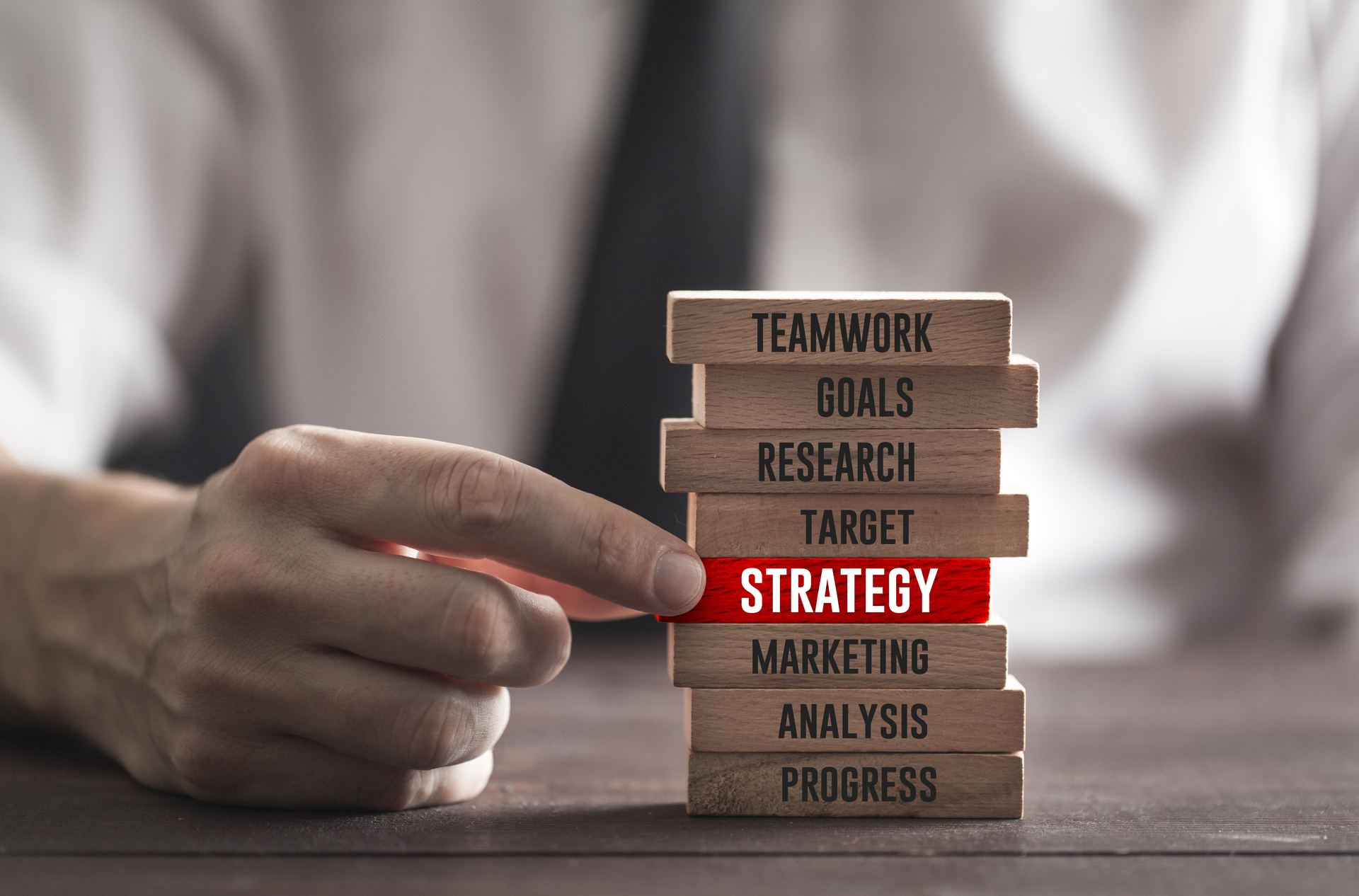

Why a Company Needs a Competitive Advantage Strategy to Deliver More Profits

Today’s marketplace is crowded, and businesses work hard to get noticed, increase revenue, and keep customers coming back. Building a strong competitive advantage is essential for companies that want to stay profitable. Here’s why it matters:

  1. Differentiation Leads to Pricing Power
  2. When your product or service stands out through better features, great customer experiences, or a unique brand story, customers are more likely to pay extra. This higher value leads to better profit margins.
  3. Customer Loyalty Reduces Acquisition Costs
  4. A strong competitive advantage helps you keep customers longer. Happy customers tend to spend more and share good experiences with others. This loyalty means you don’t have to spend as much on finding new customers, which lowers marketing costs and increases profits.
  5. Cost Leadership Creates Operational Efficiency
  6. Pursuing cost leadership, a classic competitive advantage strategy, encourages companies to improve processes, streamline supply chains, and cut waste. By working more efficiently, businesses lower expenses and make more profit on each sale.
  7. Niche Focus Increases Market Share
  8. Focusing on a specific market segment helps you become the top choice for a group of customers. This approach usually leads to a better fit between your product and the market, allowing you to gain more of that niche and charge higher prices.
  9. Innovation Secures Long-Term Profitability
  10. Innovative companies often have patented technologies or special knowledge that make it harder for competitors to catch up. By protecting what makes your business unique, you keep your lead in the market and can count on steady revenue.
  11. Sustainable Growth Through Strategic Alliances
  12. Forming partnerships or alliances can bring new revenue, help you reach more people, and let you share costs. Working with other businesses that complement yours lets you grow without taking all the risk, which can lead to higher returns.

Conclusion

In the end, having a clear and well-planned competitive advantage helps your business grow profits by making it stronger, more efficient, and more valuable to customers. 

As customer needs and the market change, reviewing and improving your strategy helps you stay profitable and ahead of competitors.

 Jim Zitek

I help CEOs identify, validate, and execute high-value strategic opportunities

that create a competitive advantage within 90 days.


The Benefits of Creating a Market Segmentation Strategy for Competitive Advantage

Many companies say they want to serve “the whole market.” It sounds ambitious and rational: a bigger market should mean more opportunity. But in practice, trying to appeal to everyone can make a company less compelling to the customers who matter most.

A strong market segmentation strategy helps a company identify the specific groups of customers it can serve better than competitors. Instead of spreading resources thinly across a broad audience, the company focuses on the segments where it has the strongest fit, the clearest value proposition, and the best chance of building a durable competitive advantage.

Market segmentation is not simply a marketing exercise. It is a strategic choice about where to compete, how to win, and what not to pursue.

Why segmentation matters for competitive advantage

Market segmentation is the process of dividing a broad market into smaller groups of customers with shared characteristics, needs, behaviors, or buying patterns.

For business-to-business companies, segmentation often includes industry, company size, buyer role, technology environment, regulatory complexity, and use case.   The goal is to understand which customers are most attractive and how the company can serve them in a way competitors cannot easily copy.

 A competitive advantage exists when a company can deliver superior value, operate at a lower cost, or maintain stronger customer loyalty than competitors. Segmentation supports this because it allows the company to make sharper, more coherent choices.

A business that targets everyone usually ends up with generic messaging, broad product features, unfocused sales efforts, and diluted brand positioning. A business that targets a well-defined segment can become highly relevant to that group. That relevance can become a source of advantage.

Benefits of a market segmentation strategy

1. Clearer customer understanding

Segmentation forces a company to understand customers at a deeper level. Rather than making assumptions about a broad audience, the company studies the specific needs, frustrations, priorities, and buying behaviors of each segment.

This improves decision-making across the business. Product teams know which features matter most. Sales teams understand the buyer’s language. Marketing teams can create more relevant campaigns. The company becomes less reliant on guesswork and more focused on evidence.

2. Stronger differentiation

Many companies struggle to explain why they are different. They use broad claims such as “better service,” “easy to use,” “high quality,” or “cost-effective.” These claims may be true, but they are rarely enough to create an advantage because competitors can say the same thing.

Segmentation makes differentiation more specific. Specificity makes the company easier to understand and harder to replace.

3. Better allocation of resources

Every company has limited resources. Segmentation helps determine where those resources should go. This prevents the business from wasting time on low-fit customers who are expensive to acquire, difficult to serve, or unlikely to remain loyal.

In other words, segmentation improves focus. It helps a company stop chasing every possible buyer and start investing in the customers most likely to create long-term value.

4. More effective marketing and sales

When a company understands its target segments, it can create messaging that feels specific and relevant. This usually improves campaign performance, sales conversations, and conversion rates.

A segmented approach allows the company to tailor all the aspects of its offer. A buyer is more likely to pay attention when the message reflects their actual situation. Segmentation helps prospects feel seen and understood.

5. Greater pricing power

Customers are often willing to pay more for a solution that appears purpose-built for their needs. When a company serves a segment especially well, it can reduce direct price comparison.

 A specialized solution can command a premium because it offers better fit, lower risk, faster implementation, or superior outcomes for a particular type of customer. This is one of the most important links between segmentation and profitability. Better fit can lead to higher willingness to pay, stronger margins, and more resilient revenue.

6. Higher customer loyalty and retention

Segmentation can also improve retention. When customers feel that a product or service is designed for their needs, they are less likely to switch.

A focused company may build segment-specific expertise, integrations, workflows, training, and support. Over time, these create switching costs. The customer is not just buying a product; they are relying on a solution that fits how they operate. That fit can increase loyalty and reduce churn.

7. Stronger brand positioning

A company that focuses on a specific segment can become known for serving that market. This can create a powerful brand advantage. Strong positioning makes referrals easier, improves word-of-mouth, and helps the company stand out in crowded markets.

8. Better product development

Segmentation helps product teams make better trade-offs. Without a defined target segment, every feature request can seem equally important. With a clear segment strategy, product decisions become easier. 

This creates product coherence. Instead of building a bloated product for everyone, the company builds a better product for the segment it wants to win.

9. A stronger path to expansion

Segment focus does not mean a company must stay narrow forever. In many cases, it creates a beachhead for future growth. Focus can be a route to scale, not a barrier to it.

A company can win one segment, build credibility, develop repeatable processes, and then expand into adjacent segments. This is often more effective than trying to enter the entire market at once.

Balancing focus and flexibility

The best segmentation strategies combine discipline with adaptability.

Discipline means the company makes clear choices. It knows which customers matter most and avoids being pulled in too many directions.

Adaptability means the company keeps learning. It watches for changes in customer behavior, competitive threats, new use cases, and unexpected demand.

A company should not change its target segment every time a new opportunity appears. But it also should not cling to a segment after evidence shows that another market is more attractive. The goal is focused learning: commit enough to build advantage, but remain alert enough to adjust when the facts change.

Conclusion

Creating a market segmentation strategy is one of the most important ways a company can build competitive advantage. It helps the business understand customers more deeply, differentiate more clearly, allocate resources more effectively, improve marketing and sales performance, increase pricing power, strengthen loyalty, and build a more coherent brand.

The benefits are significant, but segmentation also requires judgment. A company can choose a segment that is too small, create unnecessary complexity, rely on weak data, or become too narrow over time. The strategy must be tested, refined, and connected to real economic value.

Ultimately, segmentation is powerful because it forces a company to answer a fundamental strategic question: Who are we choosing to serve better than anyone else?

Companies that answer that question clearly are more likely to build products customers value, brands customers remember, and advantages competitors struggle to copy.