• Innovative Strategies That Create More Profits

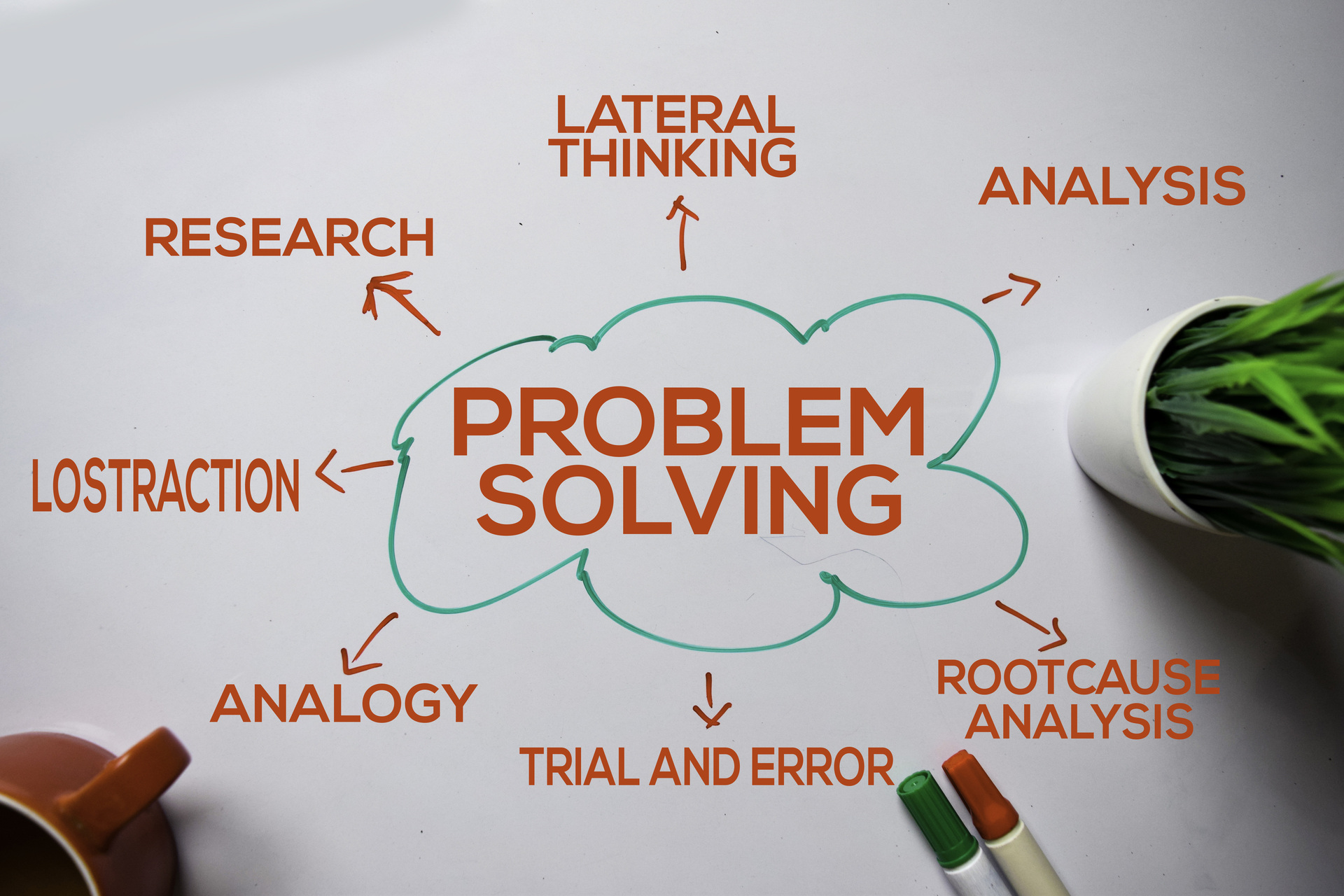
The 5 Whys: Unlocking Hidden Insights for Creative Solutions

 In today’s fast-paced business landscape, surface-level fixes aren’t enough.  It’s tempting to jump to conclusions or patch symptoms. But solving the wrong Problem is worse than ignoring it entirely. 

Root Cause Analysis (RCA) or the 5-Ways technique comes in here. RCA is not just a problem-solving tool. Using curiosity and creativity. It can also help reframe and create valuable, strategic problems that lead to competitive opportunities and advantages.

Think of it this way: The 5-Whys process tells you where to point your creative firepower. Without it, you risk generating brilliant solutions for the wrong Problem.  

The Power of Root Cause Thinking

The 5 Whys works precisely as it sounds: you ask “Why?” five times (or more if necessary) to lead you away from guesswork and toward insight. You stop chasing superficial fixes and begin solving the Problem that causes the Problem. This distinction is critical. 

Example:

  • Initial Problem: “Our team is missing deadlines.”
  • Why? The approval process from management takes too long.
  • Why? The manager is a bottleneck because they must personally sign off on every stage.
  • Why? They don’t feel confident that the team is aligned with the project’s strategic goals.
  • Why? The project kickoff meetings are rushed and don’t clearly define the strategic intent and key metrics for success.
  • Root Cause/New Problem: “We need a way to ensure our project teams have absolute clarity and strategic alignment from the beginning of a project.”

While most people use the 5 Whys to solve problems, strategic thinkers can flip it to create valuable issues — the kind that, once solved, generate innovation or competitive advantage.

Use 5 Whys when you need to:

  • Fix recurring or vague problems (e.g., “sales are down” or “employee turnover is high”).
  • Prevent jumping to assumptions or blaming symptoms.
  • Explore upstream issues in strategic planning, not just operational fixes.
  • Generate better problems for creativity or innovation workshops.

Conclusion:

The 5 Whys technique is deceptively simple but powerful. Repeatedly asking “Why?” forces you to slow down and think deeply. It can resolve chronic issues and reveal the more profound strategic questions your company needs to ask if it wants to grow, evolve, or innovate.

 Visit my website or QuickInsights for more information on transforming revenue challenges into predictable revenues and profits and creating a competitive advantage. You can also email me with any questions or comments, positive or negative. I also enjoy learning and sharing.


Cheers,  Jim Zitek

I Solve B2B Revenue and Profit Problems

With Unique, Validated Creative Solutions.

How Creative Thinking Transforms Challenges into Market Opportunities

In today’s rapidly shifting landscape—driven by AI, automation, and economic uncertainty—creativity and innovation are no longer optional for B2B companies.

Creativity and innovation matter now more than ever. Markets are shifting faster than business models.

How Creativity and Innovation Drive Growth in B2B.

1. Creating Competitive Differentiation: In a world where everyone uses the same technologies, creativity is what makes your offer unique.

2. Reinventing the Customer Experience: B2B customers don’t want more complexity—they want more innovative, more intuitive solutions.

3. Solving Problems Customers Didn’t Know They Had: Creative Thinking reveals unmet or emerging needs (e.g., post-sale analytics, risk-reduction strategies, predictive servicing).

4. Accelerating Internal Efficiency: Innovation isn’t just outward—it’s also about running leaner, faster, and smarter.

The Risk of Not Innovating.

1. Commoditization: If you’re not different, you’re replaceable.

2. Margin erosion: Without a unique value, price becomes the only differentiator.

3. Talent drain: The best employees want to work in companies that are forward-thinking and creative.

4. Customer churn: Buyers want solutions that evolve with their needs.

5. Margin erosion: Without a unique value, price becomes the only differentiator.

6. Customer churn: Buyers are drawn to solutions that evolve with their needs.

Vertical and Lateral Thinking: The Creative Key To Tomorrow’s Success.

Creativity today isn’t just about marketing slogans; it’s about solving complex problems in original, valuable ways. Innovation is how companies escape stagnation. Discover new growth and future-proof their business.

Vertical Thinking and Lateral Thinking are two distinct yet complementary approaches to problem-solving and idea generation. They are often used together because their combined use leads to more robust and innovative solutions than either used in isolation.

Vertical Thinking is a sequential, analytical, and logical approach to problem-solving. It involves taking an existing idea or problem and exploring it in depth, building upon facts, procedures, and data to arrive at a single, best solution. 

One of the main reasons for using vertical Thinking is to refine and optimize existing solutions when you need to improve an established process, product, or system. 

Lateral Thinking is a creative and indirect approach to problem-solving. It involves exploring multiple possibilities, challenging assumptions, and seeking unconventional connections to generate new and often unexpected ideas, even if they seem illogical at first.  

One of the primary reasons for using lateral Thinking is to generate innovative solutions, particularly when faced with complex or “wicked” problems where traditional methods have failed or are insufficient.

Creativity is the critical ingredient to tomorrow’s success.  

Without vertical Thinking, even the most brilliant ideas might remain impractical fantasies. Without lateral Thinking, you might only incrementally improve what already exists. Together, they form a powerful approach for navigating complex challenges, driving innovation, and achieving sustainable success.

Because creative solutions are so crucial to tomorrow’s success, I will produce a series of QuickInsights on creativity. If we are not connected on LinkedIn, let’s connect so you won’t miss any of these many creative techniques.

Visit my website or QuickInsights for more information on transforming revenue challenges into predictable revenues and profits and creating a competitive advantage. You can also email me with any questions or comments, positive or negative. I also enjoy learning and sharing.

Cheers,  Jim Zitek

I Solve B2B Revenue and Profit Problems

With Unique, Validated Creative Solutions.

Want More Growth? Update Your Ideal Customer Profile.

In the rush to grow, many B2B companies leap straight into lead generation, sales tactics, or product upgrades. But without a strong strategy foundation, these efforts become expensive experiments with unpredictable returns.

To create sustainable, profitable growth, you must first define who you serve, what problem you solve, and why you’re better at it than anyone else.

Here’s how to establish the foundation for your strategy, setting the stage for everything else.

1. If you’re trying to sell to everyone, you’ll end up selling to no one.

Define (or Refine) Your Ideal Customer Profile (ICP). Your Ideal Customer Profile is a strategic filter that helps you focus on the customers who:

Get the most value from what you offer

Stay longer and pay more.

They are easiest to work with

Refer others.

2. Your value proposition isn’t what you do. It’s the outcome your best customers care about — delivered in a way they believe.

Craft or Update Your Core Value Proposition. Most companies focus on features, capabilities, or service quality. But your customers buy results, not tools. A clear, compelling value proposition aligns your message with your customer’s motivation.

A Strong Value Proposition Answers:

  • Who is it for
  • What problem does it solve?
  • Why is it better or different from the alternatives?
  • What result will the customer see?

3. Growth happens when you solve a visible, urgent, and expensive problem.

Identify the Core Problems You Solve. 

  • What is the real cost of the problem we solve?
  • What triggers a company to start searching for a solution?
  • What alternatives do they consider (and why are they not as effective)?

The more urgent, measurable, or risky the problem, the easier it is to justify your value (and your price). You’re not selling; you are solving problems that cost your customers time, money, reputation, or growth.  

  • What is the real cost of the problem we solve?
  • What triggers a company to start searching for a solution?
  • What alternatives do they consider (and why are they not as effective)?

4. If you can’t articulate what makes you different, your customers will default to price.

Being “better,” “faster,” or “more experienced” isn’t enough. You need to claim something your competitors aren’t claiming — or can’t prove. This differentiation might come from:

  • A unique process or methodology
  • Specialized expertise in a niche market
  • A bundled or all-in-one solution that others don’t offer
  • A stronger guarantee, result, or service standard.

Growth is a process. But it starts with clarity delivered in a way that makes you the obvious choice.

Visit my website or QuickInsights for more information on transforming revenue challenges into predictable revenues and profits and creating a competitive advantage. You can also email me with any questions or comments, positive or negative. I also enjoy learning and sharing.

Cheers,  Jim Zitek

I Solve B2B Revenue and Profit Problems

With Unique, Validated Creative Solutions.


If you were starting this business today, what would you do differently?

 In today’s turbulent economy, where inflation is rising, growth is slow, and competitors are multiplying, we need to be ruthlessly honest about the future. Markets evolve, and customer needs shift. What once worked may now stifle your growth. 

  That’s why there’s one question every company should ask.   

“If we were starting this business from scratch today, what would we do differently?”

This deceptively simple question unlocks hard truths. It reveals which parts of your business are strategic assets — and which are baggage. 

There are many questions you can and should answer. The following suggested questions should get you started.

Positive Questions to Ask

These three questions will get started. What’s working well, and what should be doubled down on or expanded?

  1. What should we keep doing?
  2. What would we build bigger or better?
  3. Where are we uniquely positioned to win?

Negative Questions to Ask

  1. What would we stop offering or doing altogether?
  2. What wouldn’t we build again? 
  3. What beliefs or assumptions are no longer true?

Warning Signs That You Need This Exercise Now

  1. You’ve had flat or declining revenue for three or more quarters. 
  2. Your competitive win rate is dropping  
  3. Your team is busy, but growth feels stagnant. 
  4. Customers are more price-sensitive and less loyal. 
  5. Marketing and sales results are slipping despite increased effort

You Can’t Build Tomorrow’s Company with Yesterday’s Assumptions.

The most dangerous place for a company to be is in the middle — not bad enough to panic, not good enough to grow. These questions force you out of that comfort zone.

Starting today, by asking what you’d do differently, you get a brutally clear picture of what needs to change — and what’s still worth fighting for.

Visit my website or QuickInsights for more information on transforming revenue challenges into predictable revenues and profits and creating a competitive advantage. You can also email me with any questions or comments, positive or negative. I also enjoy learning and sharing.


Cheers,  Jim Zitek

I Solve B2B Revenue and Profit Problems

With Unique, Validated Creative Solutions.

  Don’t Just Sell—Solve: Why Differentiation Unlocks Bigger Profits

 In today’s crowded B2B markets, many companies find themselves competing on price, chasing leads that don’t convert, and struggling to stand out. What is the problem behind these challenges? A lack of differentiation.

When you look and sound like every other competitor, customers see you as just another option, driving prices down and profits with them. 

A Common Problem: Very Little Differentiation 

  • Markets are crowded with similar solutions, so competition is primarily on price.
  • Companies often don’t deeply understand their ideal customers’ real problems,
  • Without this understanding, differentiation efforts become superficial or based on internal assumptions.
  • A fear of focus differentiation requires narrowing one’s focus.
  • If you differentiate only by adding features, competitors will likely catch up.

But when you differentiate, you unlock the ability to charge premium prices, attract higher-value clients, and build lasting customer relationships that fuel predictable growth.

One Important Solution: Creative Differentiation

  • Finding new ways to solve customer problems requires both vertical and lateral thinking, as well as fresh perspectives.
  • True differentiation often stems from unexpected ideas—a different business model, a novel pricing strategy, or a unique combination of services.
  • Creative techniques, such as lateral thinking or vertical thinking, help uncover hidden needs or untapped markets.
  • Creative differentiation is about standing for something unique that resonates with your audience.
  • Creative storytelling and messaging also make your differentiation memorable and meaningful. 

Without creativity, you risk incremental changes that often fail to stand out and may be easily duplicated by competitors.

With creativity, you can build bold, category-defining differentiation that drives higher revenues and profits.

Visit my website or QuickInsights for more information on transforming revenue challenges into predictable revenues and profits and creating a competitive advantage. You can also email me with any questions or comments, positive or negative. I also enjoy learning and sharing.

Cheers,  Jim Zitek

Turn B2B Revenue Problems Into Predictable Revenues and Profits.

Inflation Is Coming for Your Profits—Here’s How to Fight Back  (and Win).

 As global inflation rises over the next two years and pricing pressures mount, many B2B companies find themselves at a crossroads: either cut costs and risk eroding value or adapt and find new ways to thrive. 

The reality is that inflation isn’t just a challenge—it’s an opportunity for creative companies to sharpen their strategies, strengthen customer relationships, and unlock new revenue streams.

The following are a few ways not just to survive but to prosper. 

Shift from Price to Value: Rather than joining the race to the bottom, focus on differentiating your unique value:

Deepen Customer Relationships: Strengthen partnerships through personalized support.

Find Operational Efficiencies: Automate repetitive processes to reduce overhead and eliminate low-margin services that drain resources.

Think Creatively and Innovate: Introduce low-cost, high-margin offerings like digital products, micro-consulting, or templates, and explore new market segments where your expertise can shine.

The companies that thrive in an inflationary cycle aren’t the biggest or the cheapest—they’re the ones that adapt the fastest.

Focusing on value over price, deepening customer ties, and building smarter, more agile operations enables you to handle the storm and emerge stronger, more profitable, and better positioned for the future.

Visit my website or my QuickInsights for more information on turning revenue problems into predictable revenues and profits and creating a competitive advantage. You can also email me with any questions or comments, positive or negative. I also like to learn and share.


Cheers,  Jim Zitek

Turn B2B Revenue Problems Into Predictable Revenues and Profits.

#CEO #President #Founder #Director #CFO

You Can’t Analyze Your Way to Growth — You Also Have to Imagine It


When revenues or profits slow, most B2B companies instinctively turn to familiar tactics: cutting costs, increasing outreach, or optimizing sales funnels. These are sensible steps, but they rely heavily on vertical thinking, which is logical, structured, and based on existing knowledge.

What’s often missing is lateral thinking — the ability to look at the problem sideways, challenge assumptions, and explore surprising alternatives. 

For B2B companies facing complex, systemic revenue problems, combining both approaches isn’t just helpful — it’s essential.

Vertical Thinking: Know What’s Wrong

Vertical thinking excels at diagnosing issues such as falling close rates, Customer churn, Inefficient sales processes, and Product-market misalignment. 

Vertical thinking helps you dig deeper, analyze data, and ask, “Where is the leakage happening?” It doesn’t ask, “What’s broken?”—it asks, “What could we do differently?”

Lateral Thinking: See What’s Possible. 

Lateral thinking introduces creative possibilities like new pricing models (e.g., value-based or usage-based), repositioning the product for a new niche, Bundling or unbundling services in unexpected ways, and developing entirely new offerings using existing assets.

Lateral thinking doesn’t ask, “What’s broken?” — it asks, What could we do differently?Lateral thinking introduces creative possibilities like New pricing models (e.g., value-based or usage-based), repositioning the product for a new niche, Bundling or unbundling services in unexpected ways, and developing entirely new offerings using existing assets

Break Your Revenue Plateau with Two Powerful Thinking Tools

Vertical helps you go deep and precise, and Lateral enables you to see wide and different. 

Together, they allow B2B leaders to understand the real causes of slowing revenues and generate fresh solutions that competitors haven’t considered.

Visit my website or my QuickInsights for more information on creating a competitive advantage, or email me with any questions or comments, positive or negative. I also like to learn.

Cheers,  Jim Zitek

Turn B2B Revenue Problems Into Predictable Revenues and Profits.


Don’t Let An Uncertain Economy Impact Your Revenues.

 Declining revenues can result from various sources, such as unstable economic conditions, competitive pressures, and internal operational challenges. Many economists suggest that we will see significant economic changes in the next two to three years.

Understanding the root causes of these economic changes is crucial. It enables you to create effective strategies and products that overcome these problems. The following are some of the potential problems.

Market Saturation: If markets become saturated, companies struggle to grow their customer base, leading to stagnant or declining sales.

Economic Downturns: Recessions or downturns can reduce business and consumer spending, affecting SMEs’ revenues.

Increased Competition: New entrants or more aggressive strategies by existing competitors can reduce market share.

Technological Disruption: Failing to keep up with technological changes can make an SME’s offerings obsolete or less desirable than more innovative solutions.

Changes in Consumer Preferences: Failure to adapt to changing consumer trends and preferences will result in lost revenues.   

Revenue Strategies to Address Market Challenges

Cost Reduction: One way to cut costs without reducing quality is to negotiate better terms with suppliers, reduce overhead, or streamline operations.

Market Expansion: To create new revenue streams, you could explore new markets or different demographics. This could involve geographic expansion, targeting new customer segments, or diversifying product lines.

Enhance Customer Value: To help retain existing customers and attract new ones, you could change or improve the product or service, add new features, or enhance customer service.

Adopt New Technologies: You could integrate new technologies to improve efficiency and modernize product offerings, making them more competitive and appealing to customers.

Change Pricing Strategies: To stimulate sales, you could adjust pricing strategies to align with market demand and consumer willingness to pay.

Increase Marketing Efforts: You could also invest more in marketing and sales strategies to increase visibility and attract new customers and re-engage old ones.

Transforming Challenges into Revenue Opportunities

By implementing new strategies and creative ideas, you can address specific challenges, increase revenues, and gain a competitive advantage that sets you apart from your competitors.

This more effective strategy and competitive advantage require research, an insightful diagnosis, the proper creative techniques, and a validated idea. 

Equally important is that the entire management team agrees that the concept or solution should be implemented. The management team’s agreement can make everyone feel united and collaborative and reduce implementation problems.

Let’s talk if you want help with revenue-increasing ideas and building a competitive advantage. Call me at 612-978-7222 or email me at jzitek@harborcapitalgroupinc.com


 Cheers, Jim Zitek

Think Differently: Stop Being Competitive and Own Your Market. 

HarborCapitalGroupinc.com   OR jzitek@harborcapitalgroupinc.com

Is a Competitive Advantage a Risk Mitigation Strategy?

 Yes. Investing in companies with a competitive advantage is often seen as a risk mitigation strategy. Here’s why.  

Stability and Predictability: A competitive advantage generally offers a more stable and predictable financial performance. It also increases a company’s ability to maintain customer loyalty, command premium pricing, and effectively manage market challenges. 
Market Leadership: Companies with a competitive advantage are frequently market leaders. A leadership position affords them greater control over pricing, product offerings, and the pace of innovation.

 Long-Term Performance: Companies with a sustainable competitive advantages deliver long-term value, which is a top priority for long-term investors who seek investments that provide compounding growth and profitability. Both are critical for long-term investment success.

Less Vulnerability to Economic Downturns: Companies with a competitive advantage generally perform better during economic downturns because of their strong brand loyalty, superior products, or cost advantages. Their resilience makes them attractive as defensive investments.

Higher Profit Margins: Competitive advantages often generate higher profit margins which helps protect them during economic downturns or unexpected business challenges, and reducing investment risk.

Conclusion: A competitive advantage does not eliminate investment risk but can significantly reduce it by providing stability, growth potential, and resilience. 


Cheers, Jim Zitek


Think Differently: Stop Being Competitive and Own Your Market. 

Create Distinctive Competitive Advantages That Attract More Buyers. 

HarborCapitalGroupinc.com   OR jzitek@harborcapitalgroupinc.com


Why Do So Many “Great’ New Product Ideas Fail?

Estimates are that about 80% of new companies fail. There are many reasons for this, but one of the big ones is inadequate research and false facts.

Research often starts by asking family and friends about the idea. Since they don’t want to be negative, they generally say it is a good idea. Since they are not your target audience, you have only false facts.

You may contact several people you think have the problem you solve. You tell them you have a great solution to their problem and ask their opinion.

You get many different answers, from “No, we don’t have that problem” to “Yeah, it sounds like a reasonable solution.” He is not committing to anything so that he can be more positive.

You got your answer: Yes, they have the problem. Bingo! Since you don’t have a solution to sell now, you have more positive facts.

However, the problem is that you didn’t ask how they solve the problem now or how much it costs to solve it—critical questions. They may live with the problem, or the cost to solve it is minor.

Don’t tell them your great solution because they may think you are just there to sell them something. You are there to find out if they have the problem, and if so, how they solve it—and at what cost.

They may even give you some ideas on how to solve the problem. Or tell you about a different problem they need to solve.

If your research is successful, you can create or adapt your solution to one that solves their problem at the same or less cost. Now that you’ve solved the problem and have the actual facts, you need to be successful.

Visit my website or my QuickInsights for more information on creating a competitive advantage, or email me with any questions or comments—positive or negative. I would also like to learn more.

Cheers, Jim Zitek
Create Distinctive Competitive Advantages That Attract Buyers.