• Innovative Strategies That Create More Profits

How Broadening Perception Boosts Creativity and Decision-Making


How Broadening Perception Boosts Creativity and Decision-Making

Discover how expanding your view reveals hidden opportunities, sharper insights, and breakthrough solutions.

2-minute read


When you change how you see the world, you change the possibilities available to you. 

Creativity is often viewed as the cornerstone of innovation and problem-solving. Yet, what fuels creativity? While several factors contribute, perception is one of the most significant yet overlooked. 

 Perception is the process we use to interpret and understand our sensory experiences. It is not just a passive reception of inputs but an active process of constructing reality based on sensory information, experiences, and context. Our backgrounds, cultures, beliefs, and past experiences influence how we perceive things.

Expanding Our Perceptions

Creativity thrives on the ability to see beyond the conventional and ordinary. Perception plays a crucial role here. A creative individual often perceives the world differently—finding connections where others see none, identifying patterns that others overlook, and visualizing possibilities that are not immediately apparent. This unique perspective often leads to groundbreaking ideas and innovations.

Creativity Involves Breaking Free From Established Patterns of Thinking.

Our cognitive boundaries shape perception. When we perceive things in a new light, we break away from conventional thought processes, allowing novel ideas to emerge. For instance, when Apple designed the first iPhone, it wasn’t just about perceiving a phone as a communication device but as an integral part of daily life—a hub for entertainment, business, and connectivity.

 In summary, perception acts as a lens through which the future is imagined and anticipated. It shapes expectations, influences the assessment of risks and opportunities, guides goal setting, and colors our predictions about societal and global trends. 

How important is perception in decision-making?

Perception influences how we interpret information, situations, and the behavior of others. It shapes our understanding of the context in which decisions are made. It is essential for initial assessments and understanding a situation’s nuances. However, relying solely on perception can lead to biases.

Experience provides a historical framework and practical knowledge, offering insights based on what has worked or not worked in the past. It is invaluable for making quick decisions in familiar contexts. However, over-reliance on experience can lead to resistance to new ideas or approaches.

Critical thinking involves analyzing information, questioning assumptions, and evaluating evidence logically. It is crucial for ensuring well-reasoned decisions that are not based on flawed logic or misinformation. It also helps identify biases and avoid fallacies.

How Can You Change Your Perspective?

Changing one’s perspective is a valuable skill and a significant personal challenge. It involves deliberately shifting how you view situations, problems, or ideas, and it can lead to more innovative thinking, better problem-solving, and improved empathy and understanding in both personal and professional contexts. 

Visit my website or QuickInsights for more information on transforming revenue challenges into predictable revenues and profits and creating a competitive advantage. You can also email me with any questions or comments, positive or negative. I also enjoy learning and sharing.


Cheers,  Jim Zitek

I Solve B2B Revenue and Profit Problems

With Unique, Validated Creative Solutions.

Want more information on perception? Check out my blog posts.

A Competitive Advantage: Why Growth-Focused CEOs Think Differently

2-minute read

Create an Advantage That Customers Value—and Competitors Can’t Touch

In today’s crowded B2B markets, where products and services often blur together, one powerful force distinguishes between merely surviving and truly thriving: a genuine competitive advantage.

It’s more than a buzzword. A genuine competitive advantage enables companies to attract better customers, close deals more quickly, earn higher margins, and retain clients.

Yet most companies remain stuck competing on price, features, or availability. The true winners break free from the commodity trap and create an advantage that customers instantly recognize, deeply value, and come to depend on.

Why A Competitive Advantage Matters

Buyers a nal, risk-averse, and under constant pressure to make smart, defensible choices. They are not simply purchasing a product but often selecting a trusted partner. A true competitive advantage alleviates their concerns, builds trust, and provides a powerful reason for them to say yes. 

  • Attracts customers who are willing to pay more for unique value  
  • Wins more deals because the offering stands out Builds loyalty and retention by delivering consistent, unmatched outcome.
  • Sustains higher margins and resists pricing pressur
  • Becomes less vulnerable to economic swings or competitor tactics

How to Build a Competitive Advantage 

Building a competitive advantage takes more than catchy slogans or surface-level branding. It requires a clear strategy, real customer understanding, and strong teamwork. Here’s how leading B2B companies do it:

  • Understand the Customer’s Business Problem. Relevance is the foundation of any advantage. Identify what drives value for the ideal customer.
  • Focus on Ideal, Profitable Customers. Be strategic about who you serve. They define and pursue an Ideal Customer Profile (ICP).
  • Differentiate Through High-Value Capabilities. Competitive advantages emerge from valuable, rare, and hard-to-copy capabilities.
  • Deliver Results, Not Just Products. Customers care about outcomes.
  • Competitive advantages connect the company’s offering directly to measurable business results.

A genuine competitive advantage should be integral to every company’s activity, not just something mentioned in marketing or sales pitches.

Conclusion

Buyers know what they want and expect more from companies. To stand out, businesses need advantages that are obvious, meaningful, and tough for others to copy.

A competitive advantage attracts ideal customers, improves pricing, and builds loyalty.

If you want practical steps to turn revenue challenges into steady growth and build a lasting competitive advantage, visit my website or check out QuickInsights. Questions or feedback? Feel free to email me. I’m always open to a conversation.

Cheers,  Jim Zitek

I help B2B companies create and sustain competitive advantages

that attract and retain profitable customers.

PS. An expanded version of this Quick Insight is available as a blog post.


The Three Strategic Choices Every Company Faces.

The Three Strategic Choices Every Company Faces: Compete, Differentiate, or Build a Competitive Advantage

Every business faces essential decisions, but the most critical is whether to create a real competitive advantage. This choice can mean the difference between getting by and becoming a leader in your field.

Each option requires a different approach and shapes your future. Building a real competitive advantage can achieve lasting growth, profits, and customer loyalty.

Let’s look at each path to help you make this critical decision. We’ll see why many businesses get stuck in the first two and explore practical ways to move forward and build a real competitive advantage.

1. Compete: The Default Path (and the Most Dangerous)

Most companies find themselves here, often without realizing it. Competing means trying to win market share by doing better than others on things like price, product features, delivery speed, or customer service. It’s about keeping up with or beating rivals using common strategies.

You end up offering similar products to the same customers. Any edge you get doesn’t last long, and your success depends on how hard you fight for attention and try to win buyers.

This path leads to:

  • Price pressure in good or bad markets
  • Thinner margins because there is no differentiation.
  • Constant discounting, especially in soft markets or delayed payments
  • Burnout from reacting to every move your competitors make  

2. Differentiate: A Step Forward, But Not Far Enough

Some companies realize they need to stand out. Differentiation means offering a distinct feature, process, or brand identity, helping avoid direct comparisons.

Differentiation enables you to charge more, attract targeted customer segments, and convey a clearer message. It might be a proprietary workflow, a niche, or a bold positioning move.

But often, differentiation is only on the surface and doesn’t last.

If your difference isn’t deeply embedded, hard to copy, and valued, competitors catch up. What’s unique today becomes standard tomorrow.

To move beyond basic differentiation, companies need to build a position that competitors can’t easily match.

3. Build a Competitive Advantage: The Path to Long-Term Success

A competitive advantage is a strategic asset or capability that allows you to:

  • Consistently win the right customers.
  • Command premium pricing.
  • Increase loyalty and reduce churn.
  • Outperform your rivals over time.                                                                                            

It’s more than just a tactic. A true competitive advantage drives profits and long-term growth because it’s based on value that your customers can’t find anywhere else.

Characteristics of a true competitive advantage:

  • Valuable: Customers care deeply about what you provide
  • Rare: Few (or no) competitors offer the same value in the same way.
  • Difficult to imitate: Others can’t easily copy your processes, capabilities, or position.
  • Sustainable: It lasts over time and evolves as the market changes.

Why a Competitive Advantage Is a Necessity—Not a Luxury

In commoditized B2B markets, buyers have countless choices. You become another option if you can’t prove your offering is strategically better.

Here’s what happens when you don’t build a competitive advantage:

  • Sales cycles get longer: Customers don’t see an apparent reason to choose you
  • Margins get thinner: You’re forced to lower prices to stay competitive
  • Customer loyalty weakens: Buyers switch providers with ease
  • Marketing becomes harder: You spend more to get less attention

On the other hand, companies with a strong advantage grow faster, build loyal customers, and don’t have to rely on discounts or defensive moves.

How to Build a Competitive Advantage: A Strategic Roadmap

Building a competitive advantage takes clear choices and a focused strategy. Here are five key steps:

Step 1: Diagnose the Market and Customer Gaps

Find out the real problems your ideal customers face—not just what they say, but what truly affects their business. Ask yourself:

  • What pain points are underserved in this market?
  • What inefficiencies or risks do buyers tolerate?
  • What do customers wish someone would do differently?
  • Use interviews, surveys, and win/loss analysis to get clarity.

Step 2: Define and Focus on Your Ideal Customer

Not all revenue is good. Companies with a real advantage define a clear Ideal Customer Profile (ICP) and build their offerings around it.

This clear focus improves your product, messaging, sales, and delivery. You become known as the best choice for your ideal customer, not just another option.

Step 3: Identify and Strengthen Your Core Capabilities

What do you do better than anyone else? This could be:

  • A proprietary system or technology
  • Unique data or insight
  • A specialized process
  • Customer outcomes you consistently deliver

Focus on the strengths your customers care about, and remove anything that doesn’t support your advantage.

Step 4: Align Your Organization to Deliver the Advantage

To make your competitive advantage real, you need to align your:

  • Determine which of the many strategies you want to use to deliver your competitive advantage,
  • Marketing (to communicate your unique value)
  • Sales (to reinforce differentiation during the buying journey)
  • Product/service delivery (to fulfill your unique promise)
  • Customer success (to ensure outcomes are realized and retained)

Every interaction should show why your business is the clear choice for your ideal customer.

Step 5: Protect and Evolve Your Advantage

Markets change, and competitors adjust. Your advantage needs to keep evolving so you stay ahead.

Regularly revisit:

  • Customer needs and trends
  • Competitive landscape
  • Internal performance metrics

Keep innovating before your advantage fades. Competitive advantage isn’t just a one-time win—it’s a mindset and a system. Competitors may spend years trying to catch up.

Now that we’ve examined the three strategic choices and their meanings, it’s time to determine which path your business is following.

Every business has a choice—conscious or not. You can:

  • Compete by reacting to rivals and chasing buyers with discounts and features
  • Differentiate by standing out in small ways that may or may not have a lasting impact.
  • You can also build a competitive advantage that attracts better customers, increases margins, and positions you as the leader, not the follower.

The decision is yours. In a crowded market, building a competitive advantage is the best way to maintain a strong and resilient business and position it well for the future.


If you have questions or would like to discuss how to apply these strategies to your business, please email me at jzitek@harborcapitalgroupinc.com  or call me at 612-978-7222. I would be happy to help you take the next step.


Outthink the Competition: How SCAMPER Sparks Game-Changing Innovation

2-minute read

What is SCAMPER?

SCAMPER is A checklist-based method that prompts you to transform or reimagine existing ideas, products, or services.

Its goal is to generate fresh concepts by tweaking or re-purposing existing ones systematically.

SCAMPER is an acronym standing for:                             

  • Substitute
  • Combine
  • Adapt
  • Modify (Magnify or Minify
  • Put to another use
  • Eliminate
  • Reverse (or Rearrange)

Each prompt encourages you to challenge and transform an existing idea in a structured yet lateral manner, helping you break habitual patterns of thought.

SCAMPER is widely used when seeking a competitive edge because it’s:

  • Simple & Memorable: makes it easy for teams to grasp and apply.
     
  • Structured Yet Flexible: Each SCAMPER step gives clear prompts, making it versatile for different industries and problem types.
     
  • Low Barrier to Entry: requires no specialized tools—just brainpower and a willingness to explore.
  • Encourages Rapid Iteration: By systematically challenging assumptions at each step, companies can quickly uncover fresh ideas for product improvement, cost-saving, or market differentiation.                                                                                                                                                                                                                                                                                                                        
  • SCAMPER can be thought of as a structured or organized form of brainstorming.

While traditional brainstorming often involves free-flowing ideas with minimal guidance, SCAMPER provides a set of specific prompts (Substitute, Combine, Adapt, Modify, Put to another use, Eliminate, Reverse) that focus the brainstorming process.

SCAMPER excels at idea generation by systematically challenging or transforming an existing product, service, or process. It helps you quickly uncover a range of potential solutions by focusing on structured prompts (Substitute, Combine, Adapt, Modify, Put to another use, Eliminate, Reverse).

SCAMPER has become a go-to technique in many corporate settings because it’s easy to integrate into existing innovation processes (like ideation workshops or continuous improvement initiatives). This user-friendly approach makes it a top choice for organizations looking to create new value and stay ahead of competitors.

 Bottom Line

SCAMPER is typically “better” if your main goal is to generate numerous variations on a theme or upgrade an existing concept.

Visit my website or QuickInsights for more information on transforming revenue challenges into predictable revenues and profits and creating a competitive advantage. You can also email me any questions or comments, positive or negative. I love to learn and share what I’ve learned.  

Cheers,  Jim Zitek

I Solve B2B Revenue and Profit Problems

With Unique, Validated Creative Solutions.


How B2B Leaders Solve Complex Problems With Creative Thinking  

2-minute read

Yes, creativity exists in everyone. While the image of a solitary genius struck by a bolt of inspiration is powerful, the truth is that creativity is not a rare gift bestowed upon a few but an innate human capacity that can be nurtured and developed.

Everyone can be creative, but people often mistake creativity for artistic ability (painting, music, etc.). But, creative techniques isn’t generally taught in schools. As a result, 80 percent of people believe they are not creative. 

 Creativity is a Skill, Not a Trait.

Creativity isn’t something you’re either born with or not. It’s a learnable, improvable skill—like problem-solving, writing, or critical thinking. With practice and the proper creative thinking techniques, anyone can enhance their ability to generate new ideas.

It’s the everyday ingenuity we use to solve problems, adapt to new situations, and express our unique perspectives.

Two Types of Creative Thinking.

Vertical and lateral thinking are two different approaches to problem-solving and creativity. 

Vertical thinking is logical, analytical, and sequential—it builds step by step, using known facts and established patterns to arrive at a solution. It’s efficient when refining or optimizing existing ideas, processes, or strategies.

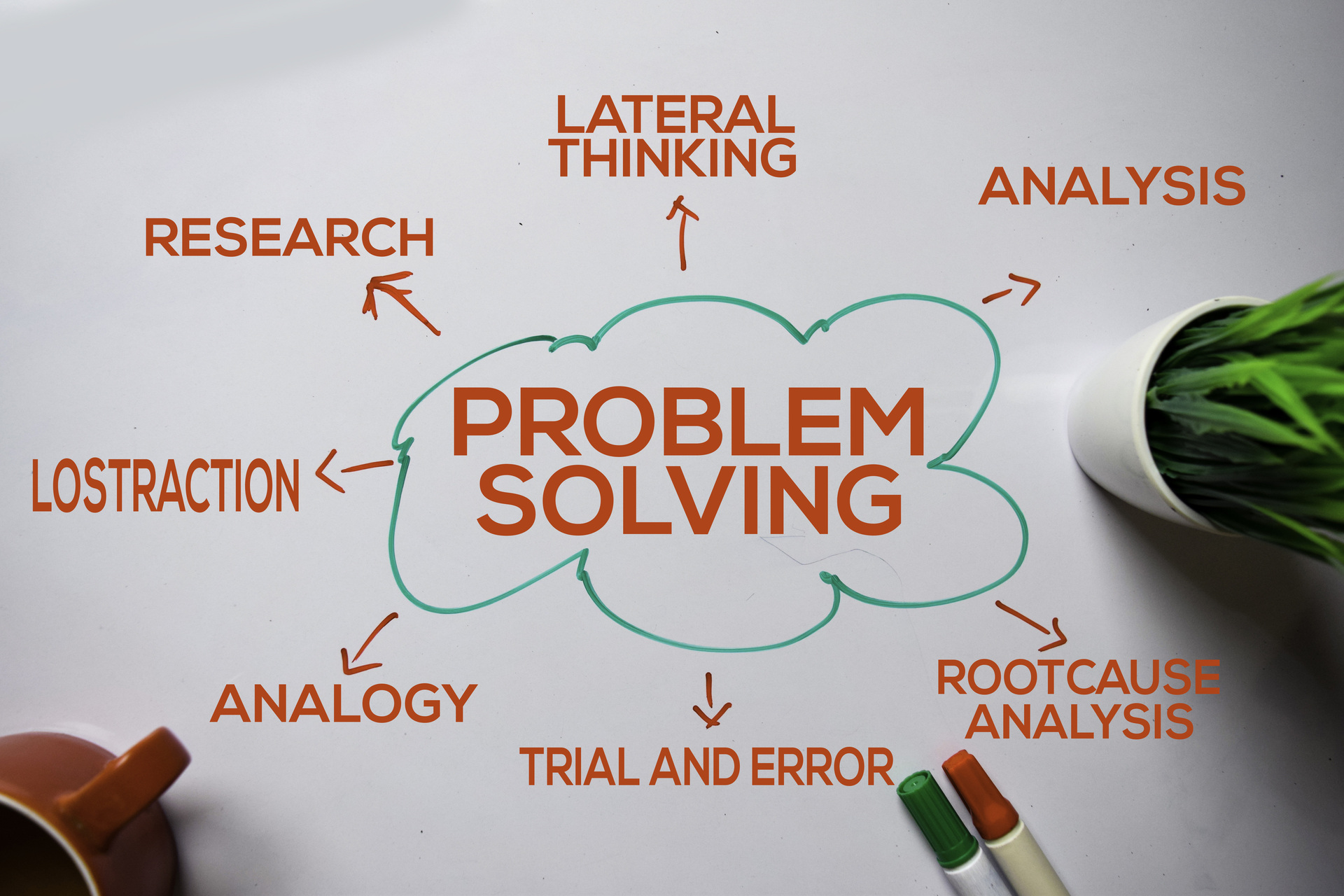
Lateral thinking approaches problems differently, breaking from conventional paths to generate new and unexpected ideas. It involves looking at issues from different angles, challenging assumptions, and using provocations or analogies to spark innovation. It becomes essential when conventional logic fails or innovation and fresh ideas are required. 

 Vertical and lateral creative techniques complement each other: Vertical thinking drives depth, while lateral thinking unlocks breadth. Using both allows individuals and companies to solve problems more creatively and effectively.

Bottom Line:

Everyone is capable of creativity, but like any other ability, it needs to be taught and nurtured. The difference between those who are “creative” and those who aren’t is often just a matter of mindset, practice, and opportunity. When exposed to different creative thinking techniques, most people discover they have more creativity than they realized. 

With 20+ types of creative techniques, would you be interested in a series of Quick Insights that explain many of these different techniques? Please give me a yes if interested.

Visit my website or QuickInsights for more information on transforming revenue challenges into predictable revenues and profits and creating a competitive advantage. You can also email me any questions or comments, positive or negative. I love to learn and share what I’ve learned.  

Cheers,  Jim Zitek

I Solve B2B Revenue and Profit Problems

With Unique, Validated Creative Solutions.


The 5 Whys: Unlocking Hidden Insights for Creative Solutions

 In today’s fast-paced business landscape, surface-level fixes aren’t enough.  It’s tempting to jump to conclusions or patch symptoms. But solving the wrong Problem is worse than ignoring it entirely. 

Root Cause Analysis (RCA) or the 5-Ways technique comes in here. RCA is not just a problem-solving tool. Using curiosity and creativity. It can also help reframe and create valuable, strategic problems that lead to competitive opportunities and advantages.

Think of it this way: The 5-Whys process tells you where to point your creative firepower. Without it, you risk generating brilliant solutions for the wrong Problem.  

The Power of Root Cause Thinking

The 5 Whys works precisely as it sounds: you ask “Why?” five times (or more if necessary) to lead you away from guesswork and toward insight. You stop chasing superficial fixes and begin solving the Problem that causes the Problem. This distinction is critical. 

Example:

  • Initial Problem: “Our team is missing deadlines.”
  • Why? The approval process from management takes too long.
  • Why? The manager is a bottleneck because they must personally sign off on every stage.
  • Why? They don’t feel confident that the team is aligned with the project’s strategic goals.
  • Why? The project kickoff meetings are rushed and don’t clearly define the strategic intent and key metrics for success.
  • Root Cause/New Problem: “We need a way to ensure our project teams have absolute clarity and strategic alignment from the beginning of a project.”

While most people use the 5 Whys to solve problems, strategic thinkers can flip it to create valuable issues — the kind that, once solved, generate innovation or competitive advantage.

Use 5 Whys when you need to:

  • Fix recurring or vague problems (e.g., “sales are down” or “employee turnover is high”).
  • Prevent jumping to assumptions or blaming symptoms.
  • Explore upstream issues in strategic planning, not just operational fixes.
  • Generate better problems for creativity or innovation workshops.

Conclusion:

The 5 Whys technique is deceptively simple but powerful. Repeatedly asking “Why?” forces you to slow down and think deeply. It can resolve chronic issues and reveal the more profound strategic questions your company needs to ask if it wants to grow, evolve, or innovate.

 Visit my website or QuickInsights for more information on transforming revenue challenges into predictable revenues and profits and creating a competitive advantage. You can also email me with any questions or comments, positive or negative. I also enjoy learning and sharing.


Cheers,  Jim Zitek

I Solve B2B Revenue and Profit Problems

With Unique, Validated Creative Solutions.

How Creative Thinking Transforms Challenges into Market Opportunities

In today’s rapidly shifting landscape—driven by AI, automation, and economic uncertainty—creativity and innovation are no longer optional for B2B companies.

Creativity and innovation matter now more than ever. Markets are shifting faster than business models.

How Creativity and Innovation Drive Growth in B2B.

1. Creating Competitive Differentiation: In a world where everyone uses the same technologies, creativity is what makes your offer unique.

2. Reinventing the Customer Experience: B2B customers don’t want more complexity—they want more innovative, more intuitive solutions.

3. Solving Problems Customers Didn’t Know They Had: Creative Thinking reveals unmet or emerging needs (e.g., post-sale analytics, risk-reduction strategies, predictive servicing).

4. Accelerating Internal Efficiency: Innovation isn’t just outward—it’s also about running leaner, faster, and smarter.

The Risk of Not Innovating.

1. Commoditization: If you’re not different, you’re replaceable.

2. Margin erosion: Without a unique value, price becomes the only differentiator.

3. Talent drain: The best employees want to work in companies that are forward-thinking and creative.

4. Customer churn: Buyers want solutions that evolve with their needs.

5. Margin erosion: Without a unique value, price becomes the only differentiator.

6. Customer churn: Buyers are drawn to solutions that evolve with their needs.

Vertical and Lateral Thinking: The Creative Key To Tomorrow’s Success.

Creativity today isn’t just about marketing slogans; it’s about solving complex problems in original, valuable ways. Innovation is how companies escape stagnation. Discover new growth and future-proof their business.

Vertical Thinking and Lateral Thinking are two distinct yet complementary approaches to problem-solving and idea generation. They are often used together because their combined use leads to more robust and innovative solutions than either used in isolation.

Vertical Thinking is a sequential, analytical, and logical approach to problem-solving. It involves taking an existing idea or problem and exploring it in depth, building upon facts, procedures, and data to arrive at a single, best solution. 

One of the main reasons for using vertical Thinking is to refine and optimize existing solutions when you need to improve an established process, product, or system. 

Lateral Thinking is a creative and indirect approach to problem-solving. It involves exploring multiple possibilities, challenging assumptions, and seeking unconventional connections to generate new and often unexpected ideas, even if they seem illogical at first.  

One of the primary reasons for using lateral Thinking is to generate innovative solutions, particularly when faced with complex or “wicked” problems where traditional methods have failed or are insufficient.

Creativity is the critical ingredient to tomorrow’s success.  

Without vertical Thinking, even the most brilliant ideas might remain impractical fantasies. Without lateral Thinking, you might only incrementally improve what already exists. Together, they form a powerful approach for navigating complex challenges, driving innovation, and achieving sustainable success.

Because creative solutions are so crucial to tomorrow’s success, I will produce a series of QuickInsights on creativity. If we are not connected on LinkedIn, let’s connect so you won’t miss any of these many creative techniques.

Visit my website or QuickInsights for more information on transforming revenue challenges into predictable revenues and profits and creating a competitive advantage. You can also email me with any questions or comments, positive or negative. I also enjoy learning and sharing.

Cheers,  Jim Zitek

I Solve B2B Revenue and Profit Problems

With Unique, Validated Creative Solutions.

Want More Growth? Update Your Ideal Customer Profile.

In the rush to grow, many B2B companies leap straight into lead generation, sales tactics, or product upgrades. But without a strong strategy foundation, these efforts become expensive experiments with unpredictable returns.

To create sustainable, profitable growth, you must first define who you serve, what problem you solve, and why you’re better at it than anyone else.

Here’s how to establish the foundation for your strategy, setting the stage for everything else.

1. If you’re trying to sell to everyone, you’ll end up selling to no one.

Define (or Refine) Your Ideal Customer Profile (ICP). Your Ideal Customer Profile is a strategic filter that helps you focus on the customers who:

Get the most value from what you offer

Stay longer and pay more.

They are easiest to work with

Refer others.

2. Your value proposition isn’t what you do. It’s the outcome your best customers care about — delivered in a way they believe.

Craft or Update Your Core Value Proposition. Most companies focus on features, capabilities, or service quality. But your customers buy results, not tools. A clear, compelling value proposition aligns your message with your customer’s motivation.

A Strong Value Proposition Answers:

  • Who is it for
  • What problem does it solve?
  • Why is it better or different from the alternatives?
  • What result will the customer see?

3. Growth happens when you solve a visible, urgent, and expensive problem.

Identify the Core Problems You Solve. 

  • What is the real cost of the problem we solve?
  • What triggers a company to start searching for a solution?
  • What alternatives do they consider (and why are they not as effective)?

The more urgent, measurable, or risky the problem, the easier it is to justify your value (and your price). You’re not selling; you are solving problems that cost your customers time, money, reputation, or growth.  

  • What is the real cost of the problem we solve?
  • What triggers a company to start searching for a solution?
  • What alternatives do they consider (and why are they not as effective)?

4. If you can’t articulate what makes you different, your customers will default to price.

Being “better,” “faster,” or “more experienced” isn’t enough. You need to claim something your competitors aren’t claiming — or can’t prove. This differentiation might come from:

  • A unique process or methodology
  • Specialized expertise in a niche market
  • A bundled or all-in-one solution that others don’t offer
  • A stronger guarantee, result, or service standard.

Growth is a process. But it starts with clarity delivered in a way that makes you the obvious choice.

Visit my website or QuickInsights for more information on transforming revenue challenges into predictable revenues and profits and creating a competitive advantage. You can also email me with any questions or comments, positive or negative. I also enjoy learning and sharing.

Cheers,  Jim Zitek

I Solve B2B Revenue and Profit Problems

With Unique, Validated Creative Solutions.


If you were starting this business today, what would you do differently?

 In today’s turbulent economy, where inflation is rising, growth is slow, and competitors are multiplying, we need to be ruthlessly honest about the future. Markets evolve, and customer needs shift. What once worked may now stifle your growth. 

  That’s why there’s one question every company should ask.   

“If we were starting this business from scratch today, what would we do differently?”

This deceptively simple question unlocks hard truths. It reveals which parts of your business are strategic assets — and which are baggage. 

There are many questions you can and should answer. The following suggested questions should get you started.

Positive Questions to Ask

These three questions will get started. What’s working well, and what should be doubled down on or expanded?

  1. What should we keep doing?
  2. What would we build bigger or better?
  3. Where are we uniquely positioned to win?

Negative Questions to Ask

  1. What would we stop offering or doing altogether?
  2. What wouldn’t we build again? 
  3. What beliefs or assumptions are no longer true?

Warning Signs That You Need This Exercise Now

  1. You’ve had flat or declining revenue for three or more quarters. 
  2. Your competitive win rate is dropping  
  3. Your team is busy, but growth feels stagnant. 
  4. Customers are more price-sensitive and less loyal. 
  5. Marketing and sales results are slipping despite increased effort

You Can’t Build Tomorrow’s Company with Yesterday’s Assumptions.

The most dangerous place for a company to be is in the middle — not bad enough to panic, not good enough to grow. These questions force you out of that comfort zone.

Starting today, by asking what you’d do differently, you get a brutally clear picture of what needs to change — and what’s still worth fighting for.

Visit my website or QuickInsights for more information on transforming revenue challenges into predictable revenues and profits and creating a competitive advantage. You can also email me with any questions or comments, positive or negative. I also enjoy learning and sharing.


Cheers,  Jim Zitek

I Solve B2B Revenue and Profit Problems

With Unique, Validated Creative Solutions.

  Don’t Just Sell—Solve: Why Differentiation Unlocks Bigger Profits

 In today’s crowded B2B markets, many companies find themselves competing on price, chasing leads that don’t convert, and struggling to stand out. What is the problem behind these challenges? A lack of differentiation.

When you look and sound like every other competitor, customers see you as just another option, driving prices down and profits with them. 

A Common Problem: Very Little Differentiation 

  • Markets are crowded with similar solutions, so competition is primarily on price.
  • Companies often don’t deeply understand their ideal customers’ real problems,
  • Without this understanding, differentiation efforts become superficial or based on internal assumptions.
  • A fear of focus differentiation requires narrowing one’s focus.
  • If you differentiate only by adding features, competitors will likely catch up.

But when you differentiate, you unlock the ability to charge premium prices, attract higher-value clients, and build lasting customer relationships that fuel predictable growth.

One Important Solution: Creative Differentiation

  • Finding new ways to solve customer problems requires both vertical and lateral thinking, as well as fresh perspectives.
  • True differentiation often stems from unexpected ideas—a different business model, a novel pricing strategy, or a unique combination of services.
  • Creative techniques, such as lateral thinking or vertical thinking, help uncover hidden needs or untapped markets.
  • Creative differentiation is about standing for something unique that resonates with your audience.
  • Creative storytelling and messaging also make your differentiation memorable and meaningful. 

Without creativity, you risk incremental changes that often fail to stand out and may be easily duplicated by competitors.

With creativity, you can build bold, category-defining differentiation that drives higher revenues and profits.

Visit my website or QuickInsights for more information on transforming revenue challenges into predictable revenues and profits and creating a competitive advantage. You can also email me with any questions or comments, positive or negative. I also enjoy learning and sharing.

Cheers,  Jim Zitek

Turn B2B Revenue Problems Into Predictable Revenues and Profits.