• Innovative Strategies That Create More Profits

How To Turn Ideas Into Concepts

 A concept is the framework of the overall story that you hold in your mind. It is the underlying pattern that gives a thousand individual facts their collective meaning..

Without concepts, our world is just a jumble of disconnected pieces. A concept is the invisible seed from which all innovation grows. It is not the finished product or the detailed plan, but the core idea that allows people to see possibilities where none seemed to exist. For example, they

  1. Clarify direction – They give shape to problems and hint at solutions.
  2. Unify people – A shared concept helps teams and societies align on purpose.
  3. Unlock progress – Every invention, strategy, or creative leap begins as a concept.

A concept is the invisible insight from which all innovation grows. It is not the finished product or the detailed plan, but the core idea that allows people to see possibilities where none seemed to exist. 

It’s a concise description of a big idea that explains the essence of a larger story. It’s important because it clarifies, aligns, and drives everything that follows — strategy, design, execution, and communication.

 Following is a breakdown of what a concept is:

  • A concept is the core idea that captures the essence of something. It captures a complex subject’s essential meaning or the most important aspects into a clear, understandable thought.
  • A concept frames your story. It explains the big idea and tells people to focus on it so they will understand what comes next.

A concept is the definition of a bigger story. The story is broad and layered. The concept allows you to explain the story quickly. Without the concept, the story feels scattered or confusing.

Why a concept is essential:  

  • Clarity: It simplifies complex ideas.
  • Alignment: It gives everyone the same starting point.
  • Direction: It keeps strategies, messages, or innovations consistent. It’s the compass for a project, idea, or strategy.
  • Memory: People remember concepts more easily than long explanations. 
  • Concepts express a big idea in a sentence or two.

A well-written concept can be expressed in one sharp sentence or two.   

Concepts express a big idea in a sentence or two.

A well-written concept can be expressed in one sharp sentence or two.

It should be short, clear, and powerful — almost like a tagline or theme.

The Power of Concepts: From Idea to Innovation

In product development and entrepreneurship, we often get caught up in the details of a specific idea. We focus on a single app, gadget, or service. 

However, the most successful innovators don’t start with an idea; they start with a concept. An idea is a destination; a concept is the map that can lead you to many different destinations.

The First Step: Crafting Your Core Concept

So, how do you create this foundational concept? Start by asking a series of questions about the problem you’re interested in solving.

  1. What is the core pain point? Don’t just list symptoms. What is the deep, underlying issue? 
  2. What is the ideal outcome? If the problem were completely solved, what would that look like? 
  3. What is the core value proposition? What essential value are you offering to the user?  

By synthesizing the answers to these questions, you arrive at your core concept: “To provide effortless pet care solutions for busy owners.”

From One Concept to Many Ideas: The “Idea Tree”

Once you have a solid core concept, you can use it to brainstorm a wide range of products and services. Think of your concept as the trunk of a tree, with each new idea branching off from it

Notice how each idea is a distinct product or service yet perfectly aligned with the core concept. You’re not tied to just one solution; you have a whole ecosystem of possibilities to explore. This approach allows you to build a cohesive brand, adapt to market changes, and even pivot to new ideas without losing your fundamental purpose.

  No Concept, No Clarity

 Here’s a clear comparison chart showing the difference between starting with a concept vs. skipping it when telling a complex story or speech:


Factor With Concept (Positive) Without Concept (Negative)
Clarity The audience instantly knows the essence of the story. Audience asks: “What’s this about?” — confusion sets in.
Framing Details are connected to a central theme. Details feel scattered, and it is hard to tie them together.
Cognitive Load Concept gives a mental “filing system” for new info. The audience is overwhelmed by too many unanchored details.
Engagement Curiosity sparked early — people lean in. Attention drops quickly — people disengage or multitask.
Retention Big idea sticks, and details are remembered through it. The audience forgets or misremembers the point.
Credibility The speaker seems strategic, organized, and prepared. Speaker risks seeming unprepared or tactical.
Impact Audience walks away with a clear, repeatable takeaway. Audience leaves saying: “Interesting… but what was the point?”

Conclusion

A strong concept is the first step to innovation. It offers a clear vision and a framework for generating, testing, and improving ideas. It’s like creating a blueprint for a whole community, not just one house.

Starting with a concept provides your audience with a roadmap, reduces confusion, and ensures your message is more likely to be remembered. Skipping it leads to confusion, disengagement, and a weaker impact.

Chreers  Jim Zitek

My concept: I turn complex product problems into creative solutions with a competitive advantage.


Concepts Turn Complexity Into Clarity

2-minute read

A concept is the framework that gives individual facts meaning and coherence. It is the pattern that shapes the overall story in your mind.

​Without concepts, our world appears as scattered, fragmented pieces. A concept is the key idea that

connects these pieces, opening up new, previously unseen possibilities. For example, they

  1. Clarify direction: Concepts help define problems and point toward solutions.
  2. Unify people: When people share a concept, it brings teams and communities together around a common goal.
  3. Unlock progress: Every new invention, strategy, or creative idea begins with a concept.

A concept is the invisible insight that lets people see possibilities where none seemed to exist.

It serves as the foundation for innovation without being the finished product or detailed plan.

A concept is a concise summary of a big idea. It is essential because it guides everything that follows:

Including strategy, design, execution, and communication.


Following is a breakdown of what a concept is:  

  • A concept is the core idea that captures a complex subject’s essential meaning in a clear, understandable thought.
  • A concept frames your story. It identifies the big idea and directs focus to set up what comes next.
  • A concept defines and simplifies a bigger story, allowing people to grasp the main idea quickly.


Why is a concept essential?

  • Clarity: It simplifies complex ideas.
  • Alignment: It gives everyone the same starting point.
  • Direction: It maintains consistency in projects, ideas, and strategies.
  • Memory: People remember concepts more easily than long explanations.

A concept can express a big idea in a sentence or two. A strong concept should

be concise, clear, and impactful, much like a tagline or theme.


Conclusion

Moving from insights to ideas to concepts is more than just a creative process. It is a strategic

skill that helps build better products, guide business direction, and create a competitive edge.

Cheers, Jim Zitek

My concept: I turn complex product problems into creative solutions with a competitive advantage.

See the blog page for more information on concepts.

How to turn insights into multiple ideas

Research and analysis give you data to solve business problems, but insights lead to those “aha!” moments. They help you understand what’s really happening and why.

Insights are powerful, but they matter most when you put them to use. The next step is to turn those insights into several ideas—different ways to act, try new things, and innovate.

Insights are the starting point for innovation, but they don’t do much on their own. The real value lies in transforming one strong insight into multiple creative ideas.

An insight is not just an observation. It’s a more profound truth about customer behavior, market dynamics, or business performance. For example:

  • Observation: Customers are abandoning the shopping cart.
  • Insight: Customers don’t trust the website’s payment security.

The second statement doesn’t just describe what’s happening; it explains why. This is what sparks new ideas. To do this effectively, you need a clear process to explore the problem and generate numerous possible solutions.

The Core of the Process

Once you have an insight, you can generate different ideas by applying structured creativity. The goal is not to stop at the first idea, but to explore multiple possibilities to address the same core issue.

One of the most effective ways to turn an insight into ideas is to utilize the “How Might We” framework. This method turns your insight into an open question, helping you focus on what’s possible instead of just the problem. Here are some basic steps to help you turn insights into ideas.

1. Reframe the Insight

Ask: What else could this insight mean?

  • Insight: Customers want faster delivery.
  • Ideas: Offer same-day delivery, partner with local stores for pickup, or create a subscription service for guaranteed speed.

2. Use Creative Techniques

Structured creativity techniques help multiply your options: For example:

SCAMPER

A structured checklist to reframe problems and generate fresh solutions:

  • Substitute – Replace one element with another (materials, processes, people).
  • Combine – Merge ideas, products, or processes to create something new.
  • Adapt – Adjust an idea from another field or context to fit your problem.
  • Modify – Change size, shape, or function to add value or uniqueness.
  • Put to another use – Repurpose an existing product or process for a different audience or problem.
  • Eliminate – Remove unnecessary parts to simplify or reduce cost.
  • Reverse – Flip roles, sequence, or perspective to discover unexpected opportunities.

Lateral Thinking

A set of techniques pioneered by Edward de Bono to deliberately escape conventional patterns:

  • Challenge Assumptions – Question “the way it’s always been done” to find hidden alternatives
  • Random Entry – Introduce a random word, object, or idea to spark unexpected connections.
  • Provocation (Po) – State an intentionally absurd or extreme idea to break rigid thinking and generate new concepts.

Brainstorming or Mind Mapping

Unstructured but highly generative methods for idea exploration:

  • Brainstorming – Rapidly generate as many ideas as possible without judgment, building momentum and variety
  • Mind Mapping – Visually branch ideas from a central theme to uncover relationships, clusters, and new directions.

3. Generate Both Incremental and Bold Ideas

Don’t only look for “safe” solutions. Push for at least one radical option alongside practical ones.

  • Insight: Customers often struggle to understand product pricing.
  • Ideas: Simplify packaging, create an interactive calculator, or reinvent the pricing model with a flat subscription.

4. Capture Many Variations

One insight can lead to five, ten, or even twenty ideas. Having numerous options matters because it reduces the risk of selecting a weak idea.

  • It gives you options to test and refine.
  • It often reveals hybrid ideas that combine the best features of both.

5. Evaluate and Cluster Ideas

Once you have a list of ideas, group them by theme, such as quick fixes, customer experience improvements, or new business models. This will help you decide which to test first.

Why This Process Is Valuable

Turning insights into different ideas ensures you don’t lock yourself into one path too early. Instead, you:

  • Maximize creativity and option value.
  • Increase your chance of finding the most effective solution.
  • Build a foundation for concepts that can become competitive advantages.

Conclusion

Insights show you what’s really going on, but ideas give you choices. By examining insights in new ways, employing creative methods, and testing both small and bold ideas, businesses can develop a range of options. Each one could help solve the problem and give you a competitive edge.

The Art of Turning Insights into Ideas

2-minute read

Insights drive innovation, but they only matter if you turn them into creative ideas. The key is to take one strong insight and use it to spark many new possibilities.

An insight is more than an observation. It exposes a deeper truth about customer behavior, market dynamics, or business performance. For example, observation: Customers often abandon their shopping carts.

  • Insight: Customers don’t trust the website’s payment security.

The second statement gets to the reason behind what’s happening, which is where ideation begins. By following a structured approach, you can thoroughly explore the issue and generate numerous possible solutions. Here’s a simple process for turning insights into actionable ideas.

The Core of the Process

Once you have an insight, use structured creativity to generate ideas. Avoid stopping at the first option and explore several ways to address the core issue.

One of the most effective ways to turn an insight into ideas is to utilize the “How Might We” framework. This approach turns your insight into an open question, helping you focus on what’s possible instead of just the problem. Here’s how you can do it.

1. Reframe the Insight

Ask: What else could this insight mean?

  • Insight: Customers want faster delivery.
  • Ideas: Offer same-day delivery, partner with local stores for pickup, or create a subscription service for guaranteed speed.

2. Use Creative Techniques

Structured creativity techniques help multiply your options: For example:

  • SCAMPER: Substitute, Combine, Adapt, Modify, Put to another use, Eliminate, Reverse.
  • Lateral Thinking: Challenge assumptions, random entry, provocation.
  • Brainstorming: Rapidly explore variations.

3. Generate Both Incremental and Bold Ideas

Don’t just settle for safe ideas. Try to come up with at least one bold option, in addition to the practical ones.

  • Insight: Customers often struggle to understand product pricing.
  • Ideas: Simplify packaging, create an interactive calculator, or reinvent the pricing model with a flat subscription.

4. Capture Many Variations

A single insight can lead to five, ten, or even twenty ideas. Having numerous options helps you avoid weak ideas and reduces your risk.

  • It gives you options to test and refine.
  • It often reveals hybrid ideas that combine the best features of both.

5. Evaluate and Cluster Ideas

Once you have your ideas, sort them into groups like quick fixes, customer experience improvements, or new business models. This makes it easier to choose what to test first.

Why This Process Is Valuable

Turning insights into different ideas ensures you don’t lock yourself into one path too early. Instead, you:

  • Maximize creativity and option value.
  • Increase your chance of finding the most effective solution.
  • Build a foundation for concepts that can become competitive advantages.

Conclusion

Insights show you what’s really going on, but ideas give you choices. By looking at insights in new ways, using creative methods, and mixing safe and bold thinking, you can build a set of ideas. Each one could help solve your problem and give your business an edge.


Cheers Jim Zitek

I Turn Complex Product Problems Into Creative Solutions 

With a Competitive Advantage

Note: Additional information on insights can be found in my blog post.

Techniques That Generate Insights

Here are five basic ways you can generate new insights.

Once you’ve found the root cause of a problem, how can you come up with insights that lead to creative ideas?

After you spot a problem, your focus moves from figuring out what’s happening to understanding why it’s happening. Generating insights is about finding hidden truths that show the real motivations, needs, and behaviors of the people involved.

Creative Techniques

1. Breaking Patterns: 

A creative thinking technique used to generate new and innovative ideas by deliberately challenging and disrupting established routines, assumptions, and ways of thinking.

We rely on patterns to make decisions quickly, which can keep us stuck with old solutions. Breaking patterns means stepping out of autopilot. Here are a few ways to try it:

Reverse Assumptions: Instead of asking “How can we solve this problem?”, ask “How can we make this problem worse?” Inverting the problem reveals hidden assumptions and potential pitfalls that can be turned into new solutions. For example, a company seeking to increase sales might ask, “How could we lose customers?” and gain new insights into what drives them away.

Forced Connections: Select two unrelated concepts and explore how they might relate to your problem. For example, when developing a new chair, choose “ocean” and “computer” and brainstorm connections between them. This may lead to ideas like a self-cleaning, water-resistant chair with built-in sensors.

Breaking Patterns Benefits

Breaking patterns helps you think beyond the usual ways. It lets you see problems from new angles, which can spark fresh ideas. This is especially helpful when your team feels stuck.

2. Changing Assumptions  

This method involves spotting and questioning one’s basic beliefs about a problem or product. By challenging these assumptions, like asking ‘why’ several times, one can generate new ideas.

How it Works: This method typically involves a three-step process:

  • List Assumptions: List all your assumptions about a problem, product, or service. These are the things you accept as accurate without question.
  • Challenge the Assumptions: Flip each assumption on its head. Ask, “What if the opposite were true?” or “How could this not be true?”
  • Generate Ideas from the Reversals: Use the challenged assumptions as prompts to brainstorm new ideas. Sometimes, even the most unusual possibilities can lead to practical and innovative solutions.

Changing Assumptions Benefits

The most significant benefit of changing assumptions is that it helps you break old habits. When you question what you’ve always believed, you can spot new perspectives and find solutions you might have missed.

3. Other People’s Views

The ‘Other People’s View’ (OPV) technique helps you develop new ideas by looking at a problem through someone else’s eyes. It shakes up your usual way of thinking by giving you a fresh point of view.

How it works:

  • 1) Identify all the key stakeholders in the problem (such as a customer, a competitor, a CEO, a child, an environmentalist).
  • 2) For each persona, brainstorm ideas from their specific point of view.
  • 3) Compare ideas to find new patterns or opportunities inspired by these diverse perspectives.

OPV helps you discover a broader range of needs and concerns, which leads to more complete and user-focused solutions.

4. Reverse Thinking  

With this method, you brainstorm ways to make a problem worse instead of better. Focusing on the negative can reveal hidden issues and assumptions, sometimes in a fun or surprising way.

How it works:

  • 1) Take your problem statement and rephrase it in reverse (for example, instead of “How can we increase sales?” ask, “How can we decrease sales?”).
  • 2) Brainstorm as many negative or “worst case” ideas as possible.
  • 3) Flip each negative idea into a positive, actionable one.  

Reverse Thinking removes the pressure to only think of ‘good’ ideas, which can help you be more creative. It also enables you to notice and avoid possible problems.le problems.

5. Metaphors & Analogies

This method uses unrelated things as metaphors for your problem. Making these connections gives you new ways to look at the issue and can spark creative ideas.

How it works: 1) State your problem. 2) Ask, “What is this problem like?” and brainstorm several metaphors. 3) Explore the qualities of each metaphor and use these qualities to inspire creative solutions.

For example, if “running a business is like an orchestra,” you can explore ideas about the different instruments (departments), the conductor (CEO), and how they need to work in harmony to produce a beautiful sound (success).

Metaphors and analogies help you make unexpected connections. This way, you can take solutions from one area and use them in another. Conclusion

Concusion

Using both vertical and lateral creative techniques is key to finding new solutions. Mixing these approaches keeps you from getting stuck in one way of thinking.

Breadth helps you avoid repeating old answers; depth ensures your ideas work well. When you combine both, you get creative and practical solutions.

It’s essential to try different creative techniques. Each gives you a new perspective, lowers risk, and helps you find better insights for solutions that matter.

Cheers Jim Zitek

I Turn Complex Product Problems Into Creative Solutions

With a Competitive Advantage

The Creative Insight Machine.

2-minute read

This step-by-step guide will help you generate insightful ideas. The methods below provide practical approaches to transition from understanding a problem to identifying its root causes and driving innovation.

After identifying a problem, the next step is to understand its underlying cause. This is where insights come in. Insights reveal what motivates people and what they need. To turn a problem into an actionable insight, try these creative techniques:

1. Breaking Patterns is a creative thinking method from Edward de Bono. It helps you generate new ideas by challenging your usual assumptions. Examining a problem from a different angle can lead to innovative and unexpected solutions.

2. Changing Assumptions means questioning the basic beliefs you have about a problem or product. Try reversing or changing these beliefs to break free from old habits and generate fresh, innovative ideas.

3. Other People’s Views, another method from Edward de Bono, asks you to imagine how others see the problem and possible solutions. By putting yourself in their place, you can understand their motivations and concerns, which helps you find new needs and ideas.

4. Reverse Thinking encourages you to brainstorm ways to make the problem worse. For example, instead of asking how to increase sales, ask how to decrease them. List all the bad ideas you can, then turn them around into positive solutions. This can spark new ideas and boost your team’s creativity.

5. Metaphors & Analogies. With this approach, you use something unrelated as a metaphor for your problem. Say what your problem is, then ask, “What is this problem like?” and explore the qualities of the metaphor you choose. This helps your mind form new connections and allows you to borrow solutions from other areas. It can lead to original and breakthrough ideas.

Conclusion

Finding new insights helps you break out of old habits. Examining a problem from a new perspective can lead to innovative solutions. This is especially useful when your team feels stuck and needs a fresh perspective.

Cheers Jim Zitek

I Turn Complex Product Problems Into Creative Solutions With a Competitive Advantage

Note: Additional information on insights can be found in my blog post.

How To Discover the Problem Behind the Problem  


In the fast-paced business world, problems are an inevitable part of life. Whether declining sales, customer churn, production errors, or project delays, the immediate instinct is often to jump to a solution.

A quick fix hides the symptoms, so the real problem often returns. To truly solve issues, you need to find the root cause. This requires careful research and a step-by-step method called root cause analysis.

Root cause determination goes past surface symptoms to discover why a problem happened.

The Problem with Symptom-Solving

A quick fix for a customer complaint might satisfy one person. However, if the complaint stems from a flawed product design, countless other customers will experience the same frustration.

Root cause determination provides the details needed to look beyond the obvious and find the real causes of a problem.

Root cause analysis helps you build lasting solutions, reduce risks, and use resources better. Instead of constantly reacting to problems, you can solve them in a more organized way. Without this approach, the same issue might return even worse.

Root cause analysis ensures that your solutions last, are lower risk, and use resources wisely. It transforms constant problem-fixing into a more systematic way of solving issues.

Determining the Root Cause of the Problem: and Fault Isolation Matter

In business, technical, and organizational settings, problems usually don’t show up alone. They often point to deeper issues. If you only fix what you see, it’s like treating a cough without finding out what’s causing it. Leaders must dig deeper by researching carefully, finding the exact fault, and using root cause analysis. This leads to lasting solutions and saves time, effort, and money.

Beyond The Symptoms

Phase 1: Research – Setting the Stage and Understanding the Landscape

Before you tackle any issue, start with research. This means gathering information, understanding the bigger picture, and spotting patterns that might not be obvious initially.

Data collection and analysis are the foundation of research. The goal is to spot trends, unusual patterns, and places where performance isn’t meeting expectations.

Contextual Understanding: Is the problem isolated or part of a larger trend?

  • Stakeholder Input: Engaging with employees, customers, partners, and other relevant parties provides invaluable perspectives.
  • Benchmarking: How does your performance compare to industry best practices or competitors?

Once you have a clear problem statement, you can dig deeper in the next phase.

  • Market research can show if a product’s decline is due to changing customer preferences, new competitors, or bigger economic changes. Understanding the outside market and your own company helps you define the problem correctly.
  • Stakeholder Input: Engaging with employees, customers, partners, and others provides invaluable perspectives. Those closest to the product or process often have unique insights into failure points.
  • Benchmarking: How does your performance compare to industry best practices or competitors? This can highlight areas where your processes or products are underperforming.

The research phase helps you turn a vague problem like “sales are down” into a clear, actionable insight, such as “sales for Product X dropped by 15% in Q3 among new customers after a competitor launched.” A well-defined problem statement is key for finding the real cause.e 2: Fault Isolation & Root Cause Analysis – Pinpointing the Core Issue

Once you have built a solid research base, the next step is to focus on fault isolation and root cause analysis. These terms are often confused. Fault isolation refers to pinpointing a specific faulty part within a system, while root cause analysis is a broader method for finding the deepest reasons for any problem.

Use your research to define the problem clearly. Figure out what went wrong, when, where, and how much. A clear definition makes it easier to understand the issue.

Fault isolation is the process of identifying and pinpointing the exact cause and location of a problem within a system. This technique is a crucial part of troubleshooting and is applied in various fields, including computer networks and software, as well as mechanical and electrical engineering.

The main goal is to narrow the failure down to a specific part or area. This cuts downtime and lets you fix the problem quickly and directly, instead of just treating the symptoms.

  • Brainstorming Potential Causes: Based on the gathered research, assemble a cross-functional team to brainstorm all possible contributing factors. Techniques like Fishbone Diagrams (also known as Ishikawa Diagrams) are excellent for this purpose. They categorize potential causes into categories such as People, Process, Equipment, Materials, Environment, and Management.
  • The “5 Whys” Technique: This simple yet powerful tool involves repeatedly asking “Why?” each time an answer is provided. Doing so allows you to drill down from a superficial problem to its ultimate root.
    • Problem: Our website conversion rate has dropped.
    • Why? Users are abandoning their carts.
    • Why? The checkout process is slow.
    • Why? Our payment gateway integration is inefficient.
    • Why? We chose a low-cost, unoptimized third-party provider.
    • Why? The procurement team prioritized cost over performance without consulting the team.
  • Failure Mode and Effects Analysis: This proactive technique is commonly employed in design and process engineering to identify potential failure modes in a system, assess their severity, and determine their causes and effects before they occur. It can also be applied retrospectively for diagnosis.
  • Testing and verification: After you find possible root causes, you need to test and confirm them. This could mean A/B testing, running simulations, checking code, inspecting equipment, or doing controlled experiments. The goal is to ensure that fixing the root cause solves the problem.
  • Focus on process, not people (at first): Human error can play a role, but root cause analysis often shows that mistakes come from bad processes, poor training, or a lack of tools. It’s better to improve the system than to blame individuals.

Why does this two-prong approach make a difference?

You need both research and diagnosis. Research provides a broad perspective and helps you identify symptoms. Diagnosis, through fault isolation or root cause analysis, digs deeper to find the exact cause that can be fixed.

If you skip thorough research, your diagnosis might only fix a minor issue while missing a bigger problem. If you don’t diagnose carefully, research might show you where the problem is but not the exact spot to fix.

Using this two-step approach, organizations can move past quick fixes. They can create targeted, practical solutions that solve current problems, strengthen processes, improve products, and prevent similar issues from happening again. This builds real resilience and ongoing improvement.

Cheers Jim Zitek
I turn complex product problems into creative solutions with a competitive advantage.
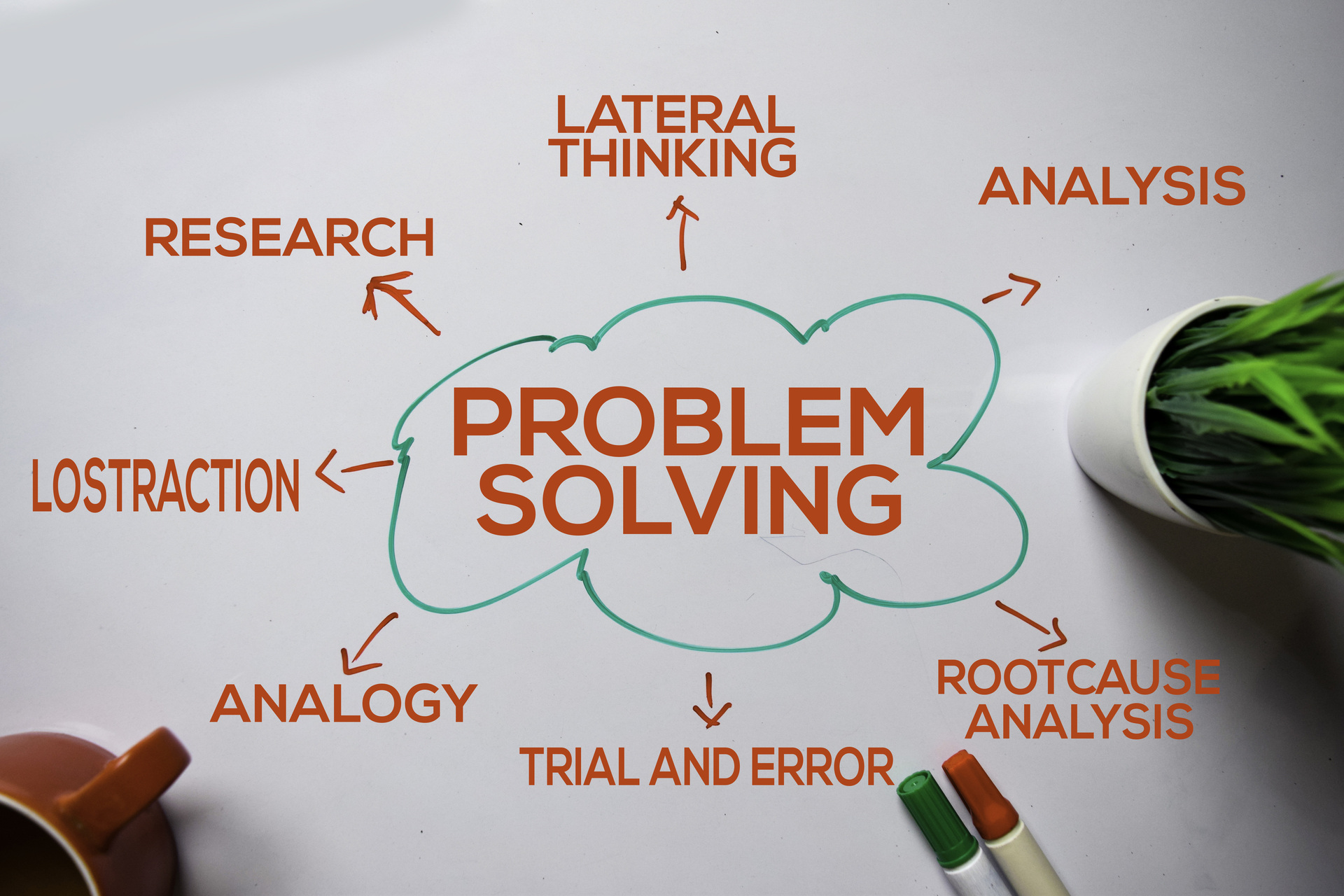
How To Discover the Problem Behind the Problem

Problems are a regular part of business today. When sales drop, customers leave, or projects fall behind, it’s easy to want to fix things right away.

Research and diagnosis serve different purposes. Research helps you gather broad information to understand a topic, while diagnosis focuses on finding the exact cause of a specific problem.

Quick fixes only hide the symptoms, so the real problem stays. To solve issues permanently, start by gathering recent data about the situation. This will give you a clearer view and help you dig deeper to find what’s really going on.

Determining the Root Cause of the Problem

In business and other settings, problems usually don’t happen alone. They often point to something more profound. If you only fix what you see, it’s like treating a cough without finding out what’s causing it.

To solve problems for good and avoid wasting time, focus on finding the root cause by researching and analyzing carefully.

Beyond The Symptoms

Phase 1: Research – Setting the Stage and Understanding the Landscape

Start by making the problem clear. Instead of just saying “sales are down,” use data to describe precisely what’s happening. This step helps you fully understand the challenge before moving forward.

In this first step, data will be collected, and patterns or anything unusual will be looked for. This turns a general concern into a clear problem you can tackle next.

Phase 2: Fault Isolation & Root Cause Analysis – Pinpointing the Core Issue

Now, the process shifts to targeted investigation—fault isolation and root cause analysis. “Fault isolation emphasizes pinpointing a specific failing component within a system, whereas root cause analysis is a broader methodology for identifying the deepest underlying reasons for any problem.

After you research, clearly state what went wrong, when and where it happened, and how serious it is. This will keep you focused on the real problem, not just the symptoms.

Why does this two-step approach matter? Research helps you see the big picture and notice symptoms, while diagnosis lets you dig deeper and find the real cause you can fix.

If you want more information, check out the blog post on this topic.

Cheers,  Jim Zitek

I Turn Complex Product Problems Into Creative Solutions With a Competitive Advantage

Unlock Your Next Breakthrough With A Creative SWOT


A creative SWOT ( Strengths and Weaknesses, Opportunities and Threats)  sparks fresh ideas by revealing your business’s current state and illuminating the exciting directions it could take tomorrow.

A SWOT analysis is a simple yet effective way to help your company develop better strategies and create products that people want. For example:

Internal Factors (Strengths and Weaknesses): Understanding these helps you identify the resources you can rely on and what you need to improve. You control these things.

Strengths include a strong brand reputation, skilled employees, and efficient technology. Weaknesses could involve high debt, outdated equipment, or gaps in team expertise.

Knowing your strengths and weaknesses reveals what you can rely on and what requires improvement.

External Factors (Opportunities and Threats): You can’t control these things outside your company but must respond to them. Opportunities could be a new market trend, a competitor’s misstep, or a new technology you can adopt. Threats might include new regulations, a changing economy, or a rival launching a new product.

Stepping back to see the full picture can help you overcome tunnel vision and truly grasp the entire business landscape.

Design Products People Actually Want

To craft successful products, you must delve deeply into your market and your company’s unique strengths. A SWOT analysis hands you the map for this journey.

The Opportunities and Threats quadrants act as a guide to what the market needs. An opportunity might reveal an underserved customer segment or a gap in the market your new product could fill. A threat, such as a competitor’s popular new feature, tells you what to match or surpass.

Your Strengths and Weaknesses determine how you can build that product. A company with strong R&D (strength) can develop a cutting-edge, feature-rich product. A company with a limited marketing budget (weakness) may need to create a niche product that relies on word-of-mouth.

The Bottom Line: A Clear Path Forward

A SWOT analysis transforms uncertainty into confidence. It sharpens your focus, rallies your team, and points everyone toward a shared vision. With this clarity, you can make bold decisions and create products your customers will love.


SWOT Analysis For Better Strategies and Products

Strategy is at the heart of every business. Knowing where you stand is essential regardless of whether you’re leading a startup or a large company. SWOT analysis is a practical way to gain this understanding.

SWOT helps you see your business’s strengths and challenges within your company and the market. This understanding leads to better decisions.

The Four Pillars of SWOT:

1. Strengths (Internal, Helpful) are internal attributes and resources that help you succeed. They are what your organization does well and what you control.

Guiding Questions:

  • What are our unique assets (brand, technology, intellectual property)?
  • What do our customers and partners love about us?
  • What processes or systems are highly effective?
  • What is our competitive advantage?

Examples include a strong brand reputation, a talented and dedicated team, efficient manufacturing processes, and a loyal customer base.

2. Weaknesses (Internal, Harmful) are internal factors that disadvantage your organization. Acknowledging them is the first step to improvement.

  • Guiding Questions:
    • Where are we lacking resources or expertise?
    • What do our competitors do better than we do?
    • What are the primary customer complaints?
    • Are there gaps in our team or technology?

Examples Include Outdated technology, a high level of debt, a weak brand presence, and an inefficient supply chain.

3. Opportunities (External, Helpful) are factors outside your organization’s control that it can use to its advantage. They arise in the broader market.

  • Guiding Questions:
    • Are there underserved markets we could enter?
    • What emerging trends (technological, social) can we leverage?
    • Are there upcoming regulatory changes that could benefit us?
    • Can we form new strategic partnerships?

Examples: growing market demand for your product, new technology that could improve efficiency, a competitor going out of business, or favorable trade policies.

4. Threats (External, Harmful) are external factors that could harm your organization. Spotting them early helps you create plans to respond.

  • Guiding Questions:
    • Who are our emerging competitors?
    • Are there negative market trends or economic downturns on the horizon?
    • Could changes in technology make our product obsolete?
    • Are material costs or regulations changing in a harmful way?

For example, a new competitor entering the market, rising raw material costs, changing customer preferences, and tightening government regulations.

How to Conduct an Effective SWOT Analysis

A SWOT analysis is more than a checklist. To get real value, follow these steps:

Bring together a team from different departments and roles. You get better insights when you include people from marketing, operations, and customer service.

Conduct an open brainstorming session for each part of the SWOT analysis. Encourage everyone to share their thoughts, and write down as many ideas as possible.

After brainstorming, group similar ideas and make sure each point is clear. Then, decide which weaknesses and opportunities matter most, and focus on those.

Turn your findings into practical strategies. This is the most essential part of the process.

The real value comes from how you use the information. Take what you’ve learned from each part of the SWOT and turn it into strategies.

  • Strengths-Opportunities: How can you use your strengths to capitalize on opportunities? (e.g., Use our strong brand to launch into a new, growing market.)
  • Strengths-Threats: How can you leverage your strengths to mitigate threats? (e.g., Use our loyal customer base to defend against a new competitor.)
  • Weaknesses-Opportunities: How can you address weaknesses by taking advantage of opportunities? (e.g., Form a partnership to gain technology we lack to serve a new customer segment.)
  • Weaknesses-Threats: How can you minimize your weaknesses to avoid threats? (This is a defensive position, e.g., Divest from an unprofitable area to prevent a market downturn’s impact.)

Conclusion: Why SWOT Matters

SWOT’s appeal lies in its simplicity and versatility. It:

  • Provides Clarity: It distills complex situations into a clear and easy-to-understand framework.
  • Encourages Collaboration: It brings different team members together to share insights and ideas.
  • Delivers Cost Efficiency: It requires no specialized tools, only time and thoughtful participation.
  • Establishes a Foundation: It is a starting point for strategic planning, marketing, and analysis.

If you review your SWOT analysis regularly, your organization can adjust strategies, handle challenges, and find new opportunities. Making SWOT an ongoing process helps leaders and teams stay focused and flexible for long-term success.

Cheers,  Jim Zitek

I Turn Complex Product Problems Into Creative Solutions With a Competitive Advantage

Unlock Your Next Breakthrough With A Creative SWOT

2-minute read

A creative SWOT reveals your business’s current state and illuminates the exciting directions it could take tomorrow, sparking fresh ideas.

A SWOT analysis is a simple yet effective way to help your company develop better strategies and create products that people want. For example:

Internal Factors (Strengths and Weaknesses): Understanding these helps you identify the resources you can rely on and what you need to improve. You control these things.

Strengths include a strong brand reputation, skilled employees, and efficient technology. Weaknesses could involve high debt, outdated equipment, or gaps in team expertise.

Knowing your strengths and weaknesses reveals what you can rely on and what requires improvement.

External Factors (Opportunities and Threats): You can’t control these things outside your company but must respond to them. Opportunities could be a new market trend, a competitor’s misstep, or a new technology you can adopt. Threats might include new regulations, a changing economy, or a rival launching a new product.

Stepping back to see the full picture can help you overcome tunnel vision and truly grasp the entire business landscape.

Design Products People Actually Want

To craft successful products, you must delve deeply into your market and your company’s unique strengths. A SWOT analysis hands you the map for this journey.

The Opportunities and Threats quadrants act as a guide to what the market needs. An opportunity might reveal an underserved customer segment or a gap in the market your new product could fill. A threat, such as a competitor’s popular new feature, tells you what to match or surpass.

Your Strengths and Weaknesses determine how you can build that product. A company with strong R&D (strength) can develop a cutting-edge, feature-rich product. A company with a limited marketing budget (weakness) may need to create a niche product that relies on word-of-mouth.

The Bottom Line: A Clear Path Forward

A SWOT analysis transforms uncertainty into confidence. It sharpens your focus, rallies your team, and points everyone toward a shared vision. With this clarity, you can make bold decisions and create products your customers will love.

Cheers,  Jim Zitek

I Turn Complex Product Problems Into Creative Solutions With a Competitive Advantage

Want more tips on using SWOT for better strategies and products? Check out my blog for the full post and practical advice.