In the fast-paced business world, problems are an inevitable part of life. Whether declining sales, customer churn, production errors, or project delays, the immediate instinct is often to jump to a solution.
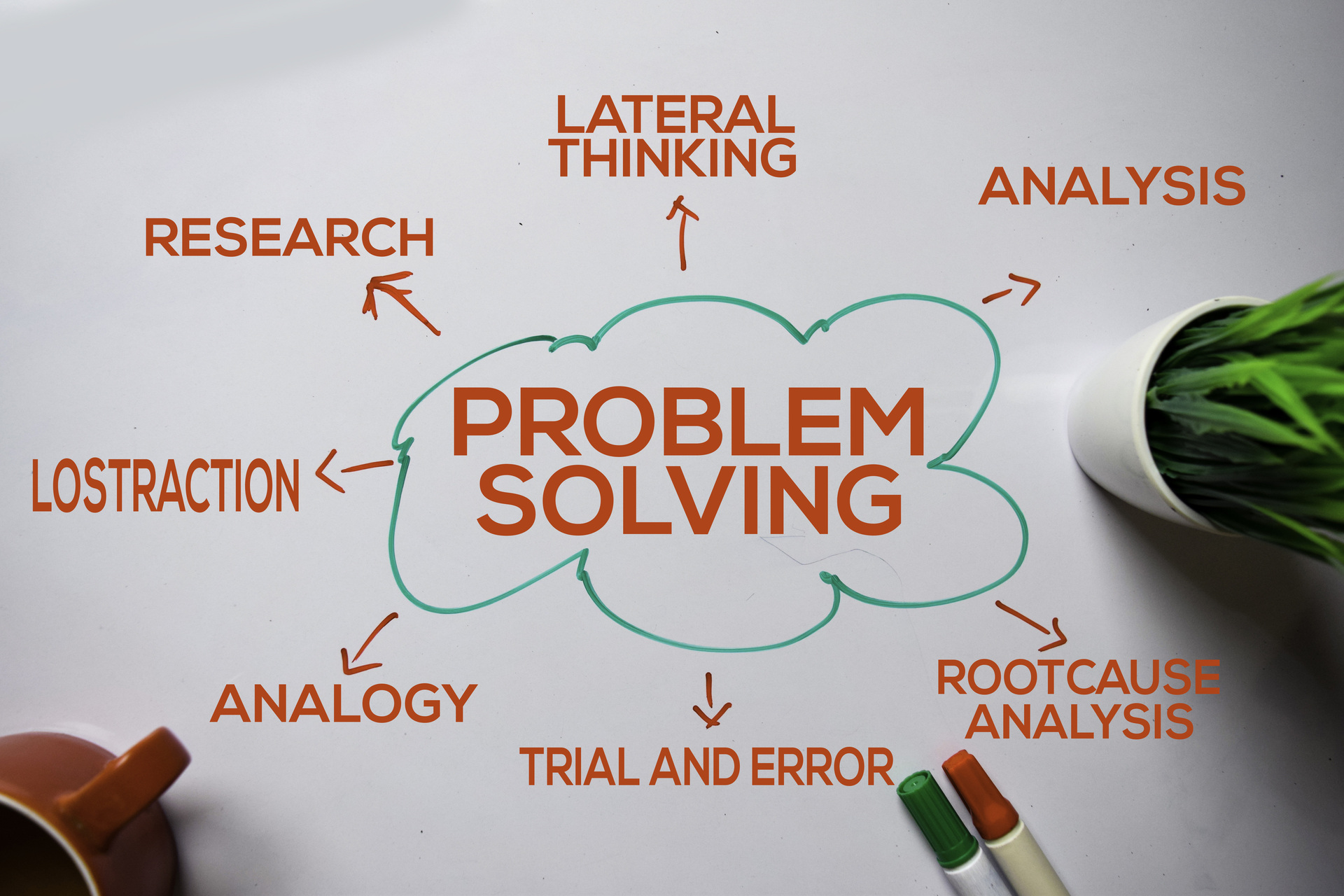
A quick fix hides the symptoms, so the real problem often returns. To truly solve issues, you need to find the root cause. This requires careful research and a step-by-step method called root cause analysis.
Root cause determination goes past surface symptoms to discover why a problem happened.
The Problem with Symptom-Solving
A quick fix for a customer complaint might satisfy one person. However, if the complaint stems from a flawed product design, countless other customers will experience the same frustration.
Root cause determination provides the details needed to look beyond the obvious and find the real causes of a problem.
Root cause analysis helps you build lasting solutions, reduce risks, and use resources better. Instead of constantly reacting to problems, you can solve them in a more organized way. Without this approach, the same issue might return even worse.
Root cause analysis ensures that your solutions last, are lower risk, and use resources wisely. It transforms constant problem-fixing into a more systematic way of solving issues.
Determining the Root Cause of the Problem: and Fault Isolation Matter
In business, technical, and organizational settings, problems usually don’t show up alone. They often point to deeper issues. If you only fix what you see, it’s like treating a cough without finding out what’s causing it. Leaders must dig deeper by researching carefully, finding the exact fault, and using root cause analysis. This leads to lasting solutions and saves time, effort, and money.
Beyond The Symptoms
Phase 1: Research – Setting the Stage and Understanding the Landscape
Before you tackle any issue, start with research. This means gathering information, understanding the bigger picture, and spotting patterns that might not be obvious initially.
Data collection and analysis are the foundation of research. The goal is to spot trends, unusual patterns, and places where performance isn’t meeting expectations.
Contextual Understanding: Is the problem isolated or part of a larger trend?
- Stakeholder Input: Engaging with employees, customers, partners, and other relevant parties provides invaluable perspectives.
- Benchmarking: How does your performance compare to industry best practices or competitors?
Once you have a clear problem statement, you can dig deeper in the next phase.
- Market research can show if a product’s decline is due to changing customer preferences, new competitors, or bigger economic changes. Understanding the outside market and your own company helps you define the problem correctly.
- Stakeholder Input: Engaging with employees, customers, partners, and others provides invaluable perspectives. Those closest to the product or process often have unique insights into failure points.
- Benchmarking: How does your performance compare to industry best practices or competitors? This can highlight areas where your processes or products are underperforming.
The research phase helps you turn a vague problem like “sales are down” into a clear, actionable insight, such as “sales for Product X dropped by 15% in Q3 among new customers after a competitor launched.” A well-defined problem statement is key for finding the real cause.e 2: Fault Isolation & Root Cause Analysis – Pinpointing the Core Issue
Once you have built a solid research base, the next step is to focus on fault isolation and root cause analysis. These terms are often confused. Fault isolation refers to pinpointing a specific faulty part within a system, while root cause analysis is a broader method for finding the deepest reasons for any problem.
Use your research to define the problem clearly. Figure out what went wrong, when, where, and how much. A clear definition makes it easier to understand the issue.
Fault isolation is the process of identifying and pinpointing the exact cause and location of a problem within a system. This technique is a crucial part of troubleshooting and is applied in various fields, including computer networks and software, as well as mechanical and electrical engineering.
The main goal is to narrow the failure down to a specific part or area. This cuts downtime and lets you fix the problem quickly and directly, instead of just treating the symptoms.
- Brainstorming Potential Causes: Based on the gathered research, assemble a cross-functional team to brainstorm all possible contributing factors. Techniques like Fishbone Diagrams (also known as Ishikawa Diagrams) are excellent for this purpose. They categorize potential causes into categories such as People, Process, Equipment, Materials, Environment, and Management.
- The “5 Whys” Technique: This simple yet powerful tool involves repeatedly asking “Why?” each time an answer is provided. Doing so allows you to drill down from a superficial problem to its ultimate root.
- Problem: Our website conversion rate has dropped.
- Why? Users are abandoning their carts.
- Why? The checkout process is slow.
- Why? Our payment gateway integration is inefficient.
- Why? We chose a low-cost, unoptimized third-party provider.
- Why? The procurement team prioritized cost over performance without consulting the team.
- Failure Mode and Effects Analysis: This proactive technique is commonly employed in design and process engineering to identify potential failure modes in a system, assess their severity, and determine their causes and effects before they occur. It can also be applied retrospectively for diagnosis.
- Testing and verification: After you find possible root causes, you need to test and confirm them. This could mean A/B testing, running simulations, checking code, inspecting equipment, or doing controlled experiments. The goal is to ensure that fixing the root cause solves the problem.
- Focus on process, not people (at first): Human error can play a role, but root cause analysis often shows that mistakes come from bad processes, poor training, or a lack of tools. It’s better to improve the system than to blame individuals.
Why does this two-prong approach make a difference?
You need both research and diagnosis. Research provides a broad perspective and helps you identify symptoms. Diagnosis, through fault isolation or root cause analysis, digs deeper to find the exact cause that can be fixed.
If you skip thorough research, your diagnosis might only fix a minor issue while missing a bigger problem. If you don’t diagnose carefully, research might show you where the problem is but not the exact spot to fix.
Using this two-step approach, organizations can move past quick fixes. They can create targeted, practical solutions that solve current problems, strengthen processes, improve products, and prevent similar issues from happening again. This builds real resilience and ongoing improvement.
Cheers Jim Zitek
I turn complex product problems into creative solutions with a competitive advantage.